“I’m sorry, Nick. Something came up and I forgot to call. I feel like such an a__-hole.” “You’re only saying that because you’ve got Preparation H on your face.”
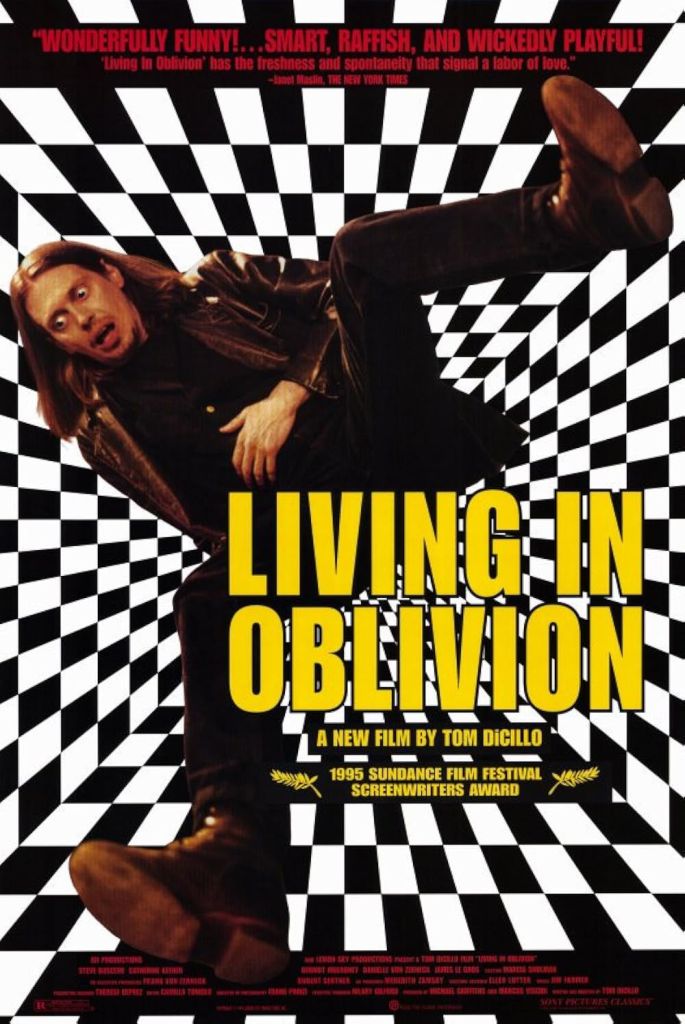
There are stretches of Living in Oblivion that feel Oscar-worthy. The writing is so sharp, so inspired, you forget how small the production really is.
Despite being a Sundance hit and critically beloved, this movie flew under the radar. It somehow escaped Roger Ebert entirely—rare for a ’90s indie. Maybe it felt too “made for L.A.” and never caught on in middle markets, even in Chicago.
Tonally, it’s about 70% of a Christopher Guest film—For Your Consideration comes to mind—but with more bite. The satire lands because it’s grounded in genuine frustrations of indie filmmaking.
Nick Reeve (Steve Buscemi) is directing a film that seems… off. Most shots have actors delivering lines directly to the camera, side by side. It might be a nod to old Hollywood style, but it reads like clunky direction—probably by design, to reflect the chaos behind the scenes.
That chaos is part of the charm, but also the limitation. The “film within the film” is never compelling enough to fully anchor the story. The structure is scattered, with a handful of scenes that feel like endings, none of which really stick. It’s an odd way to finish a film with such smart momentum early on.
But the cast—what a cast. DiCillo somehow assembled Steve Buscemi, Catherine Keener, Peter Dinklage, and Dermot Mulroney before they broke big. Buscemi and Keener especially seem fully formed here, already doing what they do best.
I’d say there are about seven standout moments that feel like they were lifted straight from an A-list film, and another seven full scenes that showcase genuinely brilliant writing. But while these parts shine on their own, they don’t quite add up to a cohesive whole. The film is less than the sum of its best moments..
This seems like it was made five years before it possibly could have. It is great. As someone that has seen almost every prominent English language movie from the 90s, this seems like a lost relic of the era. A forgotten keepsake that continuously earns its “cult film” label.
This era of animated films contains many clunkers. Okay, that’s a little unfair. It doesn’t just apply to animated films, but to almost any large, big-budget or franchise movie from 2016 to 2019. Scripts from this time often offered nothing new—or if they did, it felt like the result of throwing darts at a wall.
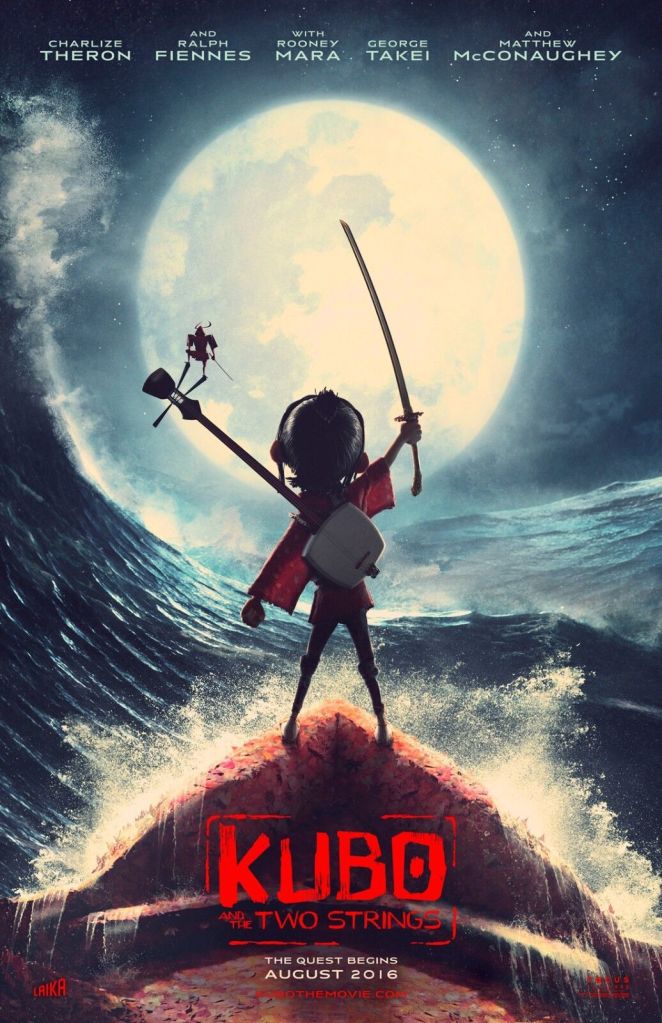
Kubo and the Two Strings is creative, yes, but also absolute nonsense. Nothing here is grounded in reality. Kubo can control origami by playing a magical shamisen—but where did that power come from? The movie isn’t interested in asking, or answering, that question. Compare this to Miyazaki’s Spirited Away, where every surreal moment still feels rooted in something emotionally familiar. In Kubo, things just… happen. Every minute, it feels like another random idea is yanked from a grab bag and dropped into the script with little development or organic integration.
The animation is impressive, considering the budget, but the character models are oddly generic. Everyone seems to have Gru’s face shape from Despicable Me, and the animation feels a little “floaty”—there’s not much weight when characters fly or step. Not a dealbreaker, but noticeable.
More frustrating is how little the film resembles the culture it supposedly draws from. Set in early feudal Japan, Kubo features no Asian voice actors in key roles, and everyone speaks in a flat, stereotypically American tone. Why build a story around such a specific cultural setting, only to strip it of that culture in execution?
In the end, it’s a jumble: generic animation, generic music, a scattershot script that relies on its uniqueness of ideas rather than their development. Worst of all, the movie constantly tells instead of shows. Kubo is sent away with his mother’s magic, then wakes in a snowy field next to a talking monkey—who was once a wooden charm named Monkey. “I said, your mother is gone. Your village is destroyed! Burned to the ground!” Monkey yells. Would’ve been nice to see that scene, right?
Kubo and the Two Strings isn’t a bad movie. In fact, it’s rather engaging, and refreshingly distinct in a sea of interchangeable animated films. It’s just… this could have been so much more in the right hands. I enjoyed it—even though I found something to complain about in every scene.
I added another J entry, this time a request. I decided that both Johnny Guitar and the movie would have enough to write about to do them both.
A beloved critical darling at the time of its release, The Joy Luck Club has largely faded from public memory. I first heard of it in Roger Ebert’s year-end collections, but for some reason, I always assumed it was a relationship drama among recent college grads—something more in the vein of St. Elmo’s Fire. I was way off.
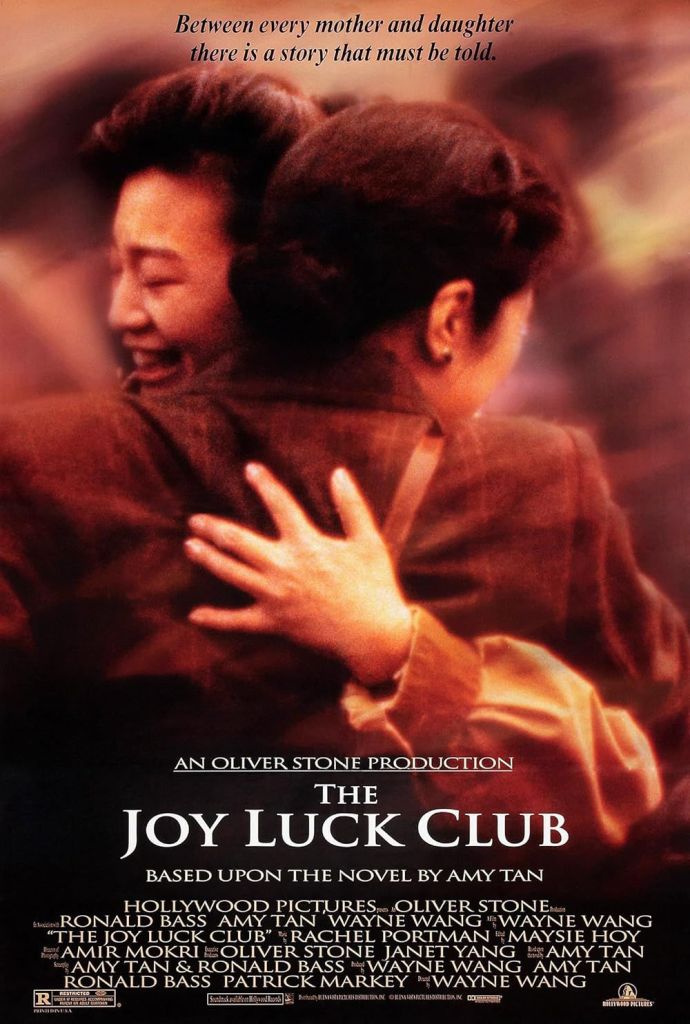
In reality, The Joy Luck Club is one of the first major Hollywood films centered entirely on Asian characters, played by Asian actresses. The title refers to a mahjong club formed by the main character’s mother during wartime in China. “Joy luck” is the idea that, even in the worst of circumstances, one can find fortune through joy and friendship.
The film follows four Chinese-American women and their immigrant mothers, weaving together stories from both generations. I’ll be honest: I had trouble telling some of the characters apart. The actresses have similar looks, voices, and even plot arcs. At times, I thought the same woman had multiple white husbands. A more exacting director—maybe someone like Spielberg—might have pushed harder to visually or tonally differentiate the stories.
That said, this is a compelling “women’s picture,” packed with enough plot turns to stay engaging without dipping into melodrama or cliché. The central thread follows June Woo and her mother, who escaped from war-torn China after abandoning her infant twin daughters by the side of the road. The film asks, “How could a mother do such a thing?”—and then slowly, powerfully, answers it.
The other daughters of the Joy Luck Club all carry histories that echo each other in meaningful ways. Second-generation immigrants often face similar tensions, especially when navigating between tradition and assimilation.
I feel like this film is a perfect introduction to Amy Tan’s novel. I never thought I’d want to read it, but now I might. The characters are strong on screen, but you can sense there’s even more to them on the page—more cultural nuance, more inner life.
A strong, meaningful film with a clear place in cinematic history. It’s just a shame the writing/directing team couldn’t quite replicate the success—Maid in Manhattan is a far cry from this. But this one’s great.
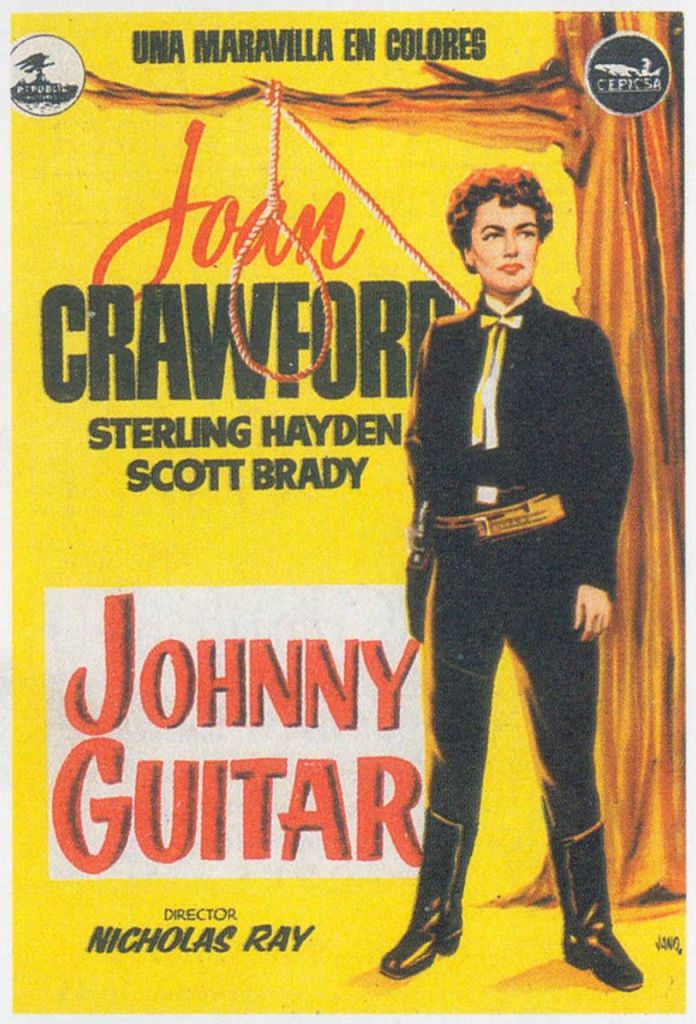
Johnny Guitar is named after a sagely gunslinger (Sterling Hayden) who carries a guitar — sans case — on his back. But the movie is all about the women: Joan Crawford as Vienna, the mysteriously affluent saloon owner who can play the piano, and Mercedes McCambridge as Emma Small, the vengeful zealot who relishes the chance to take the esteemed Vienna down.
I watched a great deal of the Grit channel for a few years. If I had seen this on there, it would’ve been one of my very favorites. It has everything I want from a 1950s Western: beautiful, well-scouted locations, gruff gunslingers, double crosses, vigilantes, and beautifully (if unnecessarily) cinematic imagery that begs to be seen in a theater. Sure, they used explosives to blow the hell out of priceless natural landscapes and burned down a million-dollar mansion attached to a cliffside rock, but the film has constant movement. There’s never a time when something interesting isn’t happening onscreen.
Nicholas Ray seems to be doing too much to prove himself here. It might be a tad over-directed, and in doing so, it feels more like a producer’s movie than a director’s one. “Make sure you can see all the movie onscreen!” I can hear someone say. It’s the kind of film that feels made for the trailer — long before that was much of a thing.
The movie has amassed a devoted cult following, mostly due to the resolve of Joan Crawford, who excelled at roles steeped in determination and melodrama. Vienna is highly respected by almost every man in town, yet she accepts it when the little chain of dominoes gradually descends to crush her. “What am I to expect? This is a man’s world, and I’m in the way,” seems to be her outlook. The men end up turning on her, even if they don’t want to.
Johnny Guitar isn’t great cinema, maybe, but if you like classic Westerns, it checks all the right boxes.
I am watching 27 movies over the next two months that I otherwise would not have watched. All movies from my watchlist I was not planning on watching. I will post a little review for each one.
Starting with # (Day 1)
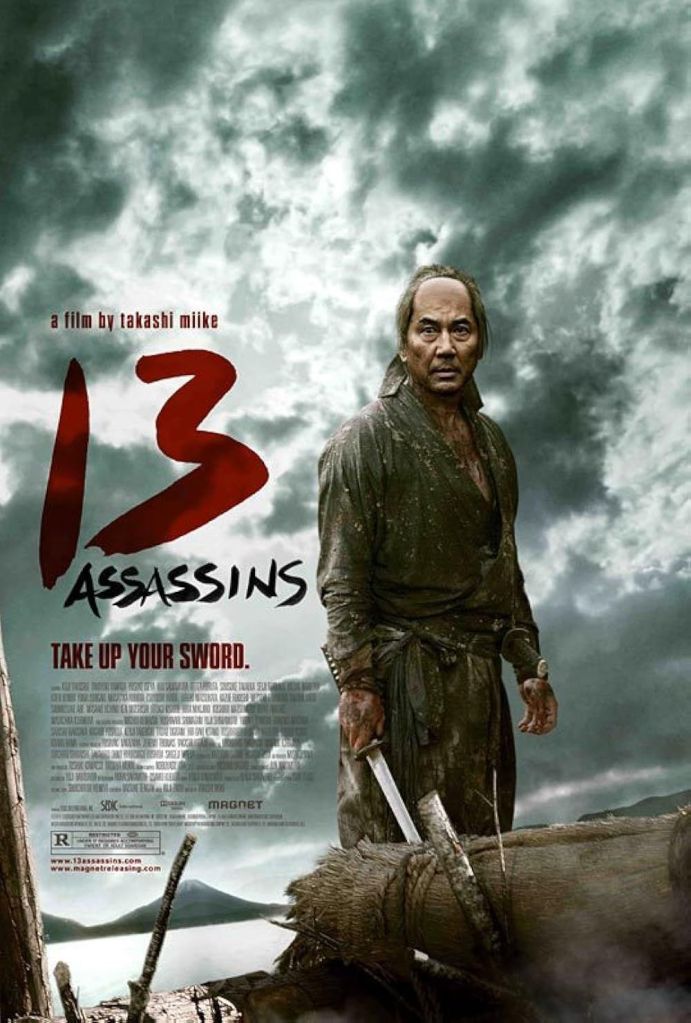
13 Assassins (Takashi Miike, 2010)
You could call this one of the best Dungeons and Dragons movies ever made. It is in no way based on the tabletop RPG, but it has that feel. Set at the end of an extended era of peace in Japan (likely the Edo period from 1603 to 1868), all samurai are trained for combat but no one has actually ever fought in a battle. A samurai master becomes disillusioned by a tyrannical lord and commits ritual suicide, seemingly feeling there was nothing else he could do to take the lord down. This does the trick. A bunch of samurai/Ronin are brought together to take down this supremely evil antagonist.
This isn’t an overly visceral movie. It’s not about spectacle or violence, though it is violent. It has some special effects that look incredibly cheap for 2010, but that doesn’t bother me. It is “telling a story” about samurai mindset and ethos in a specific time and place. It is extremely well written, every scene is masterful and drips with character. I had to keep my phone as a study guide to understand everything going on, but it didn’t detract from the experience. I look forward to watching the movie again straight through after reading a list of all the characters. To look for little details I might have missed. If I saw this when I was 12 years old, it would have been the best movie ever.
An incredibly ambitious piece of low budget filmmaking.
The idea here is a good one: what if Alzheimer’s disease was something you could catch?
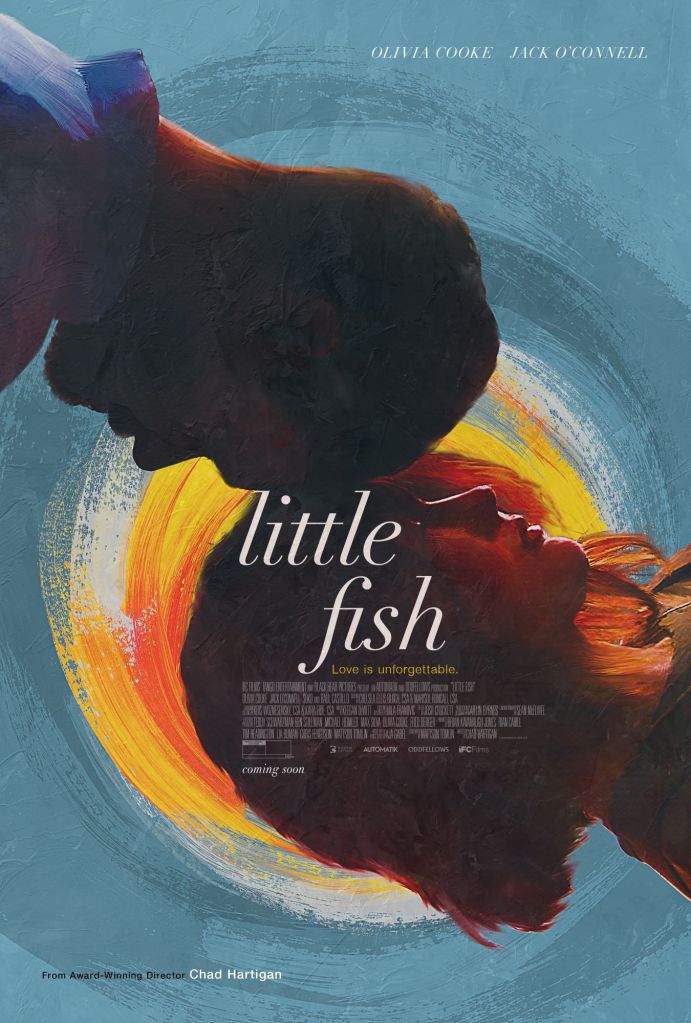
Now, imagine giving that premise to Terence Malick to write and direct and you will have a basic idea of what Little Fish is like.
The story follows Emma (Olivia Cooke) as she grapples with the Alzheimer’s-like disease that is erasing the memory of her husband, Jude (Jack O’Connell). The disease can either affect you all at once or it can affect you gradually. Jude’s loss is very gradual.
The script relies on Emma’s narration, both to explain what is happening in the plot and what is happening to her emotionally. I am reminded of Days of Heaven‘s voice-over narration. It isn’t the greatest idea in a movie to have most of the plot just flatly told to you instead of shown visually, but here it works. I usually hate voice-overs, but when it seems purposeful in many ways, I dig it. Because we hear her narration, we understand everything: what each idea means to her, why it means to her to choose the specific details she is recalling, what her emotions have been like during this process.
Badlands is associated with extreme world-building. PT Anderson held it up as a pinnacle of filmmaking because it “used pictures on the walls.” What he seemed to mean was that they found pictures that looked like Sissy Spacek’s family from childhood and put them on a wall. Just to have in the background for a few seconds. Either they asked Sissy to bring in pictures of herself or someone spent time finding photos that could work. In the days before online photo libraries that could be searched with a few keywords, this was almost unheard of.
There are little touches like that in Little Fish. Giant murals are chosen for quick shots. Mysterious paintings that just display a word on the entire side of a building. Did they scout out the location themselves? Or did they commission the painting? Either way, it would have required over a hundred hours of work for a shot that lasts only a few seconds.
In the world of Little Fish, every little word counts. There is one scene where Emma and Jude stand looking at a collage of pictures of details from their lives with their names taped to them. Dogs, friends, locations.
Literal pictures on walls.
Tattoos are also used to keep memories of importance alive, but again, the plot doesn’t dwell on this. It doesn’t affect the plot in the way such a device was used in, say, Memento.
For a low-budget film, it’s nice to see care put into the little details.
I feel like the team (the writer, the director, the producer, et al.) worked their hardest in a mad fit of effort to come up with ways to maximize the resources they had. At one point, a car crashes into another car in a scene that in no way affects the plot. It is just a way to add punctuation to the emotional changing world.
Little bits of effort make an impact. Noticing these moments that seem superfluous made me wonder, “why would they do this? What meaning does this bring?”
In a different scene, the camera follows the characters through a nice area in the city when, in the background, someone has crudely spray-painted the words “Iris come home” on the wall outside. The shot only lasts six seconds and the camera doesn’t focus on the wall. That moment is so subtle and adds an extra layer of meaning.
Who is Iris? What is her story? Did she paint it herself? Why would the community leave it?
Is the thought of Iris never making it home too heartbreaking to remove the graffiti?
Perhaps the biggest problem this movie had critically: if there is a contagious epidemic going on, why does no one wear masks? It was kind of unfortunate this came out when it did, as it was made in a pre-Covid world and came out post. There actually is one scene where scientists made everyone wear masks. However, there is a moment where a main character takes off the mask out of confusion and no one seems to care. This, to me, spoke volumes. The scientists were making people wear the masks as a technicality, but it seems like everyone has figured out that the disease is not airborne. That is my reading of the world as it is portrayed.
The movie is about memory loss, but in a way that embraces quiet melancholy. The movie recalls, specifically Eternal Sunshine of the Spotless Mind, in a way that has the characters protective of their love for each other instead of actively trying to remove such memories. Trying to hold on to memories or trying to remove them. Either way, I appreciate the depth of thought that went into this: both movies are told nonlinearly in a method that cherry-picks the important moments. This relationship feels very lived in.
Overall, this is a quiet movie that explores how Alzheimer’s affects people struggling to keep hold of themselves and the people they love. And it asks the age-old question: is it better to lose a loved one or lose the memories of the person you loved?
Best of all is the final line. Poetic and meaningful, it conveys a real message. When remembering the love of your life, even the most important emotions fade into the background when you remember him.
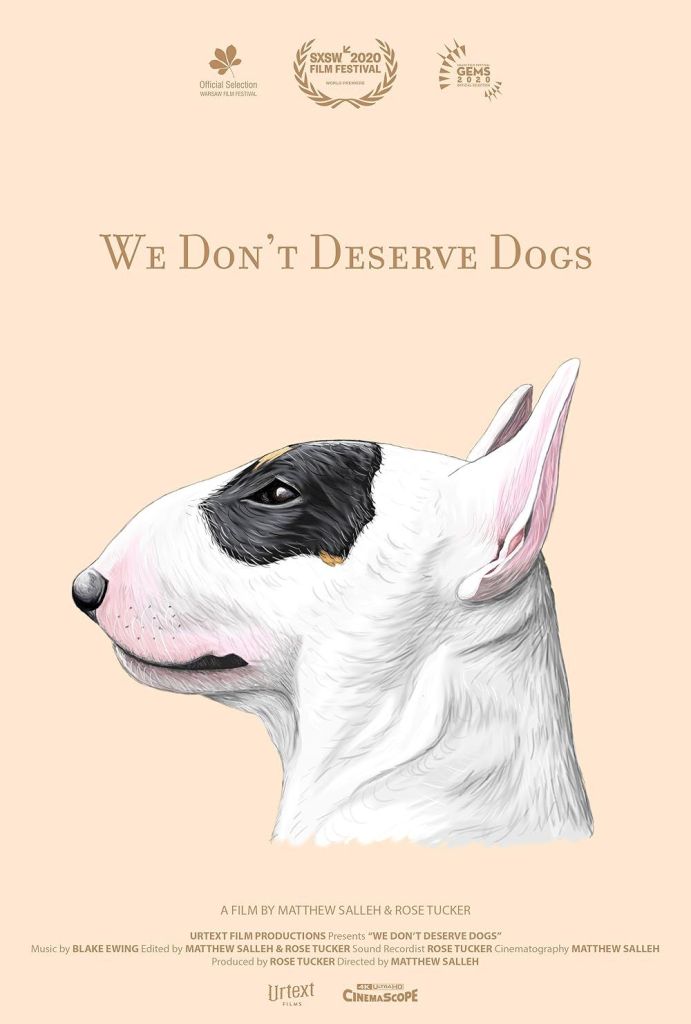
This is a collection of interviews and stories from dog owners and admirers about the dogs in their communities or the pets that have changed their lives. The mood of the film aligns with its title — this is all very, very sad. Sad stories, sad people, and sad circumstances that brought dogs into their lives.
The music is relentlessly somber, a constant collage of string instruments playing sustained whole notes, reminiscent of Philip Glass composing his version of Adagio for Strings by Samuel Barber. Interestingly, the actual composer is a former child actor, one of the Little Rascals from the 1990s movie — an odd detail.
About 80% of the film is not in English. It’s a beautifully filmed, albeit somewhat amateur, travelogue that captures glimpses of how dogs are perceived in various cultures. Some of the countries featured include Chile, Peru, Uganda, Pakistan, Romania, Vietnam, and Scotland. I had to look this up, as the segments aren’t separated by headings or on-screen text.
The film might have been aiming for the tone of Kedi, the 2016 documentary about Istanbul’s street cats. In that film, we see how cats bring meaning to people’s lives, often serving as community mascots. They’re respected and cared for, but no one person takes sole responsibility for them.
The opening story, set in Santiago, Chile, echoes this concept. It features a dog named Dr. Coffee who lives a dual life. Everyone in the neighborhood knows him and will often ask, “Have you seen Coffee today?” He moves freely, vanishing and reappearing days later. Eventually, one resident learns that the hospital nearby knows him by a different name — he has a room there and stays for days at a time. Coffee isn’t like a typical dog; he doesn’t crave pets and affection. His version of companionship is simply sitting quietly with kind people.
In Uganda, survivors of violent trauma are given dogs as a form of emotional support. One woman names her dog PTSD to reflect the emotional weight she’s working through. The belief is that a dog provides unconditional love, free from hate or judgment. The group dog-training sessions, where dozens of new dog owners learn how to care for their companions, are striking in their simplicity and warmth.
In Pakistan, a self-described tomboy finds a dog on the street with a paralyzed leg, covered in maggots, and left to die. Despite many people telling her to give the dog away once he recovered, she refused. Some people in Pakistan believe that having a dog in the house will prevent God from accepting you into heaven. She rejects that belief, instead seeing the dog’s presence in her life as part of God’s plan. Her story is one of quiet defiance and compassion.
Not all the stories are tragic. In Chile, a therapy dog named Patron brings joy to residents of a retirement home. During an exercise session, Patron is told to “find the yellow ball,” which he does effortlessly. The residents marvel at his ability to distinguish colors. One participant remarks, “If a dog comes up and hugs you, then it is a hugging dog, and you can hug it.” This gentle wisdom encapsulates the joy dogs bring — they accept us for who we are.
However, the film doesn’t shy away from difficult realities. In Vietnam, the dog meat trade is addressed. A restaurant owner recounts how his father introduced him to the practice as a child. While he acknowledges that dog meat consumption has declined, he continues to serve it as long as there is demand. This segment is sobering, forcing viewers to confront how cultural norms shape our perceptions of animals. It made me wonder about the conditions of dog meat farms and, by extension, the treatment of all farm animals. Should I view them all as dogs? It’s a thought that lingered with me.
While the film’s tone leans toward the morose, it remains gentle in its approach. Dog lovers will appreciate the celebration of the bond between humans and animals, as long as they’re prepared for the emotional weight of the stories. Ultimately, We Don’t Deserve Dogs serves as a poignant reminder of the kindness and joy that dogs bring to our lives.
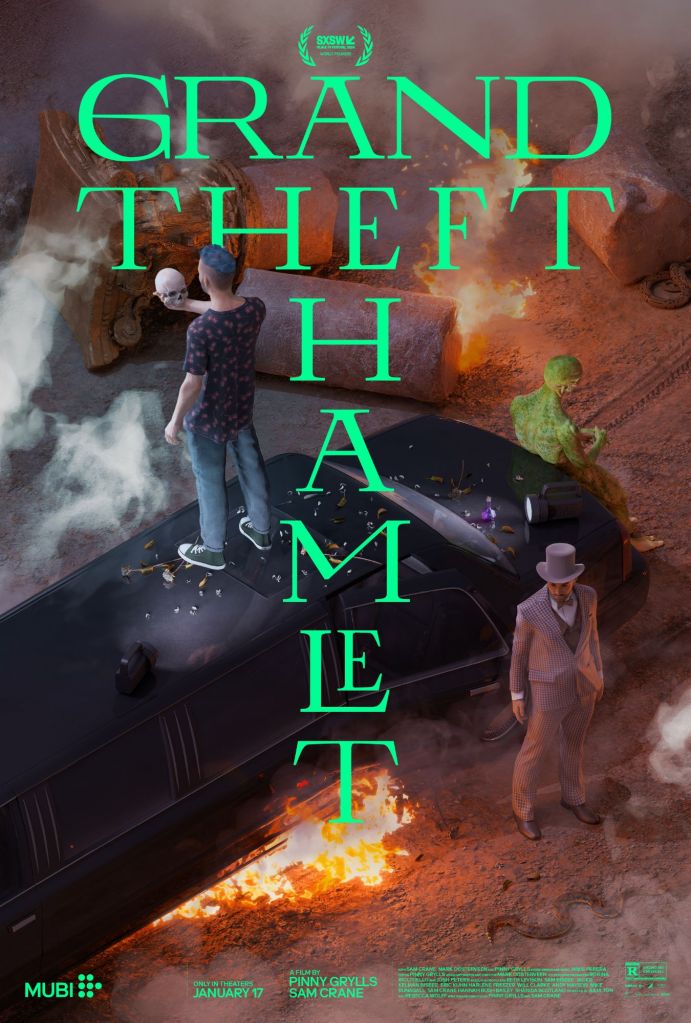
Hmm. This is just the making of Grand Theft Hamlet.
So, what is Grand Theft Hamlet? It’s a performance of Hamlet staged within Grand Theft Auto Online. Here is what that looks like:
Grand theft auto trailer.
But what exactly is GTA Online?
It’s an “open-world, action-adventure, multiplayer” sandbox game. That might sound like World of Warcraft mixed with Grand Theft Auto, but not really. GTA Online is actually part of Grand Theft Auto V, rather than a separate MMO. Only 30 players can be in the same session at a time—far fewer than the thousands in WoW.
But is GTA Online any good? That’s what I’ve been trying to figure out. The game had a mixed critical reception when it launched on PS3, likely due to server issues and bugs. Even after a PS4-era re-release, reviews remained similar. GTA V as a whole is beloved—often considered one of the best games of its generation—but I’m not sure how much of that acclaim extends to its online component.
One thing’s for sure: GTA Online is popular. Over 20 million people still play it every month, even today. Considering GTA V has sold 205 million copies, that means about 10% of people who bought a game originally released 12 years ago still log in regularly. That’s remarkable longevity. It might not be my thing, but it must have done something right.
So how was the performance of Hamlet?
No idea. Out of Grand Theft Hamlet’s 90-minute runtime, only about 10 minutes are dedicated to the performance itself. No full scene is shown. I was hyped to see Shakespeare—I even prepped by familiarizing myself with the themes, characters, and plot. But I didn’t need to. The full performance isn’t available online. And if the filmmakers didn’t want to show it, I have to assume it wasn’t very good.
As a documentary, Grand Theft Hamlet is a fascinating making-of feature. But it’s more like a DVD bonus than a full-fledged film. The project was marketed as a complete in-game performance of Hamlet, but the documentary isn’t that—it’s about the attempt to make it happen.
Was GTA Online the right place for this?
Probably not.
The idea started when two out-of-work Shakespearean actors, stuck at home during the COVID-19 lockdown, discovered a massive outdoor theater while exploring GTA Online. They wondered, Could we stage a play here? They tried performing lines, announcing their impromptu show to any players nearby. Before they could start, another player in the audience shot them, looted their corpses, and left.
Not a great start.
But they persisted, bringing in a documentary filmmaker to capture their attempt to perform Hamlet in full.
At first, I thought GTA Online was a large enough MMO that thousands of players could gather to watch, but with only 30 per session, that wasn’t the case. Even then, the idea of Hamlet performed in the chaos of GTA—grenades going off, cars ramming the stage, audience members shooting each other—sounded like a trainwreck I needed to see.
It wasn’t quite that, but it was still a trainwreck. They struggled to recruit actors, often getting killed mid-rehearsal. Every time they died, they respawned at their home base and had to drive all the way back—assuming their car didn’t explode on the way.
I appreciate that GTA Online sparked the idea: Let’s perform a play in an online world. But they put zero effort into considering other platforms. VRChat, Rec Room, Neos VR, Second Life, Minecraft, Roblox, Mozilla Hubs—all arguably better suited for virtual theater. But because they got the idea while playing GTA Online, that’s what they used.
As a gimmick for a documentary, it’s clever. The contrast between GTA’s violence and Shakespeare’s high art is intriguing. But if the goal was to explore whether online theater works, the film needed to dig deeper. I’d love to see a documentary that actually tested different platforms to see which one best supports digital performance.
“I’ve been sitting at home. Alone.”
More than anything, Grand Theft Hamlet is about pandemic-era isolation and how people filled that time. Unless you worked in an essential field, you were probably stuck at home, wondering how to stay productive. (Charli XCX: Alone Together tackles a similar theme—though in that case, the result was How I’m Feeling Now, one of her best albums.)
Many people got pulled into video game routines. One actor even asks his wife, “Do you think I spend too much time playing this game?” She says, “Yeah, a little bit.” His friend stays up late rehearsing, while he spends all night “buying planes” in GTA Online. He even misses his wife’s birthday. She tells him she has to log into the game just to spend time with him.
At one point, he says, “I want to give you a hug.” She replies, “You can in real life. I live in the same house as you.”
While Grand Theft Hamlet has more to say about video game addiction than Shakespeare, it’s still worth a watch. If you’re interested in how video games are changing the way people connect and create, this documentary offers a glimpse of what’s starting to be possible—while also highlighting the many limitations.
Final Thoughts
The idea of performing Hamlet in a video game is interesting, but this documentary sells the concept of a great film rather than being one itself. That said, it got me thinking. Online theater is still underexplored. I’d love to see a documentary that takes a methodical, America’s Test Kitchen approach—experimenting with different platforms to see how Shakespeare (or any play) translates into a digital environment.
If their Hamlet is unavailable, maybe it just didn’t work. But I’d love to see someone try again—this time, with a game that actually supports the concept.
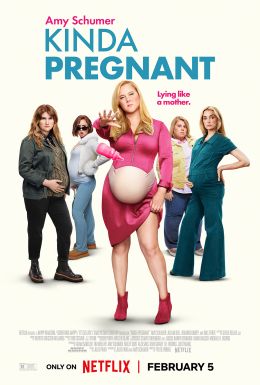
It’s hard to believe she followed up Trainwreck—with its subtle humor and emotional poignancy—with Kinda Pregnant, a film that has more in common with the worst sitcoms of all time.
The entire plot is based on an absurd premise: Amy Schumer’s character, Rainy, has a pregnant friend, so she wears a fake belly in public for fun. She loves the attention so much that she keeps wearing it… all the time.
That’s not a terrible idea—it could work in the right hands. But it doesn’t. Nearly every scene has something deeply wrong with it. Rainy is portrayed as a neurotic sociopath, making up outrageous lies and somehow getting away with them despite being terrible at it. She’s also a high school teacher, which is hard to believe. She has an expletive-ridden meltdown in front of her class—how is she not fired? How does she function in life at all?
Then there’s the yoga class for pregnant women (why is she even there?). It’s so ridiculous that it feels like no one bothered with research:
“Breathe in through your vagina. Then exhale through your butt hole.” (Everyone starts farting.)
90% of the humor relies on Rainy making incomprehensibly bad decisions. You might laugh, but for the wrong reasons—out of secondhand embarrassment, or disbelief that someone could act so inappropriately. I cringed constantly.
The worst part? Nothing is followed through. There’s potential for real dramatic moments, but the film never commits. It’s an absurd premise, sure, and Rainy keeps making terrible choices—but if it all built up to something, maybe a big confrontation or a well-choreographed comedic disaster, it might have been worth it. But no. Nothing. Just bad writing.
The good: Will Forte comes out relatively unscathed. His character, Josh, is likable and charming—you root for him to find the right girl (which is obviously not Rainy, who even uses her fake pregnancy as an excuse to avoid sex with him—except when she doesn’t). She sleeps with him, but does everything she can to keep him from seeing or feeling her body, maintaining the illusion of her fake pregnancy. There’s even some raunchy dialogue that only adds to the absurdity of the situation. The scenes between Rainy and her actually pregnant best friend are solid. Most of the supporting characters are fine—sane, even. I didn’t mind the broader attempts at humor, like a scene at a butterfly tent where Rainy’s friend (NOT Rebel Wilson) yells for bug spray and starts a fight. I didn’t laugh, but I smiled.
I want to believe Amy Schumer is better than this. Either she’s lost her ability to write, or—more likely—she “reworked” someone else’s D-list script in a week and called it a day. She’s also too old for this role.
 Avidavr: Media Reviews