My 27 Movie A-Z Film-a-thon: Day 24.
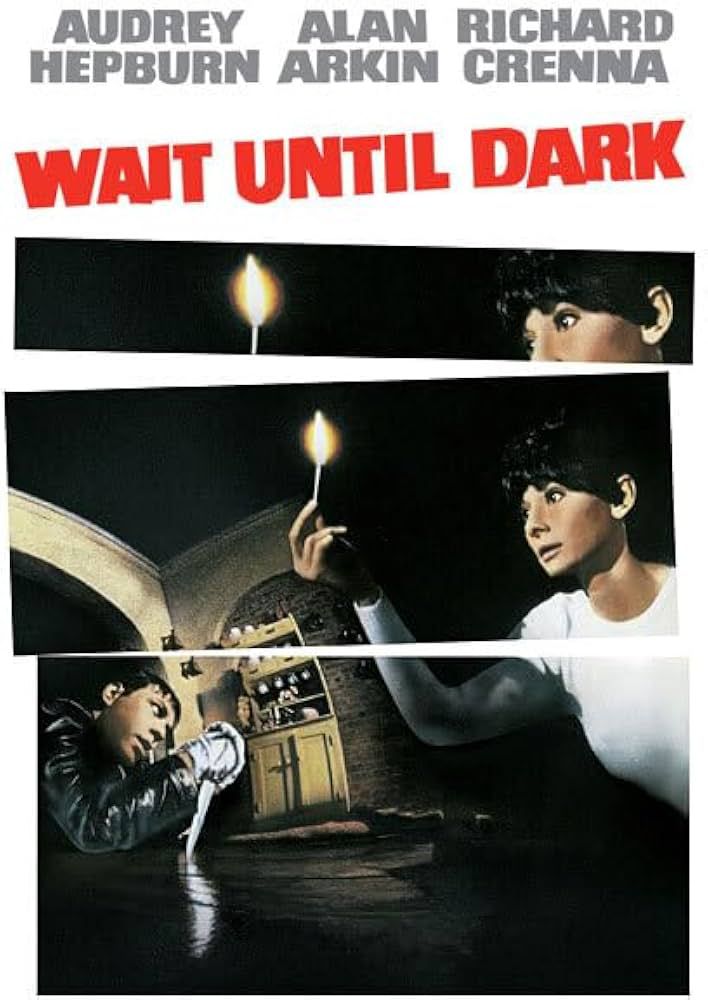
“I was the world’s champion blind lady today.”
Audrey Hepburn plays Susy Hendrix, a remarkably chipper, recently blinded homemaker married to a photographer. Ahh, the irony—her husband is an artist, yet she’ll never see his work again.
Wait Until Dark debuted as a play in 1966, which is remarkable to me. An actually scary play back then? Much of the tension takes place in total darkness, using clever lighting tricks. It must’ve been fantastic to see live.
Fun fact: it ran for 374 performances on Broadway, and for each one, Robert Duvall fell down a small flight of stairs. He wasn’t the only one. Was the impact worth it? Why does she live in a basement? It is a miniscule aspect of the production, but it adds impact to the big moments. Stage actors really will die for their craft.
The movie is great for a few reasons. First, the dialogue is top-notch. The villains are smart and strategic, the good guys are joyful and resourceful, and everyone feels believable.
The direction is equally strong. Terence Young doesn’t let the camera sit still—the apartment is seen from every angle, which is perfect for a thriller where space matters. You know the stakes of every movement, and it’s nerve-wracking to wonder whether she’ll take that extra step or remember where the knife is.
The obvious reason to see Wait Until Dark is Audrey Hepburn. She’s never been better—not just because she plays blind so convincingly. Probably no one else could play optimistic and cheery as well, and her performance is as chilling as any late ’70s scream queen.
The movie expands beyond the single-set apartment, but only a little. There’s a dialogue-free airport intro, and a memorable scene where neighbor Gloria cons her way out. You see the street and a phone booth that keeps ringing. Still, it feels like a filmed play. With more liberties, it could’ve reached Hitchcock’s level.
Most of the details are perfect, but the other key reason it works—besides Audrey—is the music. Henry Mancini’s score deserves a place beside The Exorcist and Halloween as one of horror’s creepiest. Dissonant, eerie bells—likely prepared piano and vibraphones—create a distinct sound. It’s been ripped off plenty, but still feels fresh. There’s not much of it, but it doesn’t need much to build dread.
I watched The 101 Scariest Movie Moments of All Time on Shudder, and this was featured. I’m always wary of horror clip shows spoiling moments, but I was happy with how things unfolded. Modern audience scores on platforms like the IMDb are very high, especially for a horror movie from before the genre got truly scary.
The biggest scares come from small things. It plays on our fear of strangers, of not locking the door, of being blind, of trusting elaborate lies. It was a different world in 1967—precautions weren’t widely adopted yet, because there weren’t many cautionary tales like this.
Violent crime more than doubled from 1966 to 1970, showing a real need for stories that reflected a changing world. The film did its job—earning $17.5 million in the U.S. (about $170 million today). It was a major step in horror’s evolution, and in helping people see the world differently. I’d call it the next big step after Psycho.
8.5/10
 Avidavr: Media Reviews