Goal: Find the best reviewed horror movie I haven’t seen.
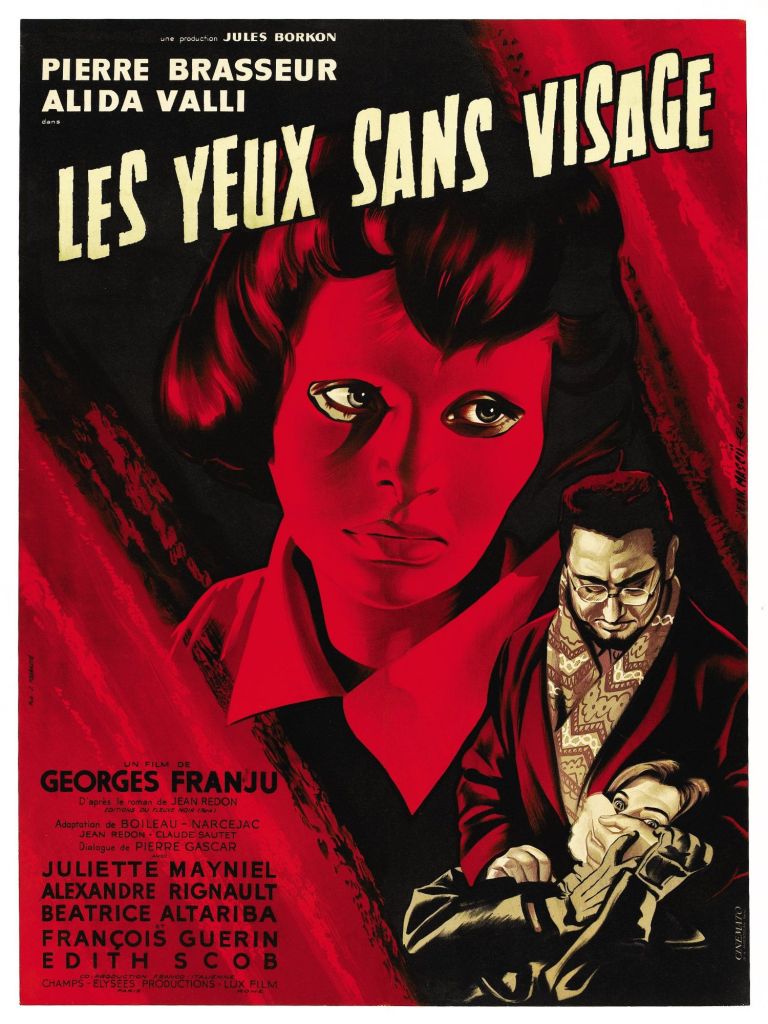
What I know about it:
I’m staying in a room with thin walls. While talking to my mom on the phone, I mentioned maybe watching a French film called Eyes Without a Face for her birthday. She seemed on the fence. After I hung up, my neighbor started playing an unfamiliar mid-tempo ’80s rock ballad. When the chorus hit, the singer kept repeating, “Eyes without a face.” He played it on repeat. A quick lyric search told me it was Billy Idol. I looked the song up on Album of the Year—it has a user score of 96 out of 100. Always a great day when I discover a truly great song I didn’t know. (Also, my neighbor listens to my conversations. Good to know.)
Apparently the song was inspired by this movie. If that’s true, it absolutely can’t be a slasher or gore fest. Idol’s song sounds more like something by The Church or Echo and the Bunnymen. It would fit perfectly on the Donnie Darko soundtrack—melancholy, haunted, and romantic.
That’s all I knew: a 90 on Metacritic, a French title, and a premise about a surgeon who kidnaps young women to repair his daughter’s disfigured face. I assumed the daughter’s eyes would still be intact—the eyes as self, or soul.
—
After the movie,:
This movie did for the scapula what Psycho did for the shower. What a horrifying film for 1960. It’s like David Cronenberg saw James Whale’s Frankenstein and thought, “Pretty good, but what if Dr. Frankenstein were a complete a-hole?”
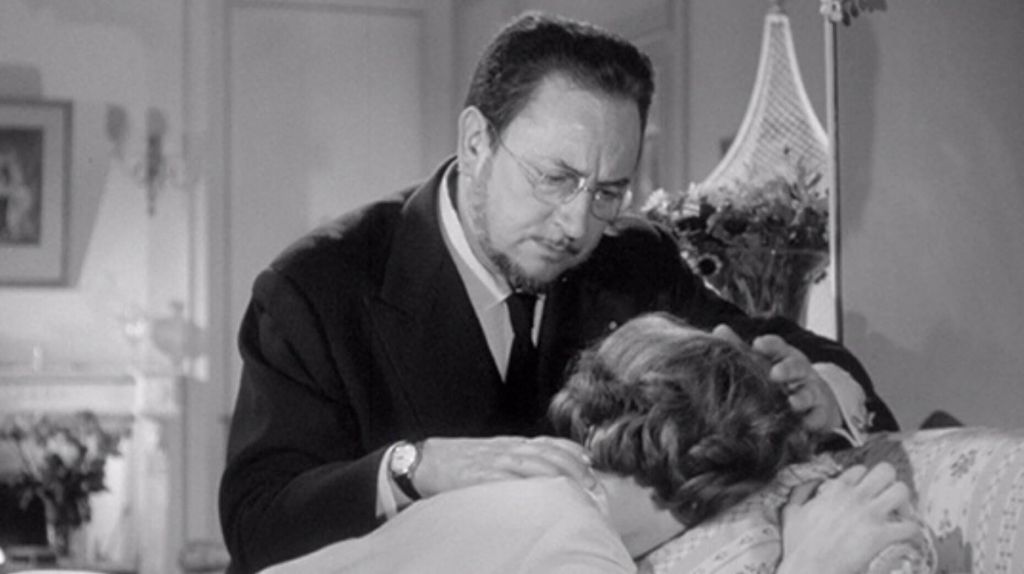
I can’t find many classic movies about a daughter realizing her parents are terrible people. The only two released before Eyes Without a Face seem to be The Daughter of Dr. Jekyll (1957) and Imitation of Life (1959). The Night of the Hunter (1955) fits somewhere between them, though that one’s about a clear villain who wants to kill the daughter.
Why are there no parents as villains before the late 1950s? Old Hollywood probably believed in the nuclear family. And of course, there was the Hays Code—a production code that enforced certain moral standards, including:
> “The sanctity of the home shall be upheld.”
“Parents must not be portrayed in a way that would offend natural filial respect.”
So you couldn’t make a movie like this. But it’s not like anyone was eager to try anyway. Villains acted alone. Showing the villain’s family might have made evil seem ordinary.
The most brilliant thing about Eyes Without a Face is that the serial killer is a respected doctor—so esteemed he regularly gives lectures and has fans. In one scene, two middle-aged women approach Le docteur Génessier after a university lecture on skin transplantation. They shower him with effusive praise:
> “You must feel so proud, Doctor.”
“Such marvelous work you’re doing… your poor daughter, what a tragedy.”
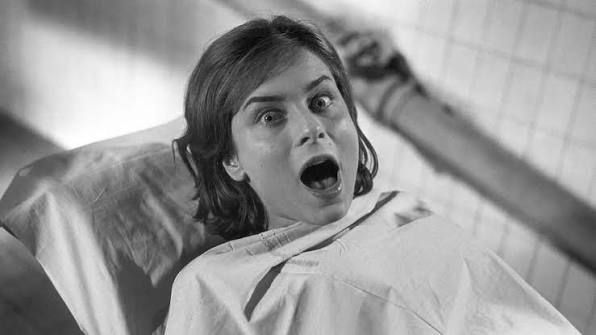
I was half right about how the movie’s title would come into play. The scariest moment isn’t something we see but something we hear: a young woman found in the harbor, her face completely torn off, leaving only the eyes. We’re to assume the entire face—muscle tissue and all—has been removed. The studio allowed this because it could technically make sense that only her skin was gone, but that wasn’t the image I saw in my head. I thought, This is some messed-up serial-killer movie. It’s like the video game Heavy Rain, but if it were filmed in 1959.
The once-beautiful Christiane is the prototypical helicopter child. Her father, Génessier, makes all her decisions for her—including who she might marry (his assistant Jacques, who isn’t allowed to see her disfigured face). This type of father—authoritarian and controlling—was familiar to European audiences. The French would have called him père autoritaire. But to Americans used to seeing the wholesome head-of-household types from “Leave It to Beaver” or “Father Knows Best”, the idea that a father could be controlling in a bad way would have seemed radical.
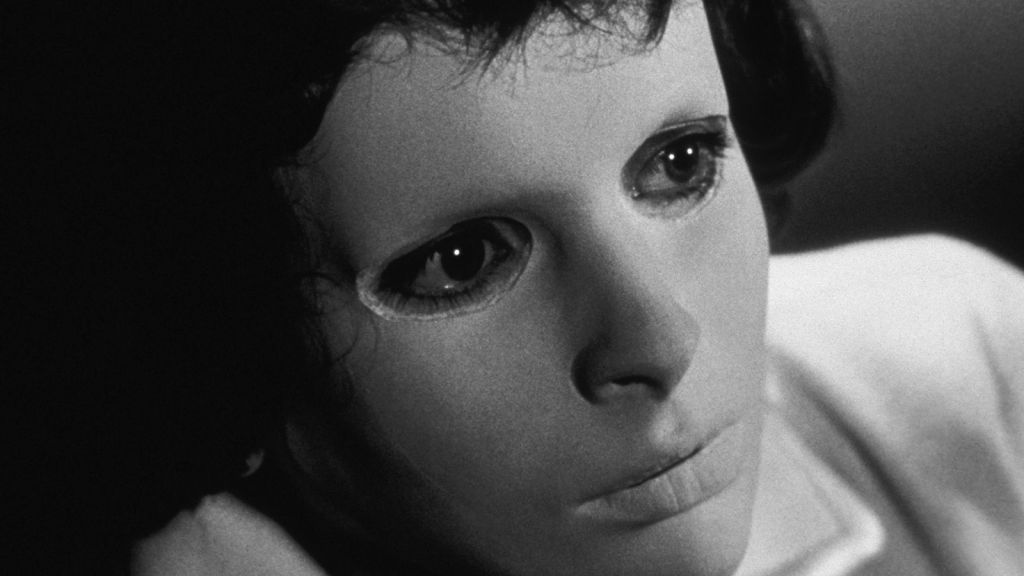
The movie I think of most when it comes to the meaning of Eyes Without a Face is Zach Braff’s Garden State. That film resonated with people who felt trapped in lives their parents designed for them—medicated, compliant, and numb. The tragedy of Christiane isn’t that her face is disfigured or that her life was ruined. The real melancholy comes with realizing you never got to live your life at all.
9.5 / 10

 Avidavr: Media Reviews
Leave a reply to thoughtfullollapaloozac07efc1df8 Cancel reply