A surreal, funny, and slightly chaotic warm-up for future giant Michael Angelo Covino.
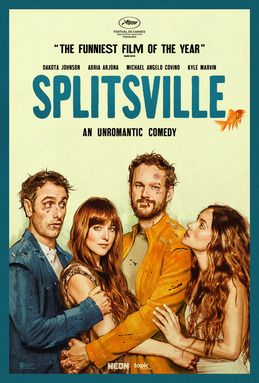
Is it possible to be happy while you and your partner are clearly heading to splitsville?
That’s the question at the heart of Michael Angelo Covino’s second feature, a film about four good people (well, three and a half) struggling with traditional fidelity. Each character is grown yet surprisingly inexperienced, caught between wanting more from their partner and bracing for what happens when that partner moves on.
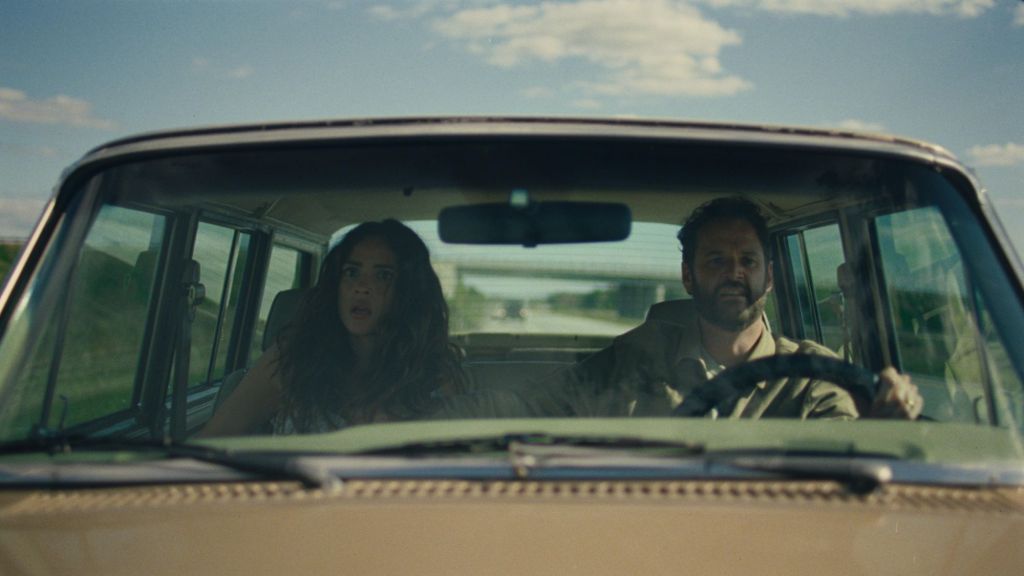
Of course, that premise alone doesn’t explain why this film premiered at the Cannes Film Festival. Splitsville is surreal, bravura filmmaking. Covino takes the idea of a relationship in decline and asks: What if Splitsville were an actual place? What would it look like?
Life in Splitsville is deceptively serene, yet shocks lurk at every corner. Car accidents, brawls, incidents with the law, even fires punctuate the landscape. Just as destabilizing, though, are the quiet tremors in relationships—emotions threatening to bubble to the surface at any moment.
And if there’s one thing the film never forgets, it’s to be funny. Action scenes drag on far past comfort, with intent, and the movie delights in setting up expectations only to veer sharply off course. The IMDb lists the nudity level as “severe,” and if the sight of an unremarkable, non-erect penis offends you, consider this your warning. One member makes repeat appearances—comic relief when maybe least expected.
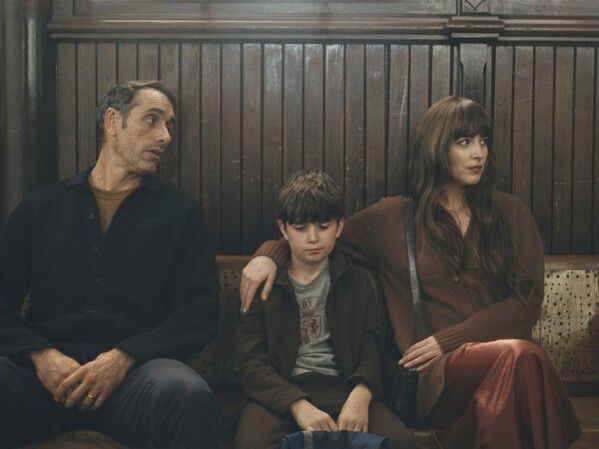
Splitsville feels rooted in mumblecore, recalling the Duplass brothers or Joe Swanberg’s Happy Christmas. But Covino isn’t interested in fly-on-the-wall realism. He smooths out the genre’s rough edges and perhaps parodies it, creating something both more mainstream and more cinematically ambitious. The result feels closer to French absurdist comedies of the ’60s and ’70s—think Blier’s Get Out Your Handkerchiefs or Buñuel’s The Discreet Charm of the Bourgeoisie—but with the kind of gonzo set pieces Scorsese might secretly agree to direct.
Still, it plays like a warm-up lap for Covino rather than the main event. It’s witty and energetic, but a little slight and long-winded compared to contemporaries like Sean Baker (Anora) or Ruben Östlund (Triangle of Sadness).
The cast is uniformly strong—except for Dakota Johnson, the film’s marquee name. Marketed as its centerpiece, she’s instead the weak link, playing what feels like a variation of her usual role. Too prim and flawless for the messiness the film celebrates, she seems miscast. By contrast, Kyle Marvin and Adria Arjona shine as the central couple. Marvin feels like a Seth Rogen shorn of stoner shtick—an everyman capable of working any job—while Arjona recalls a young Salma Hayek, approachable and magnetic. They both feel like people you’d actually want to hang out with, yet not quite like anyone we’ve seen on screen before.
Ultimately, Splitsville is well-made, funny, and visually exciting—worth the trip to the theater even if it doesn’t reinvent the wheel. What it does do is remind us that Hollywood’s hit-making machine could use a new set of tires.
7.5/10

 Avidavr: Media Reviews
Leave a comment