My 27 Movie A-Z Film-a-thon: Day 22.
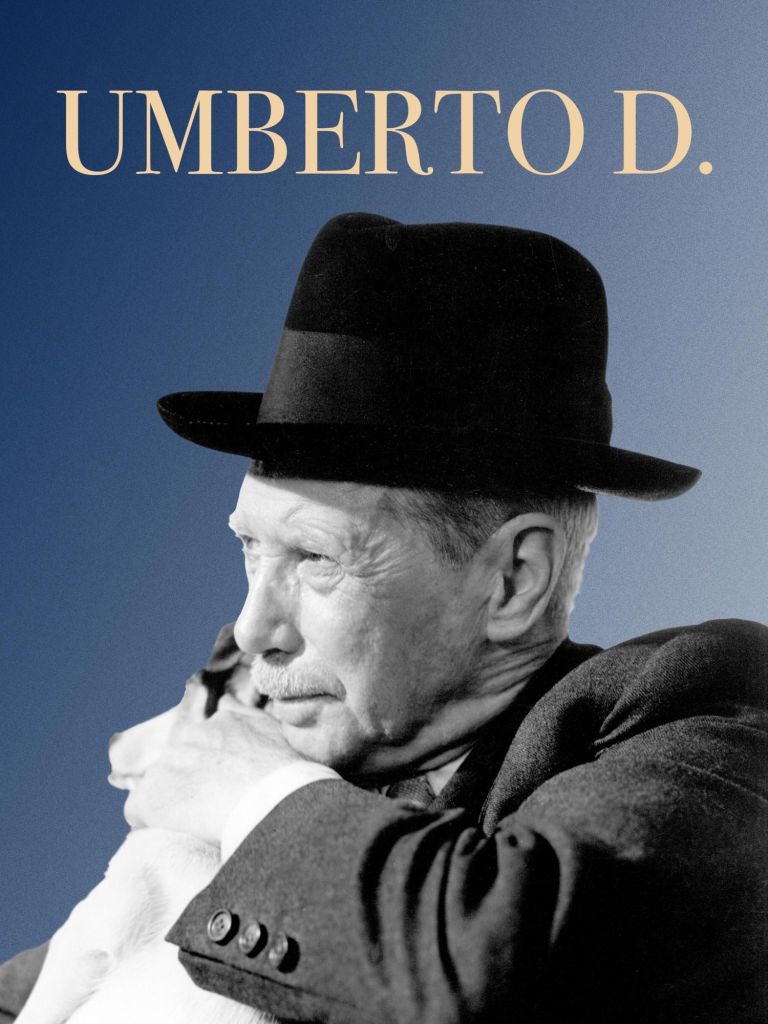
The second most famous film by the director of Bicycle Thieves may not reach the same heights as that masterpiece, but Umberto D. is a sincere and modest minor tragedy—quiet, sad, and human. It’s the second film I’ve seen (after Make Way for Tomorrow) that centers on an elderly person who’s waited too long to address rent or mortgage problems, only to face impending homelessness. In this case, Umberto lives alone with his dog, Flike—and he fears homelessness more for the dog’s sake than his own.
Umberto D. is a prime example of Italian Neorealism, a genre defined by minimal plot, focus on the working class, and an emphasis on realism and humanism. Director Vittorio De Sica employs nonprofessional actors, with Umberto played by Carlo Battisti, a retired professor. His inexperience brings a vulnerability that feels lived-in.
The film follows Umberto Domenico Ferrari, a retired government employee, as he tries to navigate postwar Italy’s economic realities. Early on, we see him walking a picket line to demand an increase inn their inadequate pensions, which are hardly enough to cover rent. His landlady, Antonia, is of the unsympathetic upper class. She wants him out, not out of necessity, but so she can remodel to entertain upper class guests. She refuses partial rent and even endangers his dog. Her cruelty seems rather exaggerated, but maybe not entirely unrealistic.
As modern viewers, we might wish for more context. Did Umberto once have a family or a partner? Is Antonia struggling as well? These omissions prevent the film from becoming truly layered. The sadness here isn’t melodramatic; it’s cumulative, arising from isolation and desperation. Umberto has peers who might care for him, but his pride gets in the way. “I shouldn’t be in this situation!,” he seems to insist—but he is.
The final 15 minutes are rather fantastic, and they elevate the film into that special place. The story is simple but it lingers. Umberto still receives a pension, and it should be possible to scrape by—yet he’s adrift. When the world you expected crumbles, it’s hard to see a way forward. The film doesn’t try to inspire, but it brings dignity to a story of quiet struggle. You come away feeling like you truly knew this man. This is a story that is painfully common, yet rarely told.
9/10
 Avidavr: Media Reviews