A thoughtful elegy that ends as a plea for significance.
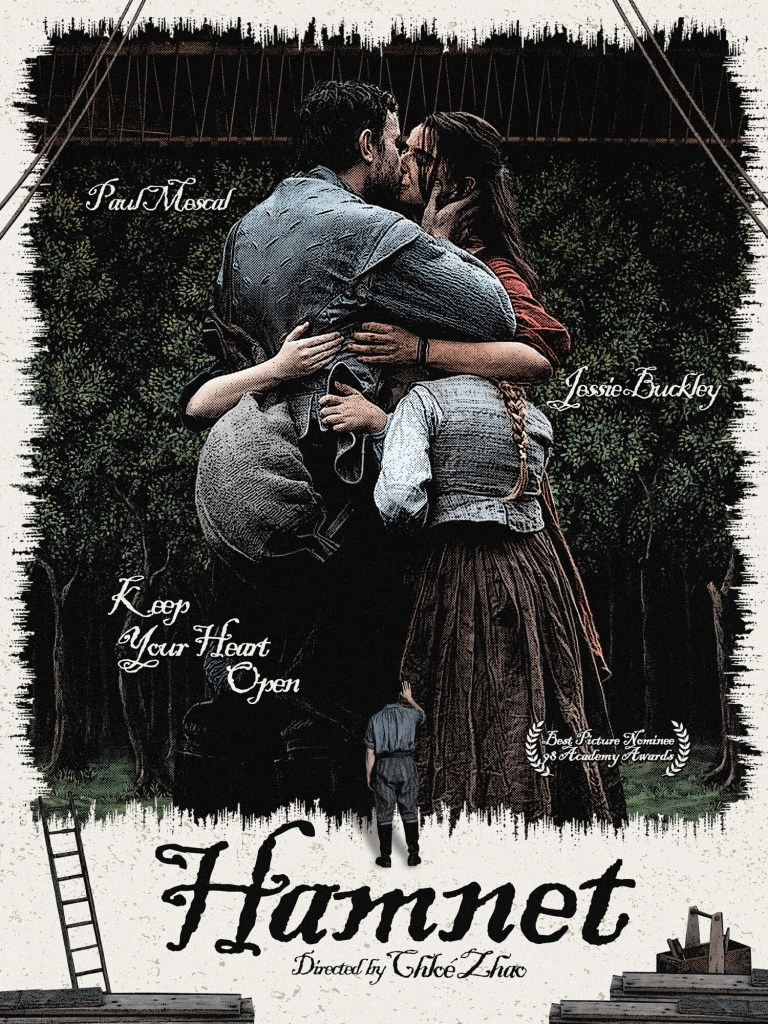
Hamnet is intermittently compelling while you’re watching it, but I don’t think the world will ultimately care very much. The first half works surprisingly well, unfolding with a meditative patience that recalls the style of Chloé Zhao—a comparison that will excite the half of the audience that tolerated Nomadland and bore everyone else senseless. There’s a quiet confidence early on, an observational calm that treats grief as a lived condition rather than a dramatic event. For a while, Hamnet feels like it knows exactly what kind of movie it wants to be.
That confidence collapses by the end. Some have positioned Hamnet as the “real” Shakespeare in Love, but that comparison only highlights how much that film got right. Hamnet can’t decide how its characters are supposed to exist: they often speak like modern people who binge Outlander, then suddenly shift into scenes written in full Shakespearean verse. The tonal whiplash is baffling. Are we meant to believe the audience can’t handle period language—except when it’s convenient?
The final act fails outright. Leaning on Adagio for Strings—arguably the most famously depressing piece of music ever written—to sell Shakespearean tragedy feels desperate, not profound. The camera lingers on Jessie Buckley’s face for so long that people around me literally fell asleep, and the staging of the finale makes entering the center of the Globe Theatre feel about as casual as finding a spot near the stage at a rock concert. I liked too much of Hamnet to recommend against seeing it, but I give a thumbs down to the very elements most people seem to admire.
6/10
 Avidavr: Media Reviews