Goal: Find a movie I never heard of until it started showing up on streaming trends.

—
What I know about it:
To me, this movie is an oddity. It’s like one of those titles that shows up on How Did This Get Made? alongside Death Spa or Chopping Mall—except this one actually has an overall good reputation. If it’s decent, why have I never heard a single respected critic mention it? Meanwhile, eXistenZ and Event Horizon weren’t exactly hits, yet people bring them up constantly on YouTube.
The plot sounds intriguing enough: a group trapped in a mechanical maze that might be some layer of Hell. They move up, down, sideways—each new room maybe leading to freedom. I pictured Hellraiser by way of Saw, two movies franchises with famously devoted fans. So why doesn’t Cube ever come up in the same breath?
I couldn’t find a proper trailer. I showed a clip to Josh on YouTube, and he wasn’t impressed. Maybe that’s a good sign. The movie doesn’t seem to sell itself, so maybe that is why no one has heard of it. He tends to like things that announce themselves loudly (Heretic, for example). Cube doesn’t seem to do that. Maybe the people who love it found it quietly—and showed it to their friends.
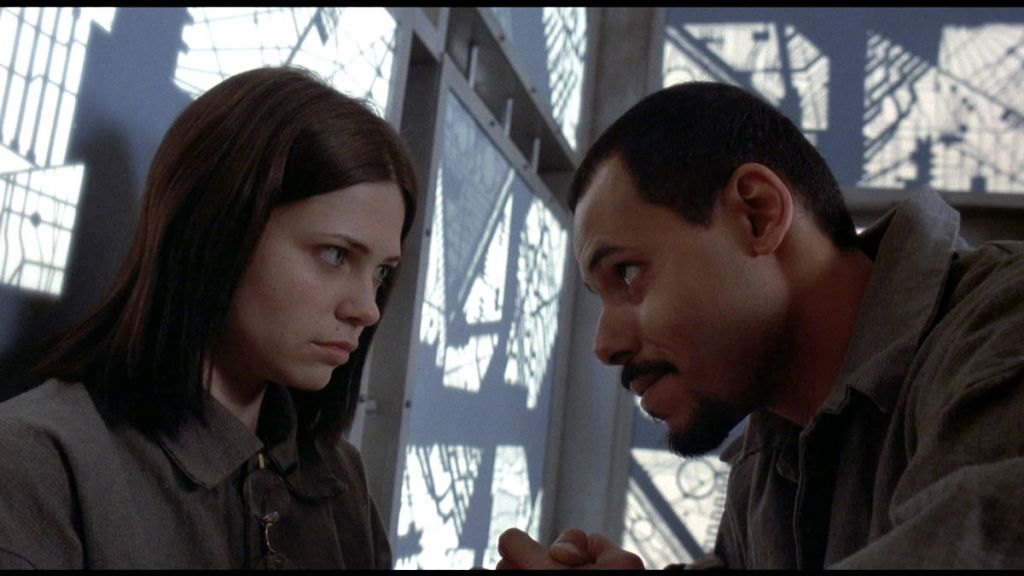
I first heard of Cube in 2006, when it was the No. 1 most-borrowed DVD from Netflix in Carmel, Indiana. One month, it sat at the top of the local trends list like a mystery no one could explain. I’ve seen it pop up on other streaming charts since—but I’ve never once heard anyone talk about it. Ever.
—
After the movie:
This was basically Canadian Escape Room: The Movie. Which is kind of impressive, considering it came out in 1997—long before “escape rooms” were a thing. I first heard of a real-life escape room in 2014, when they started popping up all over the West Coast. In Indianapolis, a place opened called The Escape Room. A year later, another one opened called Escape the Room. They weren’t connected, but I beat both. I was good, kinda—successfully completed both, where the success rate for each one was about 40%. Usually, I wasted time on red herrings, but I’d crack the last puzzle with seconds left.
Cube didn’t invent the escape-room concept, but it definitely saw the appeal coming. Its roots are in point-and-click adventure games and Dungeons & Dragons modules. Sierra made some of the first “escape room”–style text adventures like Mystery House, where you typed in commands to make your way through puzzles. The version of this idea I played was Maniac Mansion — a Lucasfilm Games classic that added comic relief and actual personality. Every room in point-and-click adventure games is an escape room, and only the elite few wanted to think enough to make their way through those. The Secret of Monkey Island and Sam & Max Hit the Road are still two of the best games ever made.

And before all that, there was Dungeons & Dragons. The legendary module Tomb of Horrors (Gary Gygax, 1975) was built entirely around the idea of a cruel puzzle dungeon. Players swapped horror stories about total party kills. The struggle was real.
When I was a kid, that whole genre fascinated me. My favorite was Jim Henson’s Labyrinth, but I also loved Scooby-Doo Meets the Boo Brothers (1987)—a movie where Shaggy inherits a haunted mansion and has to solve puzzles to find a hidden fortune. Looking back, that was basically The Da Vinci Code for children.
The problem is, puzzle-solving doesn’t translate well to film. Watching someone instantly solve something you never understood isn’t satisfying. It works in a game, or maybe a serialized show—like Batman cliffhangers: How will they get out of the conveyor belt trap this time? Stay tuned next week. Same Bat-time, same Bat-channel.
But Cube doesn’t build a world to make those puzzles matter. There’s almost no setup or lore—just math equations and quick deductions. The puzzles function as MacGuffins, filler between moments of panic. You can’t play along. You just wait to see who dies next.
Still, it’s fun. The writing’s solid, and most of the acting works. The “villain” type might be the worst performer here—but that’s part of the fun. (Play “Spot the Worst Actor” at home and see if you agree.)
The direction feels dated, full of leftover ’90s TV transitions. Even when there is gore, the whole thing looks like an episode of Goosebumps or early Buffy the Vampire Slayer—but cheaper.
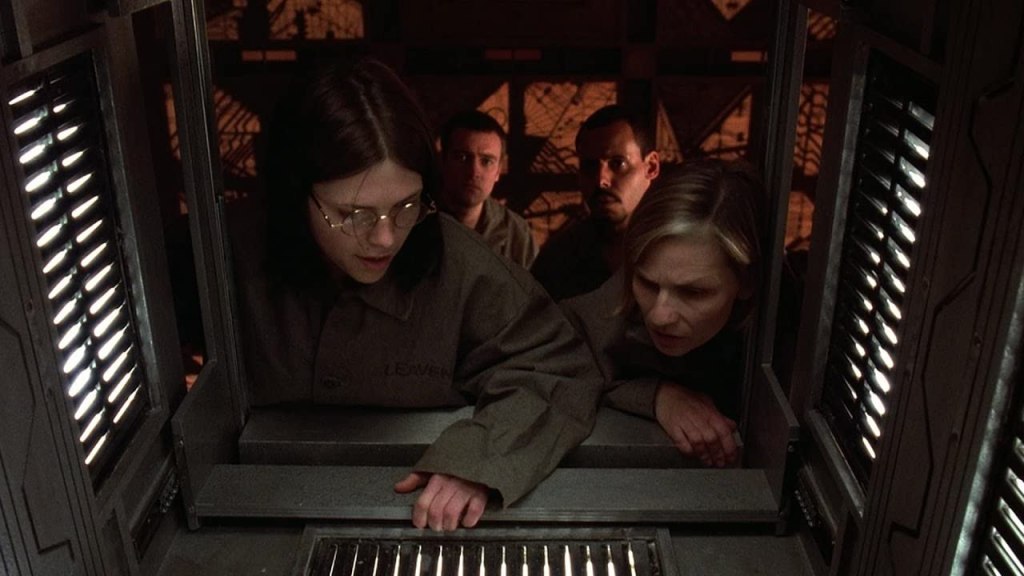
The ending, though, is a letdown. It just… stops. No emotional payoff, no moral, no world-building to make sense of anything. It’s one of those “Wouldn’t it be messed up if…?” movies that mistakes mystery for meaning. I think the implication is aliens—but it could be anything, and the movie doesn’t seem sure either.
I liked Cube. I could almost recommend it. It deserves credit for being nothing like anything else from its decade, but it’s the kind of film that practically begs for a remake.
5.5 / 10
 Avidavr: Media Reviews