Tag: October horror project

  • Day 12: Cube (1997)

    Goal: Find a movie I never heard of until it started showing up on streaming trends.

    What I know about it:

    To me, this movie is an oddity. It’s like one of those titles that shows up on How Did This Get Made? alongside Death Spa or Chopping Mall—except this one actually has an overall good reputation. If it’s decent, why have I never heard a single respected critic mention it? Meanwhile, eXistenZ and Event Horizon weren’t exactly hits, yet people bring them up constantly on YouTube.

    The plot sounds intriguing enough: a group trapped in a mechanical maze that might be some layer of Hell. They move up, down, sideways—each new room maybe leading to freedom. I pictured Hellraiser by way of Saw, two movies franchises with famously devoted fans. So why doesn’t Cube ever come up in the same breath?

    I couldn’t find a proper trailer. I showed a clip to Josh on YouTube, and he wasn’t impressed. Maybe that’s a good sign. The movie doesn’t seem to sell itself, so maybe that is why no one has heard of it. He tends to like things that announce themselves loudly (Heretic, for example). Cube doesn’t seem to do that. Maybe the people who love it found it quietly—and showed it to their friends.

    I first heard of Cube in 2006, when it was the No. 1 most-borrowed DVD from Netflix in Carmel, Indiana. One month, it sat at the top of the local trends list like a mystery no one could explain. I’ve seen it pop up on other streaming charts since—but I’ve never once heard anyone talk about it. Ever.
    After the movie:

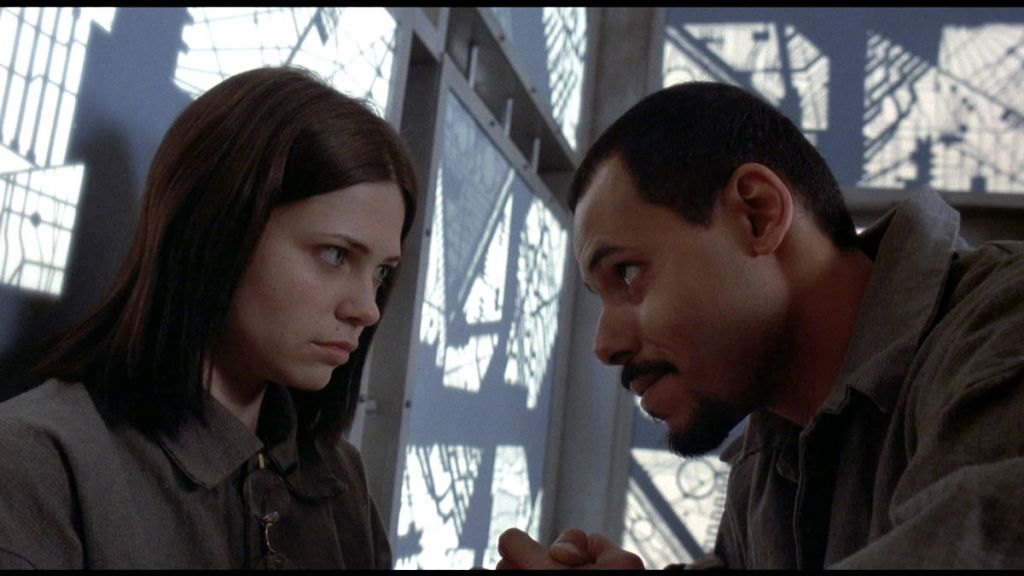
    This was basically Canadian Escape Room: The Movie. Which is kind of impressive, considering it came out in 1997—long before “escape rooms” were a thing. I first heard of a real-life escape room in 2014, when they started popping up all over the West Coast. In Indianapolis, a place opened called The Escape Room. A year later, another one opened called Escape the Room. They weren’t connected, but I beat both. I was good, kinda—successfully completed both, where the success rate for each one was about 40%. Usually, I wasted time on red herrings, but I’d crack the last puzzle with seconds left.

    Cube didn’t invent the escape-room concept, but it definitely saw the appeal coming. Its roots are in point-and-click adventure games and Dungeons & Dragons modules. Sierra made some of the first “escape room”–style text adventures like Mystery House, where you typed in commands to make your way through puzzles. The version of this idea I played was Maniac Mansion — a Lucasfilm Games classic that added comic relief and actual personality. Every room in point-and-click adventure games is an escape room, and only the elite few wanted to think enough to make their way through those. The Secret of Monkey Island and Sam & Max Hit the Road are still two of the best games ever made.

    And before all that, there was Dungeons & Dragons. The legendary module Tomb of Horrors (Gary Gygax, 1975) was built entirely around the idea of a cruel puzzle dungeon. Players swapped horror stories about total party kills. The struggle was real.

    When I was a kid, that whole genre fascinated me. My favorite was Jim Henson’s Labyrinth, but I also loved Scooby-Doo Meets the Boo Brothers (1987)—a movie where Shaggy inherits a haunted mansion and has to solve puzzles to find a hidden fortune. Looking back, that was basically The Da Vinci Code for children.

    The problem is, puzzle-solving doesn’t translate well to film. Watching someone instantly solve something you never understood isn’t satisfying. It works in a game, or maybe a serialized show—like Batman cliffhangers: How will they get out of the conveyor belt trap this time? Stay tuned next week. Same Bat-time, same Bat-channel.

    But Cube doesn’t build a world to make those puzzles matter. There’s almost no setup or lore—just math equations and quick deductions. The puzzles function as MacGuffins, filler between moments of panic. You can’t play along. You just wait to see who dies next.

    Still, it’s fun. The writing’s solid, and most of the acting works. The “villain” type might be the worst performer here—but that’s part of the fun. (Play “Spot the Worst Actor” at home and see if you agree.)

    The direction feels dated, full of leftover ’90s TV transitions. Even when there is gore, the whole thing looks like an episode of Goosebumps or early Buffy the Vampire Slayer—but cheaper.
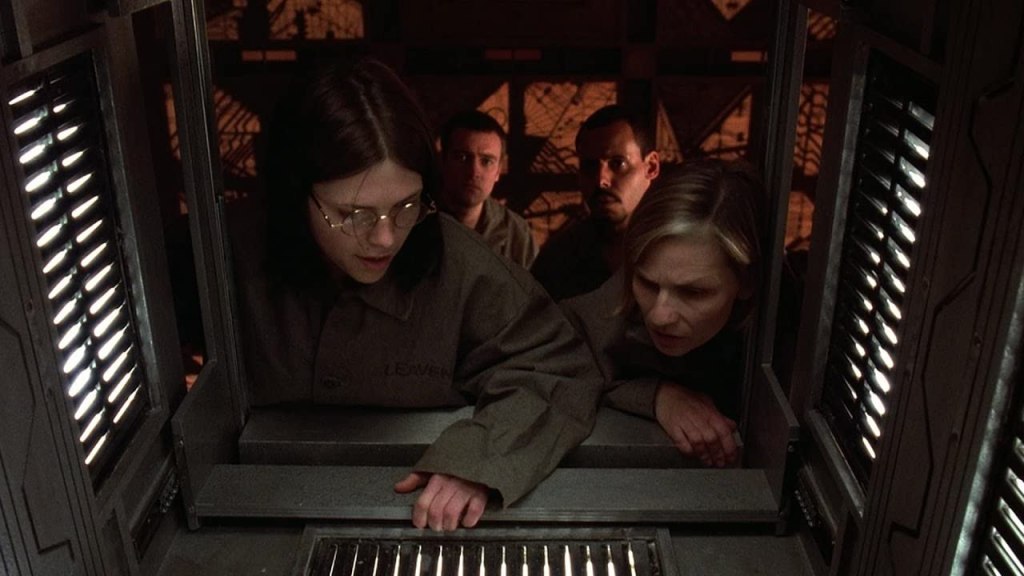
    The ending, though, is a letdown. It just… stops. No emotional payoff, no moral, no world-building to make sense of anything. It’s one of those “Wouldn’t it be messed up if…?” movies that mistakes mystery for meaning. I think the implication is aliens—but it could be anything, and the movie doesn’t seem sure either.

    I liked Cube. I could almost recommend it. It deserves credit for being nothing like anything else from its decade, but it’s the kind of film that practically begs for a remake.

    5.5 / 10
  • Day 8: Friday the 13th (1980)

    Goal: Find a horror classic I have no interest in, just to cross it off my list.

    What I know about it:
    I’ve seen bits and pieces of several Friday the 13th sequels. Every October, there’s usually a marathon, and I’ll turn it on for as long as I can stand. This isn’t much. I’ve definitely seen parts of 2, 3, 5, 7, and 8, and probably 4 and 6, though I couldn’t tell you which is which.

    My favorite was Part II—the one where Jason still had a sack over his head because the hockey mask hadn’t been invented yet. I caught the last forty minutes of it once, and it was shocky but exciting, almost like John Carpenter’s Halloween. I thought maybe I was missing something by not watching these all the way through. Then Part III came on and I laughed at how bored I was. Dull. In 3D.

    Still, there’s a weird pleasure in trying to tell the sequels apart. Turn on the Friday the 13th channel on Pluto TV and make everyone guess which entry it is. Sure, they’re all bad, but what kind of bad? Cheesy bad? Slow bad? Dialogue-from-another-planet bad? You’ll never remember the characters or even the kills, but the flavor of badness is always distinct.

    Despite all that, I’d never actually seen the original Friday the 13th. Cable marathons always started with Part II. I figured maybe the first one was too rough or too different. I’d heard The New Blood was the most entertaining, but ten minutes in, I realized there were better ways to spend an evening.

    So: my first Friday the 13th, start to finish.

    After the movie

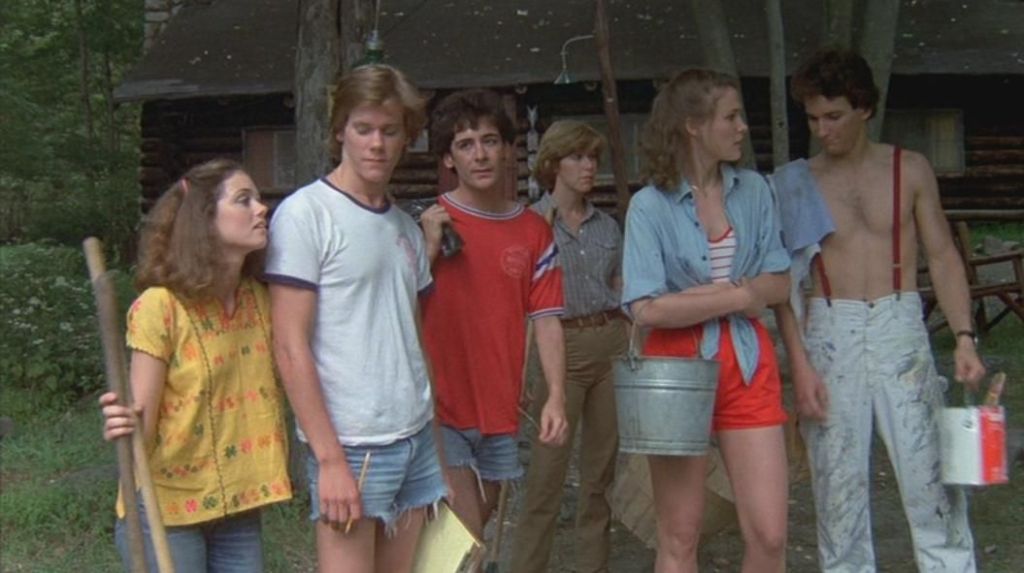
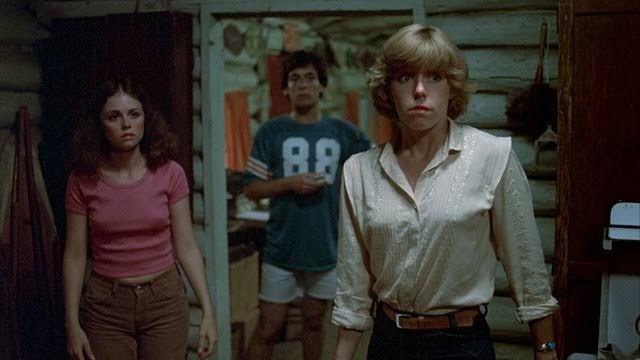
    That was… disappointing. Not because I hated it, but because I liked it at first. The first 45 minutes are immensely watchable: great introductions, fun little scenes, an effective sense of menace. At their best, Friday the 13th movies aren’t about bad dialogue—they’re about realistic bad dialogue. These kids actually sound like kids.

    Case in point: the Strip Monopoly scene. Everyone played Monopoly in 1980. Everyone had heard of stripping games. Combine the two and you get, well, this.

    > Brenda: “OK, you’re the banker. Remember what the penalty is for losing.”
    Bill: “What’s the penalty?”
    Brenda: “You lose a piece of clothing every time you lose money.”

    Girl, are you sure that makes sense? You lose money every turn in Monopoly. Are you wearing a hundred articles of clothing? Do you even own pants?

    No one ever seems to put their clothes back on, and, in true Monopoly fashion, they quit before the game even begins. One girl runs back to her cabin barefoot. They’ll finish in the morning, I guess. (Where are the camp’s kids?)

    The first half hour works because it forgets to be scary. It’s just a slice-of-life portrait of bored teenagers in 1980—hiking, joking, killing time. Honestly, if the whole movie had been that, I might’ve loved it on principle. It feels more like an art-house hangout movie than a slasher.

    Then the ideas dry up. The film turns into a faceless murder mystery where you never see the killer, just the aftermath. The deaths get bigger, the suspense smaller. The movie stops being about anything.

    The sequels fixed what didn’t work—mask, mythology, pacing—but broke what little it tried to do right. In time, Friday the 13th became the franchise that perfected its own mediocrity. Critics hated the original for being a ripoff of Halloween; Gene Siskel even spoiled it by naming the killer in his review out of spite. It has a 22 on Metacritic. But time has been kind: now it sits comfortably above 60% on Rotten Tomatoes, the horror fan’s version of “we were wrong.”

    I think people admire it now the way musicians admire the rough early versions of their genre. Fred Durst once said he liked the Beastie Boys because “it’s nice to see an early example of our style of music done right.” Friday the 13th is like that—an imperfect template everyone else copied to death. It didn’t invent the superstition, the killer, or the kids, but it invented the business model.

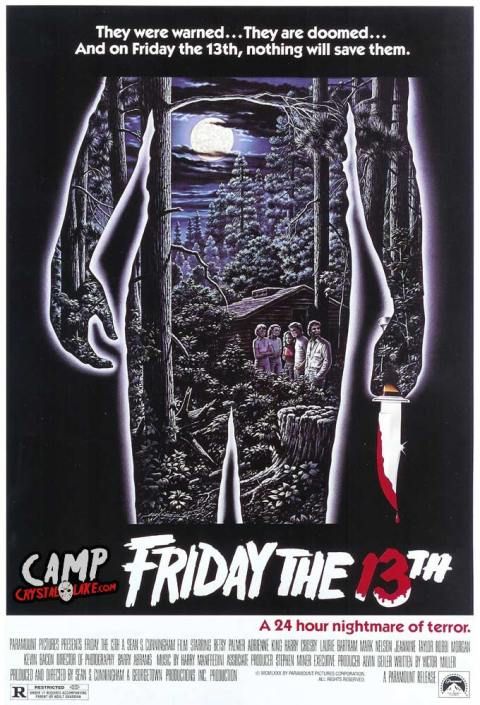
    In 1979, producer Sean S. Cunningham took out a full-page Variety ad for a movie that didn’t exist.

    > “FROM THE PRODUCERS OF LAST HOUSE ON THE LEFT — FRIDAY THE 13TH — the most terrifying film ever made.”

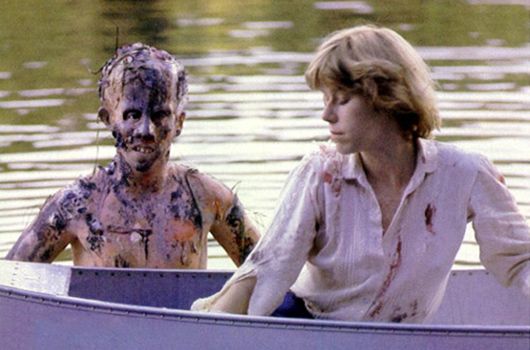
    No script, no plot, just a title. He saw that Halloween proved a scary date could sell, so he picked the unluckiest one on the calendar. The ad worked, and within months he had to start filming. Victor Miller wrote a quick script about camp counselors, a drowned boy, and his vengeful mother.

    It’s not a great movie. But it is a great idea for one, or at least a great title they were determined to turn into *something* everyone would want to see eventually. It is the series that perpetually almost had an idea that really, really worked.

    *Oh well. We’ll market it anyway. *

    Maybe the purest example of a movie that exists because it sounded like one.

    5/10

  • Day 7: Heretic (2024)

    Goal: Find the most notable current sleeper horror hit.

    What I know about it:

    Next to nothing. It’s got a 90% on Rotten Tomatoes and a 71 on Metacritic. For this week’s theme, I wanted a movie that feels big but that I somehow know literally nothing about.

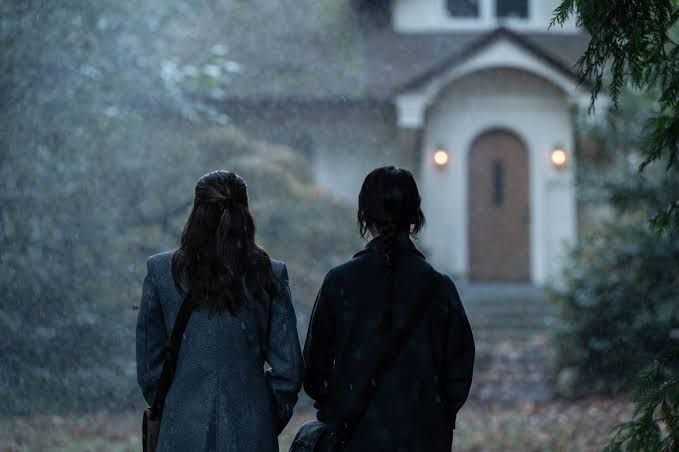
    It has Hugh Grant and it seems to be about Mormons. He’s some kind of weird loner with a torture house. It seems like the movie everyone will still be talking about in five years. Just a hunch. Let’s see if I’m right.

    After the movie:

    Do you remember when Bend It Like Beckham came out, and at first you wondered how they got Kate Winslet to seem 18 years old? Then you realized it wasn’t Kate Winslet but her strange, skinny doppelgänger named Keira Knightley? She ended up going pretty far, mostly because a lot of screenwriters had been writing parts for Kate Winslet five years earlier — and Winslet would’ve turned them down anyway. Keira Knightley turned out to be great. But she was no Kate Winslet.

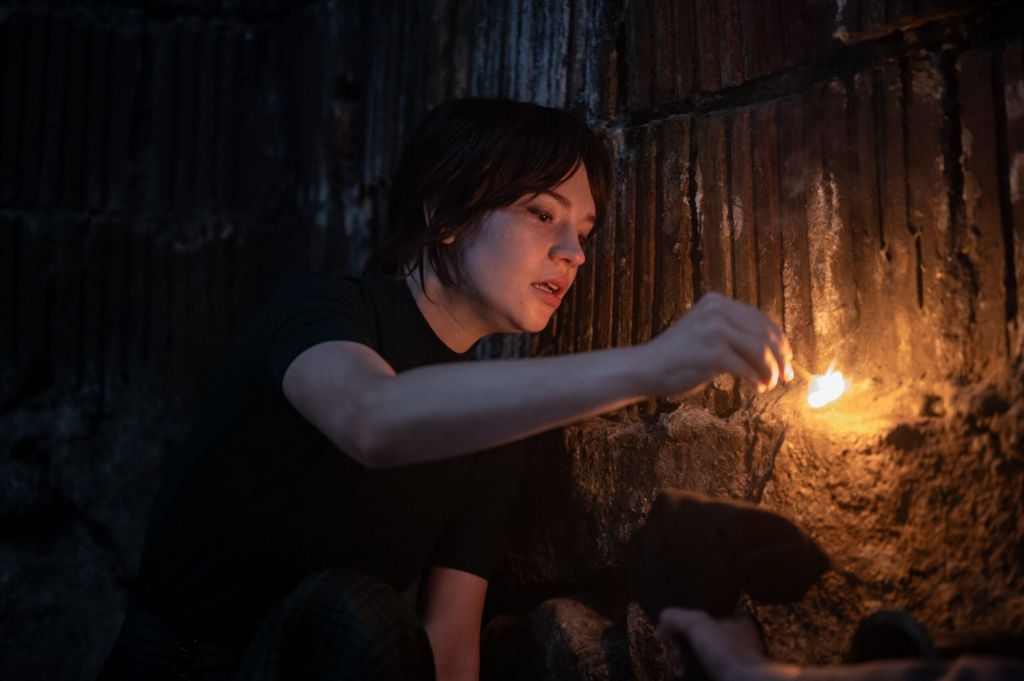
    Sophie Thatcher is the new Keira Knightley. She’s not getting cast in parts written for Kate Winslet — she looks and sounds exactly like Emma Stone. I’d wager Sophie Thatcher is actually a more natural actress. She’s great in Heretic, and even better in 2025’s sleeper hit Companion, which I actually recommend even more for this week’s theme: “the sleeper horror hit.”

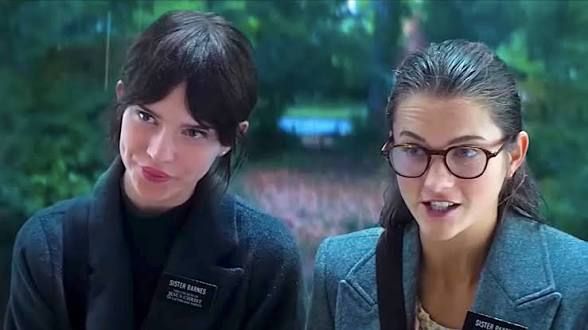
    Sophie Thatcher feels so much like Emma Stone that there’s a bit of a “new Coke” imitation effect going on. In Companion, that worked perfectly because she was supposed to feel like an imitation of the real thing. But in Heretic, there’s a little whiplash when she starts talking. How did this extremely smart, modern girl get cast as a Mormon missionary?

    If this movie had been made twelve years ago, Emma Stone would’ve been perfect. She had that “smart but innocent” quality — the thing that peaked with Poor Things. Sophie feels like Emma’s 12-years-younger little sister who also decided to act. Seeing this modern, post-ironic type trying to convert unsuspecting Christians to this quirky, folksy little underdog religion… I just wanted to say, “Shouldn’t you be in Brooklyn? Go home.”

    I’m stalling. What was the movie and what did I think of it? It was small and imteresting. Honestly, it feels like it could’ve been a play — maybe one converted to film at the last second. This is a horror movie tailor-made to play at sorority movie nights at Brigham Young University. Modern girls who freely explore the world, who’ve seen South Park and homemade internet porn, yet firmly believe in their mission: to tell the world about their faith. They’re believable. Exactly as good as young people who’ve never had a reason to question what they believe.

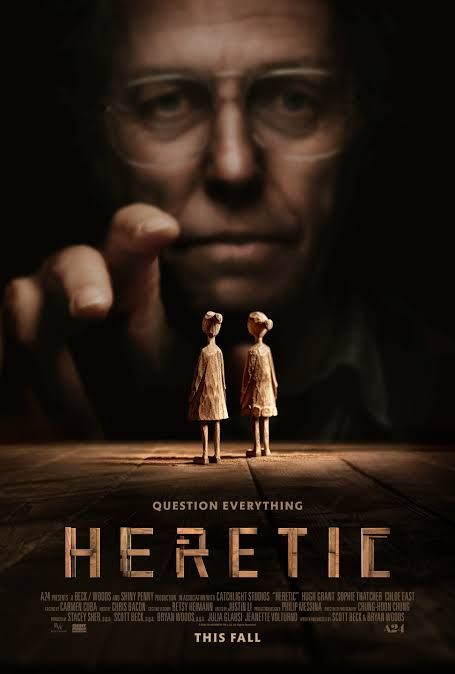
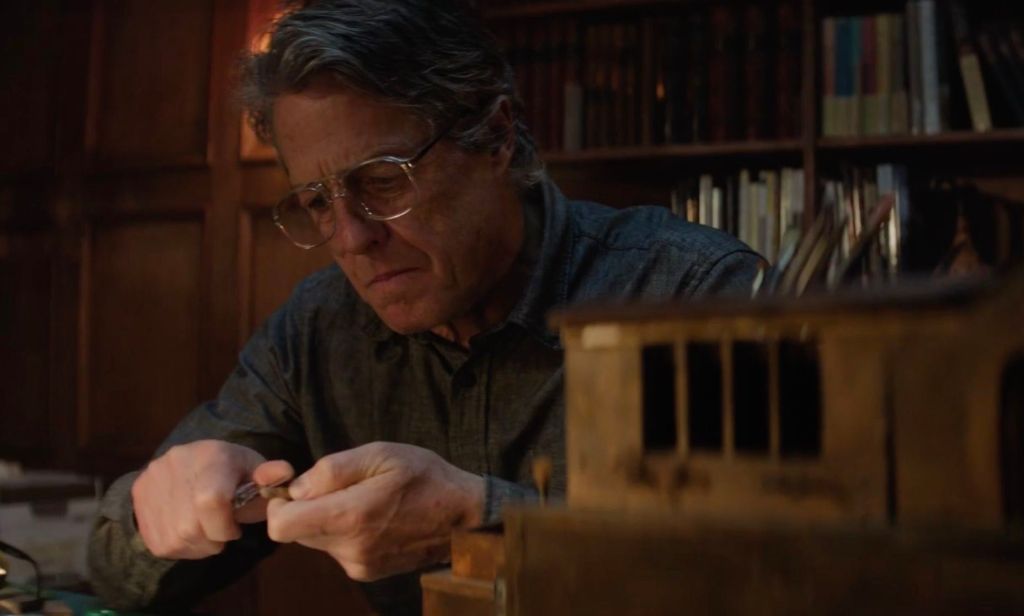
    On the other side of that coin is Hugh Grant as Mr. Reed, the titular “heretic” — every Mormon missionary’s worst nightmare. The poster has him smiling, staring at a game board with the two sisters as miniature chess pieces. Mr. Reed plays with them like a cat tossing a mouse, keeping himself amused before the kill. “You still believe that my wife is in the other room baking blueberry pie, despite all the evidence to the contrary.”

    Heretic has a handful of great ideas, and kind of a boatload of padding. Case in point: in addition to religion, Mr. Reed is obsessed with copyright disputes. He brings up two examples — Monopoly and “Creep” by Radiohead — as evidence that remakes and copies are more successful than originals.

    He’s got a point with Monopoly. I’m a board game hobbyist, and even I’d never heard of The Landlord’s Game, the 1904 prototype Monopoly ripped off almost entirely. Looking it up online made me respect it even more. One of its “Chance Cube” outcomes said, “5: Caught robbing a hen-roost: Go to jail. 10: Caught robbing the public. Take $200 from the board. The players will now call you Senator.” You can’t copyright board-game mechanics — or religious texts, for that matter. Mr. Reed makes that point too: religions are all just cover versions of each other.

    Where he loses me is with his deep affection for The Hollies’ “The Air That I Breathe.” Yes, the guitar progression is the same as “Creep,” and Thom Yorke’s phrasing is similar. But “The Air That I Breathe” has no hook. It’s a song no one under 70 cares about. The Hollies were basically the Thomas Edison of 1970s pop — taking half-forgotten ideas and dressing them up without subtlety. I’d have been way more impressed if Mr. Reed compared Joseph Smith to The Hollies directly, and left Radiohead out of it.

    Screenwriter, I see what you’re doing. But no one likes that song.

    But that last shot? Very good — it should be studied. It’s nice when little moments call back and actually have purpose. There’s a famous movie that ends with a man believing he survived a horror, cutting into a birthday cake… and we realize he’s still trapped, imagining a happy ending. Heretic’s ending is like that — but more artful. It’s not trying to scare you with a hand bursting from the ground next to a gravestone. It’s believable — truthful about what happens to the mind when coping with an actual human tragedy. A perfect little movie moment.

    Still, this is a decent movie. It feels like a filmed play — one that’s not really worth seeking out unless you’re curious. It doesn’t have much going for it other than novelty and a few twists, almost all in the first 40 minutes.

    If you see it, maybe you’ll agree.

    (That’s not a spoiler.)

    6.5/10

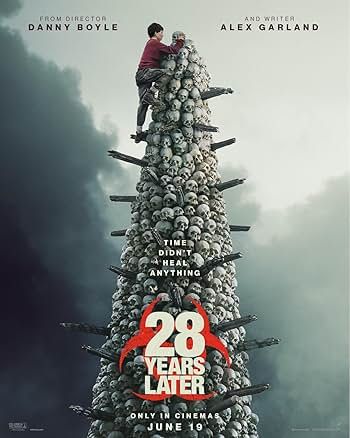
  • Day 5: 28 Years Later (2025)

    Goal: Find a movie that everyone will watch for Halloween this year.

    28 Years Later (2025)

    What I know about it:

    I saw 28 Days Later twice, 22 years ago. There was nothing else like it at the time, and it was great. I was a big George Romero fan at that age, and I even made a short zombie movie as part of my senior project in college. It was called Oh, No! Zombies!!! and was 45 minutes long. I kind of resented 28 Days Later because there were absolutely no zombie movies coming out at that time, and I felt very protective of my own private toy.

    I finally watched 28 Weeks Later (2006) back in March and had a revelation: fast zombies seem very weird in 2025. We now know what zombies are like — they’ve been around in everything from The Walking Dead to Game of Thrones. We’re used to zombie tropes, and it just seems strange now that there is exactly one zombie franchise that thinks it makes sense for zombies to move faster in decay.

    28 Weeks Later arguably did not work. It has more great ideas than any zombie movie since George Romero first injected new life into the genre 50 years ago. But the internal logic was borderline nonsensical, and characters trended toward making inexplicable decisions. It’s the kind of movie that will be great once properly remade (and perhaps remade again).

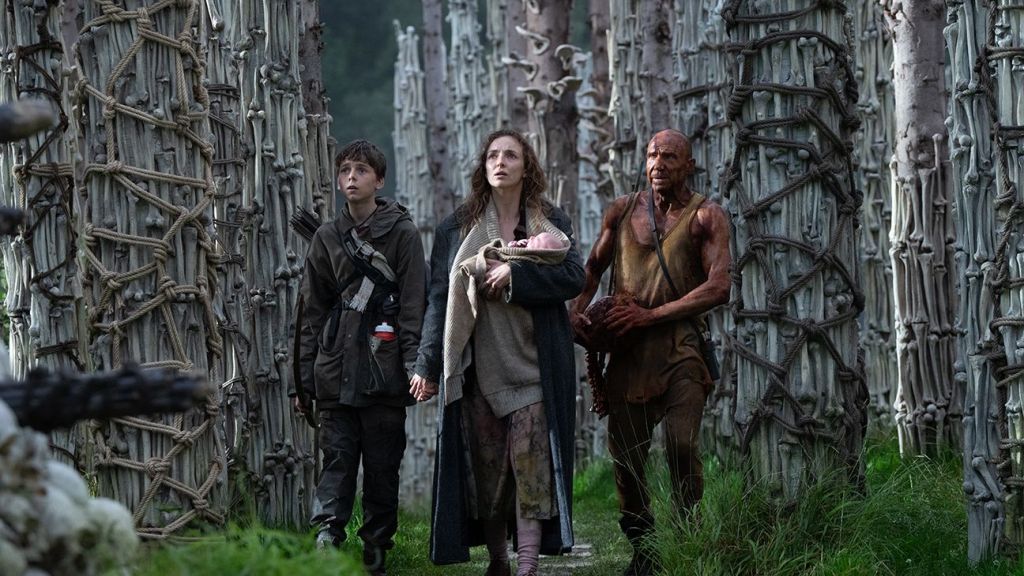
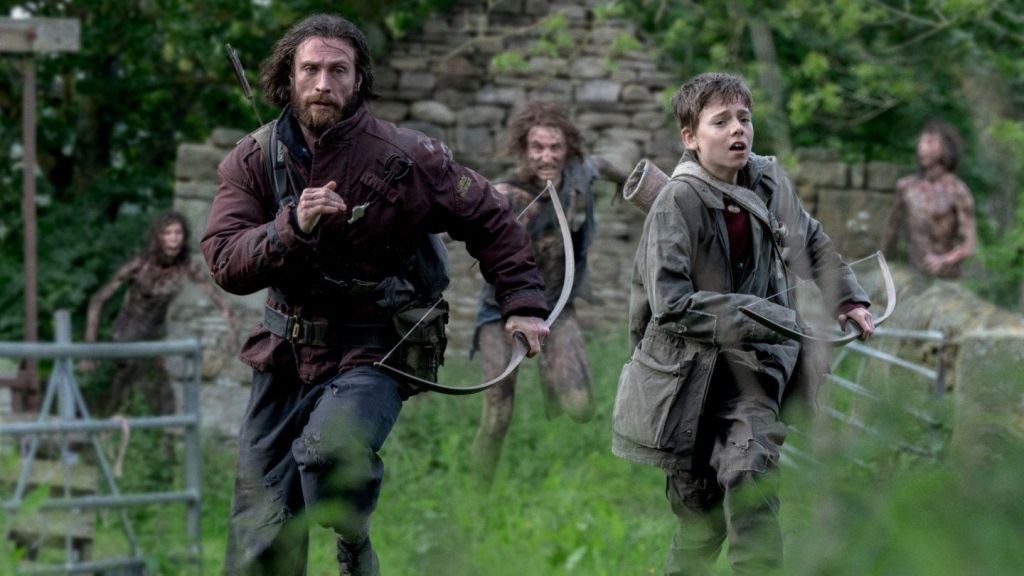
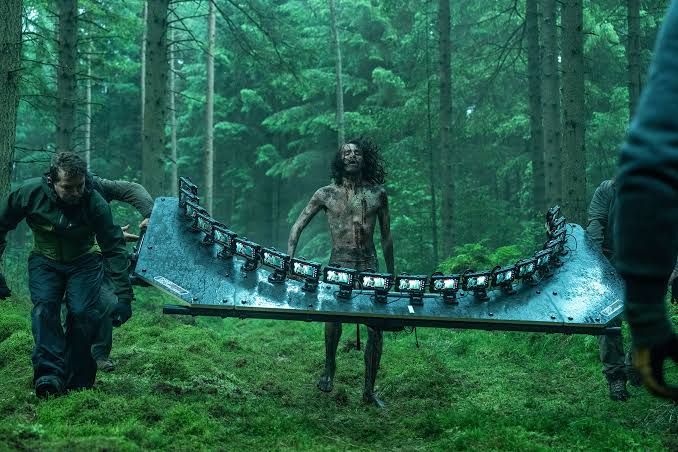
    The pictures from 28 Years Later look phenomenal. 28 Weeks Later seemed kind of like a throwaway movie that somehow got people to really like it. 28 Years Later seems like a very important movie to Danny Boyle. He stepped in to direct this himself. He’s tried to make Oscar-caliber movies for years, with nothing panning out for a while. I believe he saw this as something that had true potential if it was done the right way — and he didn’t want to leave that to anyone else. (I think the flaws of 28 Weeks Later are easy to see, even if you really like the movie.)

    After the movie:

    Bra. Vo.

    If you’re looking for a movie that’s a visceral artistic experience — every sound and visual image contributing to an intense wave of beauty — this is the kind of movie you’re looking for.

    Watching 28 Years Later reminds me of watching hanabi taikai, Japanese firework shows. I once watched the Katakai Fireworks Festival (on YouTube) during a down period in my life. The experience — seeing one 15-minute firework show curated like a living garden, set to music — created this splash of joy that made me feel artistically satisfied. One 15-minute show after another, lasting over two hours. There was no plot, but artistically it could not have made any more sense. 28 Years Later is akin to that, with artfully considered zombie splatter gore.

    This is a child-on-an-Odyssey movie, a strangely under-seen genre in cinema. It has infinite potential, and when done well, it produces many people’s favorite films (The Wizard of Oz, E.T., The NeverEnding Story, Spirited Away, Pan’s Labyrinth, The Iron Giant). Pixar, strangely, rarely makes a true child-on-an-Odyssey movie, other than Coco, which I hate.

    The story is about 90% unintelligible to Americans — which I think is a point of British pride to Boyle and many others who live in that tiny segment of the world. I watched this movie with tiny subtitles, which I couldn’t read quickly, so they were of little use. The brilliance here is that you don’t need to understand the words or sentences to follow the plot. At a certain point, Ralph Fiennes enters the movie, saving the day for most Americans who will finally understand a bloody thing one character is saying.

    This is bravura direction. Every moment is beautifully realized, and the actors inhabit their roles with confidence, understanding what truly matters. The world is shit, but twelve-year-old Spike has nothing to compare it to. The world is full of the diseased, but the only ones who matter to him are his family.

    The movie begins with a room full of little children watching Teletubbies, likely in 2002 — when the world first forever changed. Seeing the world kept to that blueprint, one that knew progress only up to the year when DVD players were all the rage and smartphones had not yet been realized — the world saw very little progress to be undone compared to what we know now. I’m actually a little jealous of the inhabitants of 28 Years Later. If I didn’t have an Android phone in my hand 18 hours a day, I would not know how to do anything.

    The cinematography is as good as you’ll see in a motion picture this year. The editing is extremely strong, stylized in a way that makes sense alongside Danny Boyle’s earlier work. But the MVP here has to be the score, written by the band Young Fathers — a Scottish experimental hip-hop group that’s largely unheard of in the Western Hemisphere. I know of them but never connected with their music in a way that made me want to return to it. I now feel like I was mistaken. The sound of 28 Years Later feels timeless and universal. It sounds equally like the year 2025 and like there is no time at all. This is how gods would likely score a story — with drama and ephemeral curiosity.

    28 Years Later is about accepting true death. The sadness isn’t losing everyone you know to a zombie apocalypse; it’s losing someone you love to one of the stupidest, most mundane ways to go. Cancer. The Big C is alive and well in a world that makes becoming doomed by the rage virus seem merciful.

    This is as good a zombie movie as you could possibly make. Whether you’ll like it is another matter. This is museum-quality art, which means it doesn’t care what you think of it. I loved it, but I am weird.

    Like the best hanabi taikai, it flares, fades, and leaves you staring at the afterimage — in awe and grateful that something so immediate could feel so eternal.

    9/10

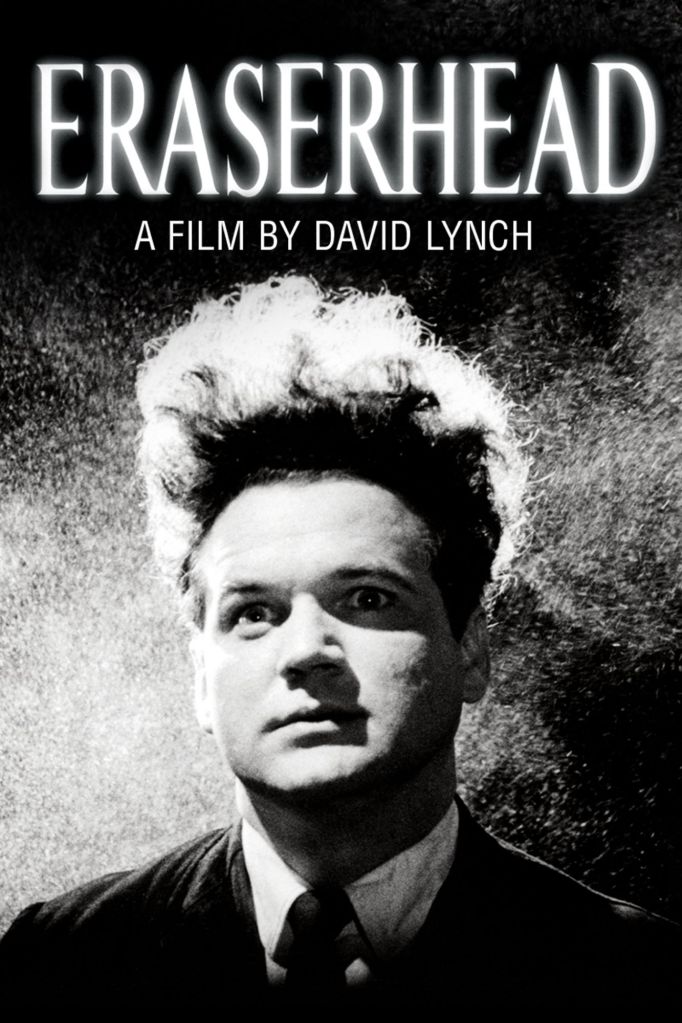
  • Day 4: Eraserhead (1977)

    Goal: Find a horror movie I am embarrassed to have never seen.


    Eraserhead (1977)

    What I know about it:
    A black and white horror movie from the same guy that did Twin Peaks and Mulholland Dr. RIP. This has a very strange trailer that I can’t remember, and I saw it last week. Long static shots of a guy with a high-cut hairstyle looking blankly at the camera. Ok, now I’ll read the premise on IMDb.

    So this is a survival movie. “Henry Spencer tries to survive the screams of his newborn mutant child.” Shouldn’t those adjectives be in reverse order? Does Henry have a mutant newborn child, or does he have a newborn mutant child? Describing the child like that makes it sound like some sort of irregular baseball card, or like he came with a set of superhero clothes. “Mutant Child here! Now with a detachable umbilical cord and noise chip!”

    As someone who regularly saw the grosses for midnight movies nationwide, this was one of the standards, particularly in New York and California. If you specifically like watching cult or midnight films, you have already knocked this off your list long ago. I don’t know what it is, but it’s the type of movie that I want to know as little about as possible.


    After the movie:
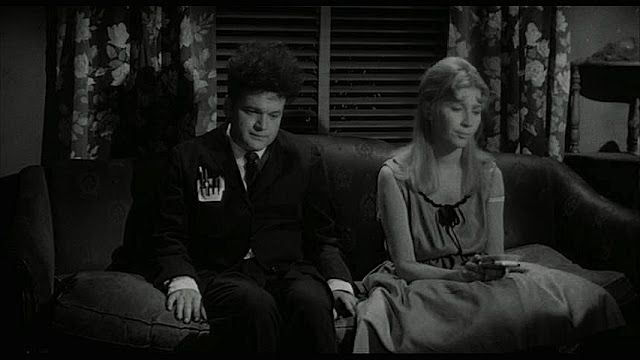
    Hair in the 1970s. You couldn’t mess with it. Today, if someone looked in the mirror and said, “You know, my hair kind of looks like a pencil eraser,” they would then get clippers and a pair of scissors and cut it down until it seems like the average length trending right now. But in 1976, that length was inches, which equated to a white man afro on some unlucky men. So all you could do was look out the bedroom window from the fetal position and sulk.


    The terminology “newborn mutant baby” is definitely accurate. It isn’t a mutated normal baby. It is a normal mutant baby, with a head that looks curiously like a human elbow. David Lynch deserves some sort of medal for comedy for playing such a long game for such a minor joke. Blink and you’ll miss it.

    I watched this with Josh, who seemed to mostly agree with me on Dead Calm. With Eraserhead, he realized it was boring and considered leaving 30 minutes in. “This movie is just *dull*. People in 1977 watched this because there wasn’t anything else to do.” He never left the room and watched the screen the entire time. He said he kept waiting for it to get better, although I think just enough new things happened to—not keep him interested, maybe—but to keep him from becoming bored out of his mind.

    I realized while watching this: mostly, this was an extremely influential movie for certain directors. It is clear that Barton Fink, which won the Palme d’Or in 1991, was about 70% Eraserhead when the Coen Brothers thought out what to do for their fourth feature film. Is it a drama? Thriller? Comedy? The decision to give it the biggest award was unanimous, which is as if they were saying, “Bravo. We saw Eraserhead, too.”


    This was pre–the mutated creature film boom of the late 70s and 80s, from directors David Cronenberg, John Carpenter, Joe Dante, Ridley Scott, et al. The stop-motion and practical effects were influential on many 1980s films. David Lynch figured out how to take the effects used in Jason and the Argonauts and claymation movies and do them on a next-to-nothing budget. The sequences don’t last long, but the effect feels straight out of Beetlejuice a decade later. The body imagery, which includes a rib cage split open, feels right out of John Carpenter’s The Thing.

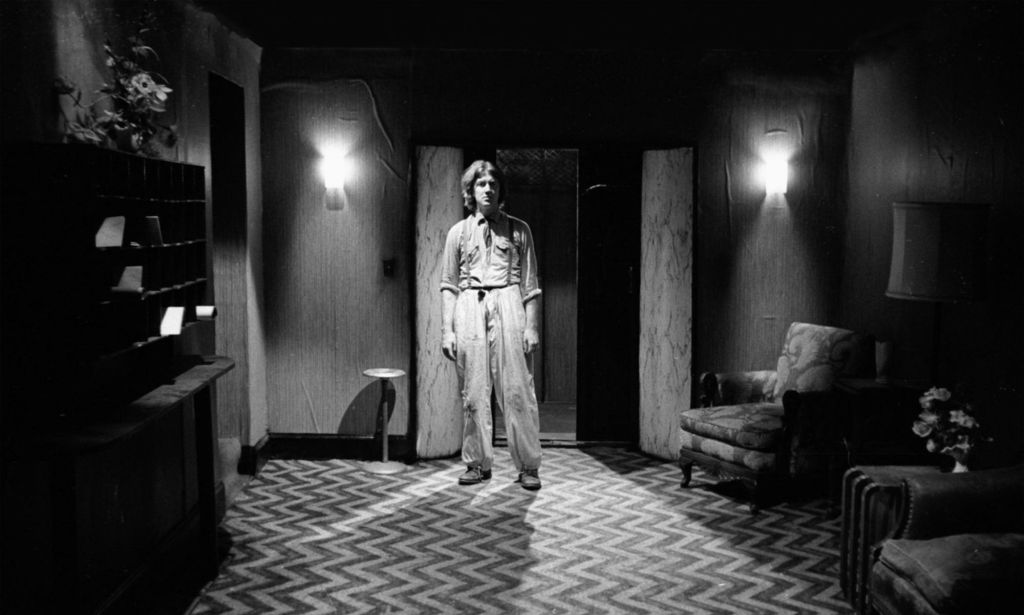
    If the film is about anything, it is the crushing routine and existence of working-class, industrialized city life. Henry Spencer lies down and looks out his bedroom window, and then we cut to his perspective and see what it is he sees. When someone’s bedroom has a contender for “world’s worst view,” I always think, “How did he get stuck here? Henry must be the worst person alive at finding a job. Or the worst at finding an apartment.”


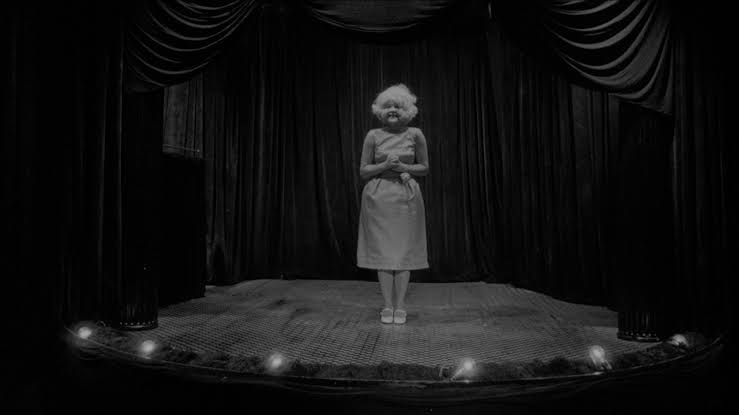
    I always assumed Angelo Badalamenti specialized in 1950s jukebox-style music, which is where the strange lounge act aesthetic came from in Blue Velvet, Twin Peaks, et al. But no. That seems to mostly be Lynch’s idea as the origin point. The song here, “In Heaven,” was mostly written by the man himself. I like to think he started with this idea just to find something absurd to be “the mutant squish-y” song, and then he just decided to keep that style and really commit. The Twin Peaks aesthetic started here, in this bizarre, dark horror movie that no one was supposed to see.

    Because Eraserhead is must-see cinema. For anyone who grew to love David Lynch for Twin Peaks or Mulholland Dr., this is where a surprising amount of his craft was first seen. I could name 30 movies now considered classics released in the next 20 years that were directly indebted to Eraserhead. The entire 1980s cult movie genre was trying to be the next Eraserhead!

    9/10