Tag: movie review

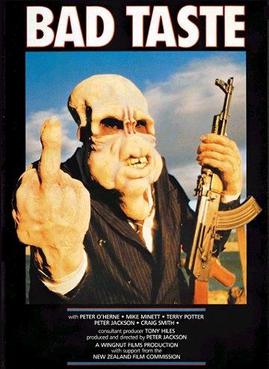
  • Day3: Bad Taste (Peter Jackson, 1987) review

    A-Z “Hidden Gems” Film-a-thon Day 2

    “One day, when you are famous and everyone knows your name, people will see this and laugh at you.”

    “Good. I hope they do. I am quite happy with how it turned out.”

    That was an exchange I once had with my sister about one of my own early creative projects, the album Mad Cow Disease by my high school musical group, The Cadets of Temperance. My college-era zombie movie, Oh, No! Zombies!!!, inspired similar reactions from older relatives who seemed less charmed by my artistic instincts than I was. Other people involved had supportive families. Mine sometimes looked at what I was making with the expression of people being asked to admire a live electrical fire.

    So I feel a certain kinship with Peter Jackson’s Bad Taste.

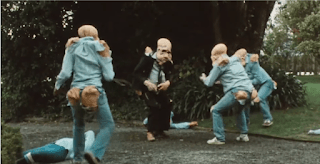
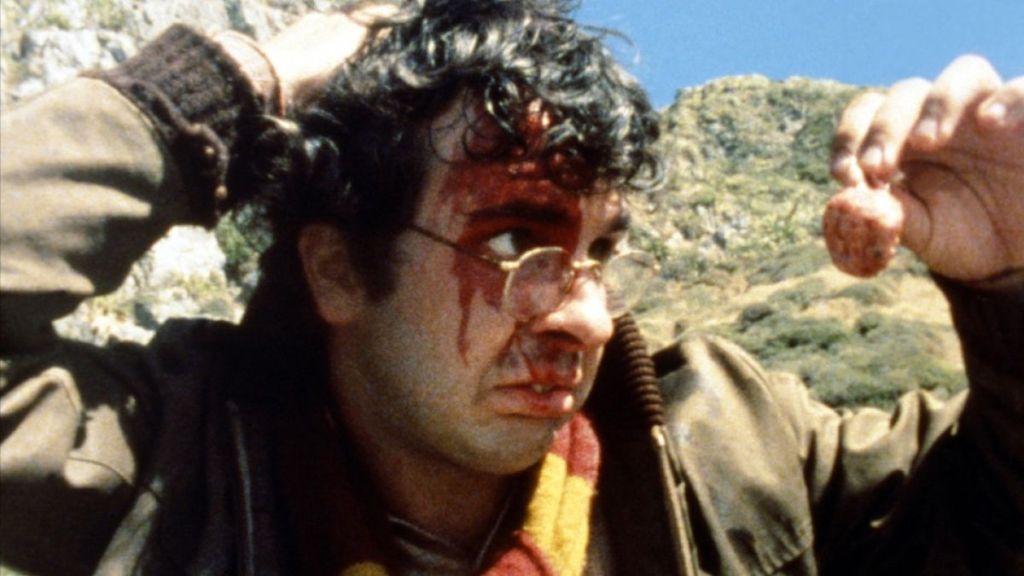
    Watching it, I kept imagining Jackson showing this thing to his family at age twenty-four while they tried to process what exactly they were seeing. “What is this?” “Why do the aliens have human disguises that still leave their giant butt cheeks exposed?” “Why does the man with the head wound keep putting his brain back into his skull and carrying on?”

    To my disappointment, Jackson never seems to have offered a great canonical explanation for the aliens’ protruding rear ends. But with a title like Bad Taste, perhaps he felt no obligation to. If anyone questioned the exposed buttocks, he could always point to the marquee and say: I warned you.

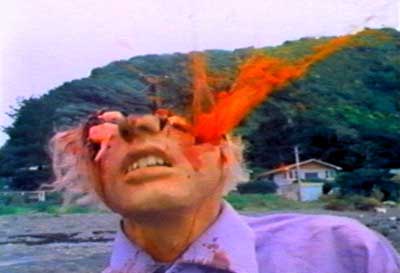
    The plot, such as it is, concerns a group of men battling grotesque aliens in rural New Zealand. The creatures look a bit like something Jim Henson might have designed on weekend during a high degree fever. One character, Derek, suffers a catastrophic head wound early on and spends much of the film scooping fallen brain matter off the ground and stuffing it back into his skull. At one point, he even seems willing to supplement his own supply with alien brain. This is not a movie in which medical distinctions matter.

    What struck me most was not the story, which barely qualifies as one, but the brute fact of the movie’s existence. I watched it on Plex without subtitles, which did it no favors. The accents are thick, the sound often resembles dialogue captured inside a coffee can, and the image has that faded, fragile look common to low-budget productions. And yet the camera, while shaky, is never hopelessly amateurish. The movie may not be polished, but it is recognizably a movie. That already puts it ahead of many ambitious homemade projects.

    Bad Taste is less a world than a continuity exercise. Nothing in it feels fleshed out enough to support a larger mythology, and Jackson does not seem especially interested in coherence for its own sake. What he is interested in is getting the shot, finishing the effect, solving the problem in front of him. That is the real subject of the film.

    Jackson plays Derek, the memorably concussed hero, but he also seems to play half the surrounding population. So many characters look suspiciously like Peter Jackson with slight variations in beard, wig, or voice that the film begins to feel like one man arguing with himself across New Zealand. From a strict continuity standpoint, it is not impressive. I noticed missing details, shifting visual elements, and the usual evidence of a production held together with stubborn improvisation. But Jackson was operating under absurd constraints, including the small matter of having to act in multiple roles while also making the movie.

    And that is why Bad Taste matters.

    Not because it is a great film on its own terms. It is not. The writing is thin, the world-building is nonexistent, and much of the humor depends on the audience finding sheer excess funny. But the movie proves that Jackson had the one quality no school can really teach: full commitment. He shot the thing over four years, beginning with a self-financed budget of 25,000 New Zealand dollars before receiving further support from the New Zealand Film Commission to complete it. He had no film-school polish because he had never gone to film school at all. He left school young (age 16), taught himself by doing, and turned this movie into his education.

    In that sense, Bad Taste was his film school. Cheaper, too. The only thing he really missed were the writing classes.

    I made Oh, No! Zombies!!! the summer before my senior year of college and used its music for my final project. My presentation got honors largely because the professors laughed constantly while I explained how the movie had been made and how all the pieces fit together. I had been inspired by Ed Wood and by the worst zombie films I could find. What inspired Jackson here is harder to pin down. Bad Taste does not feel fully enough formed to be parody, and it is too odd to read as straightforward homage. It feels instead like a prototype for the grotesque brilliance he would later achieve in Dead Alive/Braindead: the early, unstable version of a sensibility not yet fully invented.

    I tried to watch Bad Taste when I was a junior in college and gave up. At that age, time felt too valuable to spend on something this ragged. I should have stuck with it. Watching it now is a little like seeing an early bicycle built by the Wright Brothers and asking why it does not fly. Of course it does not fly—that was never the point. The point is that it moves at all, that someone figured out how to make it work, and that they carried it across the finish line. Bad Taste is that kind of movie: less impressive for what it achieves on screen than for the fact that it exists, undeniable ragged—but overall complete.. Most movies, even now, never get that far.

    4/10

  • Day 12: Cube (1997)

    Goal: Find a movie I never heard of until it started showing up on streaming trends.

    What I know about it:

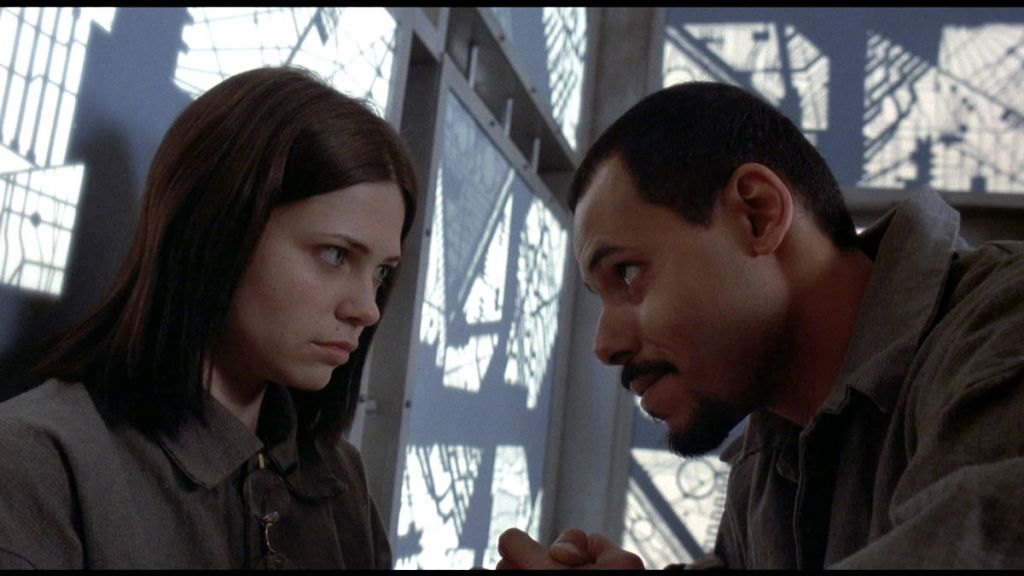
    To me, this movie is an oddity. It’s like one of those titles that shows up on How Did This Get Made? alongside Death Spa or Chopping Mall—except this one actually has an overall good reputation. If it’s decent, why have I never heard a single respected critic mention it? Meanwhile, eXistenZ and Event Horizon weren’t exactly hits, yet people bring them up constantly on YouTube.

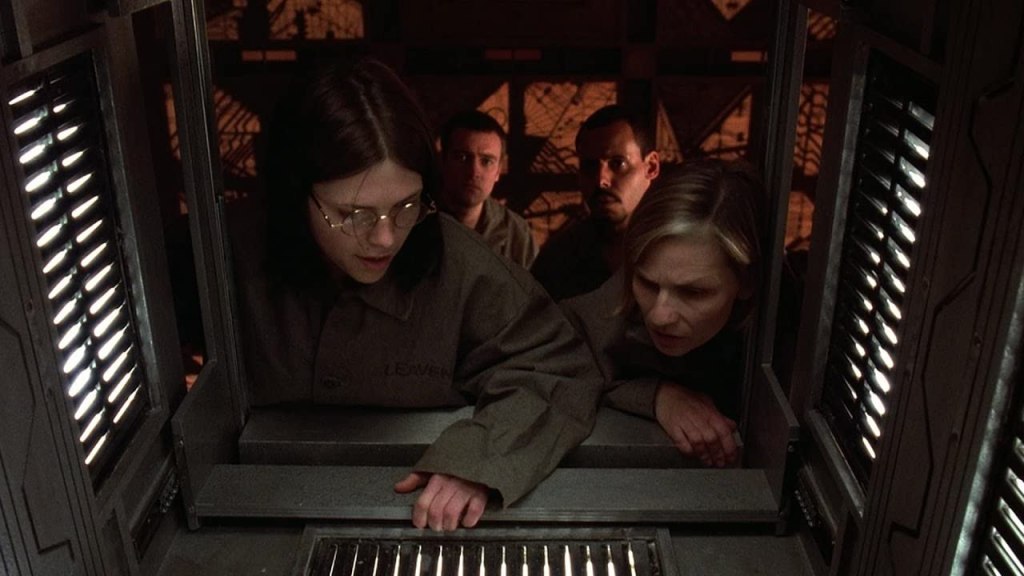
    The plot sounds intriguing enough: a group trapped in a mechanical maze that might be some layer of Hell. They move up, down, sideways—each new room maybe leading to freedom. I pictured Hellraiser by way of Saw, two movies franchises with famously devoted fans. So why doesn’t Cube ever come up in the same breath?

    I couldn’t find a proper trailer. I showed a clip to Josh on YouTube, and he wasn’t impressed. Maybe that’s a good sign. The movie doesn’t seem to sell itself, so maybe that is why no one has heard of it. He tends to like things that announce themselves loudly (Heretic, for example). Cube doesn’t seem to do that. Maybe the people who love it found it quietly—and showed it to their friends.

    I first heard of Cube in 2006, when it was the No. 1 most-borrowed DVD from Netflix in Carmel, Indiana. One month, it sat at the top of the local trends list like a mystery no one could explain. I’ve seen it pop up on other streaming charts since—but I’ve never once heard anyone talk about it. Ever.

    After the movie:

    This was basically Canadian Escape Room: The Movie. Which is kind of impressive, considering it came out in 1997—long before “escape rooms” were a thing. I first heard of a real-life escape room in 2014, when they started popping up all over the West Coast. In Indianapolis, a place opened called The Escape Room. A year later, another one opened called Escape the Room. They weren’t connected, but I beat both. I was good, kinda—successfully completed both, where the success rate for each one was about 40%. Usually, I wasted time on red herrings, but I’d crack the last puzzle with seconds left.

    Cube didn’t invent the escape-room concept, but it definitely saw the appeal coming. Its roots are in point-and-click adventure games and Dungeons & Dragons modules. Sierra made some of the first “escape room”–style text adventures like Mystery House, where you typed in commands to make your way through puzzles. The version of this idea I played was Maniac Mansion — a Lucasfilm Games classic that added comic relief and actual personality. Every room in point-and-click adventure games is an escape room, and only the elite few wanted to think enough to make their way through those. The Secret of Monkey Island and Sam & Max Hit the Road are still two of the best games ever made.

    And before all that, there was Dungeons & Dragons. The legendary module Tomb of Horrors (Gary Gygax, 1975) was built entirely around the idea of a cruel puzzle dungeon. Players swapped horror stories about total party kills. The struggle was real.

    When I was a kid, that whole genre fascinated me. My favorite was Jim Henson’s Labyrinth, but I also loved Scooby-Doo Meets the Boo Brothers (1987)—a movie where Shaggy inherits a haunted mansion and has to solve puzzles to find a hidden fortune. Looking back, that was basically The Da Vinci Code for children.

    The problem is, puzzle-solving doesn’t translate well to film. Watching someone instantly solve something you never understood isn’t satisfying. It works in a game, or maybe a serialized show—like Batman cliffhangers: How will they get out of the conveyor belt trap this time? Stay tuned next week. Same Bat-time, same Bat-channel.

    But Cube doesn’t build a world to make those puzzles matter. There’s almost no setup or lore—just math equations and quick deductions. The puzzles function as MacGuffins, filler between moments of panic. You can’t play along. You just wait to see who dies next.

    Still, it’s fun. The writing’s solid, and most of the acting works. The “villain” type might be the worst performer here—but that’s part of the fun. (Play “Spot the Worst Actor” at home and see if you agree.)

    The direction feels dated, full of leftover ’90s TV transitions. Even when there is gore, the whole thing looks like an episode of Goosebumps or early Buffy the Vampire Slayer—but cheaper.

    The ending, though, is a letdown. It just… stops. No emotional payoff, no moral, no world-building to make sense of anything. It’s one of those “Wouldn’t it be messed up if…?” movies that mistakes mystery for meaning. I think the implication is aliens—but it could be anything, and the movie doesn’t seem sure either.

    I liked Cube. I could almost recommend it. It deserves credit for being nothing like anything else from its decade, but it’s the kind of film that practically begs for a remake.

    5.5 / 10

  • Day 7: Heretic (2024)

    Goal: Find the most notable current sleeper horror hit.

    What I know about it:

    Next to nothing. It’s got a 90% on Rotten Tomatoes and a 71 on Metacritic. For this week’s theme, I wanted a movie that feels big but that I somehow know literally nothing about.

    It has Hugh Grant and it seems to be about Mormons. He’s some kind of weird loner with a torture house. It seems like the movie everyone will still be talking about in five years. Just a hunch. Let’s see if I’m right.

    After the movie:

    Do you remember when Bend It Like Beckham came out, and at first you wondered how they got Kate Winslet to seem 18 years old? Then you realized it wasn’t Kate Winslet but her strange, skinny doppelgänger named Keira Knightley? She ended up going pretty far, mostly because a lot of screenwriters had been writing parts for Kate Winslet five years earlier — and Winslet would’ve turned them down anyway. Keira Knightley turned out to be great. But she was no Kate Winslet.

    Sophie Thatcher is the new Keira Knightley. She’s not getting cast in parts written for Kate Winslet — she looks and sounds exactly like Emma Stone. I’d wager Sophie Thatcher is actually a more natural actress. She’s great in Heretic, and even better in 2025’s sleeper hit Companion, which I actually recommend even more for this week’s theme: “the sleeper horror hit.”

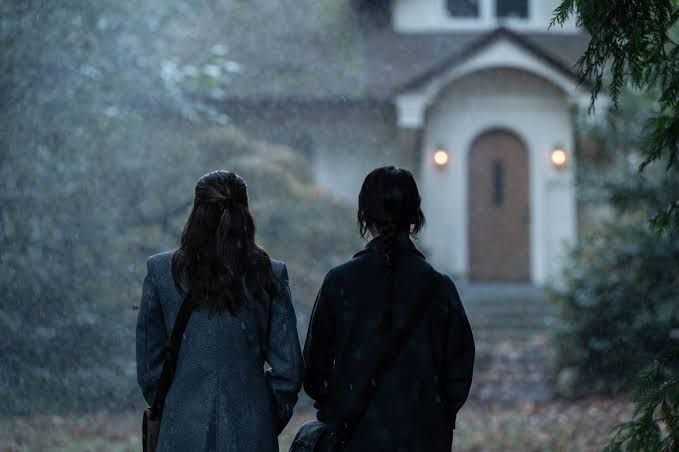
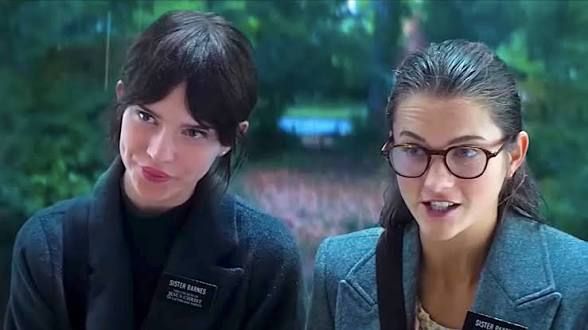
    Sophie Thatcher feels so much like Emma Stone that there’s a bit of a “new Coke” imitation effect going on. In Companion, that worked perfectly because she was supposed to feel like an imitation of the real thing. But in Heretic, there’s a little whiplash when she starts talking. How did this extremely smart, modern girl get cast as a Mormon missionary?

    If this movie had been made twelve years ago, Emma Stone would’ve been perfect. She had that “smart but innocent” quality — the thing that peaked with Poor Things. Sophie feels like Emma’s 12-years-younger little sister who also decided to act. Seeing this modern, post-ironic type trying to convert unsuspecting Christians to this quirky, folksy little underdog religion… I just wanted to say, “Shouldn’t you be in Brooklyn? Go home.”

    I’m stalling. What was the movie and what did I think of it? It was small and imteresting. Honestly, it feels like it could’ve been a play — maybe one converted to film at the last second. This is a horror movie tailor-made to play at sorority movie nights at Brigham Young University. Modern girls who freely explore the world, who’ve seen South Park and homemade internet porn, yet firmly believe in their mission: to tell the world about their faith. They’re believable. Exactly as good as young people who’ve never had a reason to question what they believe.

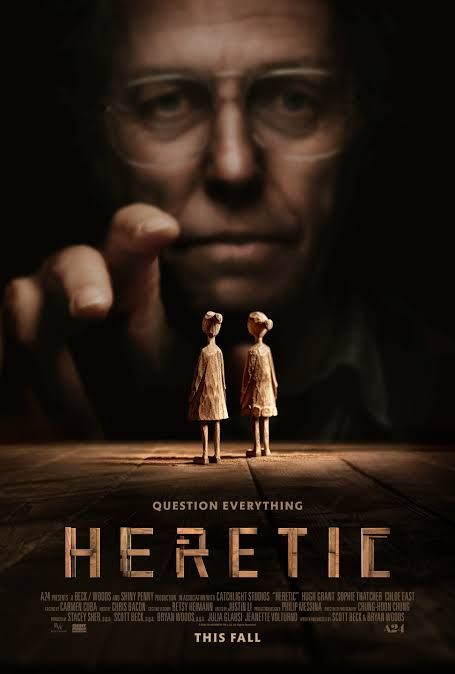
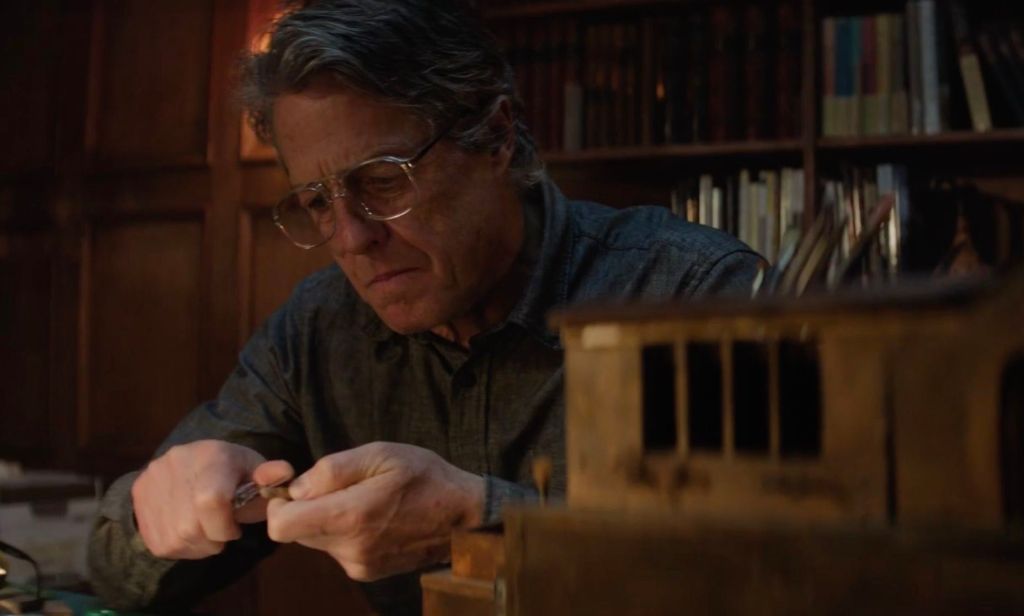
    On the other side of that coin is Hugh Grant as Mr. Reed, the titular “heretic” — every Mormon missionary’s worst nightmare. The poster has him smiling, staring at a game board with the two sisters as miniature chess pieces. Mr. Reed plays with them like a cat tossing a mouse, keeping himself amused before the kill. “You still believe that my wife is in the other room baking blueberry pie, despite all the evidence to the contrary.”

    Heretic has a handful of great ideas, and kind of a boatload of padding. Case in point: in addition to religion, Mr. Reed is obsessed with copyright disputes. He brings up two examples — Monopoly and “Creep” by Radiohead — as evidence that remakes and copies are more successful than originals.

    He’s got a point with Monopoly. I’m a board game hobbyist, and even I’d never heard of The Landlord’s Game, the 1904 prototype Monopoly ripped off almost entirely. Looking it up online made me respect it even more. One of its “Chance Cube” outcomes said, “5: Caught robbing a hen-roost: Go to jail. 10: Caught robbing the public. Take $200 from the board. The players will now call you Senator.” You can’t copyright board-game mechanics — or religious texts, for that matter. Mr. Reed makes that point too: religions are all just cover versions of each other.

    Where he loses me is with his deep affection for The Hollies’ “The Air That I Breathe.” Yes, the guitar progression is the same as “Creep,” and Thom Yorke’s phrasing is similar. But “The Air That I Breathe” has no hook. It’s a song no one under 70 cares about. The Hollies were basically the Thomas Edison of 1970s pop — taking half-forgotten ideas and dressing them up without subtlety. I’d have been way more impressed if Mr. Reed compared Joseph Smith to The Hollies directly, and left Radiohead out of it.

    Screenwriter, I see what you’re doing. But no one likes that song.

    But that last shot? Very good — it should be studied. It’s nice when little moments call back and actually have purpose. There’s a famous movie that ends with a man believing he survived a horror, cutting into a birthday cake… and we realize he’s still trapped, imagining a happy ending. Heretic’s ending is like that — but more artful. It’s not trying to scare you with a hand bursting from the ground next to a gravestone. It’s believable — truthful about what happens to the mind when coping with an actual human tragedy. A perfect little movie moment.

    Still, this is a decent movie. It feels like a filmed play — one that’s not really worth seeking out unless you’re curious. It doesn’t have much going for it other than novelty and a few twists, almost all in the first 40 minutes.

    If you see it, maybe you’ll agree.

    (That’s not a spoiler.)

    6.5/10

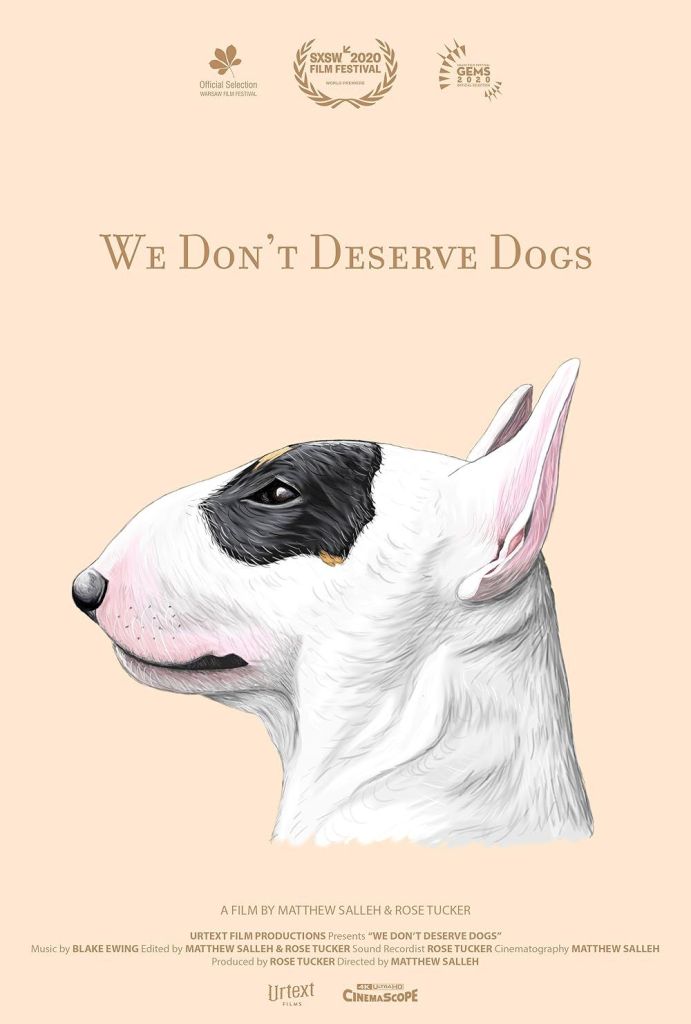
  • We Don’t Deserve Dogs (2020)

    Mellon collies and the infinite sadness.

    This is a collection of interviews and stories from dog owners and admirers about the dogs in their communities or the pets that have changed their lives. The mood of the film aligns with its title — this is all very, very sad. Sad stories, sad people, and sad circumstances that brought dogs into their lives.

    The music is relentlessly somber, a constant collage of string instruments playing sustained whole notes, reminiscent of Philip Glass composing his version of Adagio for Strings by Samuel Barber. Interestingly, the actual composer is a former child actor, one of the Little Rascals from the 1990s movie — an odd detail.

    About 80% of the film is not in English. It’s a beautifully filmed, albeit somewhat amateur, travelogue that captures glimpses of how dogs are perceived in various cultures. Some of the countries featured include Chile, Peru, Uganda, Pakistan, Romania, Vietnam, and Scotland. I had to look this up, as the segments aren’t separated by headings or on-screen text.

    The film might have been aiming for the tone of Kedi, the 2016 documentary about Istanbul’s street cats. In that film, we see how cats bring meaning to people’s lives, often serving as community mascots. They’re respected and cared for, but no one person takes sole responsibility for them.

    The opening story, set in Santiago, Chile, echoes this concept. It features a dog named Dr. Coffee who lives a dual life. Everyone in the neighborhood knows him and will often ask, “Have you seen Coffee today?” He moves freely, vanishing and reappearing days later. Eventually, one resident learns that the hospital nearby knows him by a different name — he has a room there and stays for days at a time. Coffee isn’t like a typical dog; he doesn’t crave pets and affection. His version of companionship is simply sitting quietly with kind people.

    In Uganda, survivors of violent trauma are given dogs as a form of emotional support. One woman names her dog PTSD to reflect the emotional weight she’s working through. The belief is that a dog provides unconditional love, free from hate or judgment. The group dog-training sessions, where dozens of new dog owners learn how to care for their companions, are striking in their simplicity and warmth.

    In Pakistan, a self-described tomboy finds a dog on the street with a paralyzed leg, covered in maggots, and left to die. Despite many people telling her to give the dog away once he recovered, she refused. Some people in Pakistan believe that having a dog in the house will prevent God from accepting you into heaven. She rejects that belief, instead seeing the dog’s presence in her life as part of God’s plan. Her story is one of quiet defiance and compassion.

    Not all the stories are tragic. In Chile, a therapy dog named Patron brings joy to residents of a retirement home. During an exercise session, Patron is told to “find the yellow ball,” which he does effortlessly. The residents marvel at his ability to distinguish colors. One participant remarks, “If a dog comes up and hugs you, then it is a hugging dog, and you can hug it.” This gentle wisdom encapsulates the joy dogs bring — they accept us for who we are.

    However, the film doesn’t shy away from difficult realities. In Vietnam, the dog meat trade is addressed. A restaurant owner recounts how his father introduced him to the practice as a child. While he acknowledges that dog meat consumption has declined, he continues to serve it as long as there is demand. This segment is sobering, forcing viewers to confront how cultural norms shape our perceptions of animals. It made me wonder about the conditions of dog meat farms and, by extension, the treatment of all farm animals. Should I view them all as dogs? It’s a thought that lingered with me.

    While the film’s tone leans toward the morose, it remains gentle in its approach. Dog lovers will appreciate the celebration of the bond between humans and animals, as long as they’re prepared for the emotional weight of the stories. Ultimately, We Don’t Deserve Dogs serves as a poignant reminder of the kindness and joy that dogs bring to our lives.

    7.5/10