Tag: modern horror

  • Day 7: Heretic (2024)

    Goal: Find the most notable current sleeper horror hit.
    What I know about it:

    Next to nothing. It’s got a 90% on Rotten Tomatoes and a 71 on Metacritic. For this week’s theme, I wanted a movie that feels big but that I somehow know literally nothing about.

    It has Hugh Grant and it seems to be about Mormons. He’s some kind of weird loner with a torture house. It seems like the movie everyone will still be talking about in five years. Just a hunch. Let’s see if I’m right.

    After the movie:

    Do you remember when Bend It Like Beckham came out, and at first you wondered how they got Kate Winslet to seem 18 years old? Then you realized it wasn’t Kate Winslet but her strange, skinny doppelgänger named Keira Knightley? She ended up going pretty far, mostly because a lot of screenwriters had been writing parts for Kate Winslet five years earlier — and Winslet would’ve turned them down anyway. Keira Knightley turned out to be great. But she was no Kate Winslet.
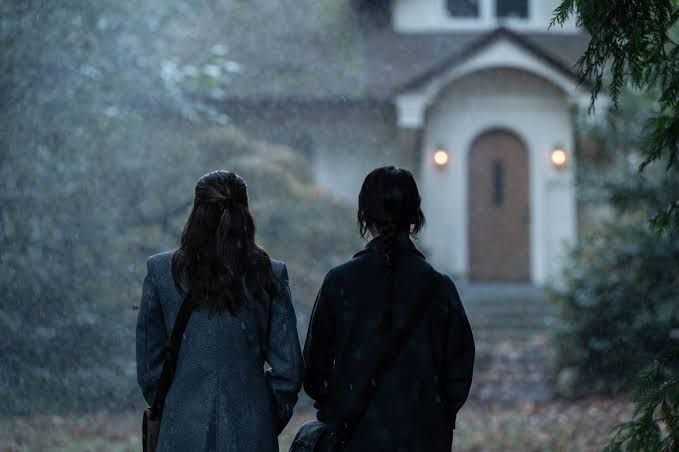
    Sophie Thatcher is the new Keira Knightley. She’s not getting cast in parts written for Kate Winslet — she looks and sounds exactly like Emma Stone. I’d wager Sophie Thatcher is actually a more natural actress. She’s great in Heretic, and even better in 2025’s sleeper hit Companion, which I actually recommend even more for this week’s theme: “the sleeper horror hit.”

    Sophie Thatcher feels so much like Emma Stone that there’s a bit of a “new Coke” imitation effect going on. In Companion, that worked perfectly because she was supposed to feel like an imitation of the real thing. But in Heretic, there’s a little whiplash when she starts talking. How did this extremely smart, modern girl get cast as a Mormon missionary?

    If this movie had been made twelve years ago, Emma Stone would’ve been perfect. She had that “smart but innocent” quality — the thing that peaked with Poor Things. Sophie feels like Emma’s 12-years-younger little sister who also decided to act. Seeing this modern, post-ironic type trying to convert unsuspecting Christians to this quirky, folksy little underdog religion… I just wanted to say, “Shouldn’t you be in Brooklyn? Go home.”
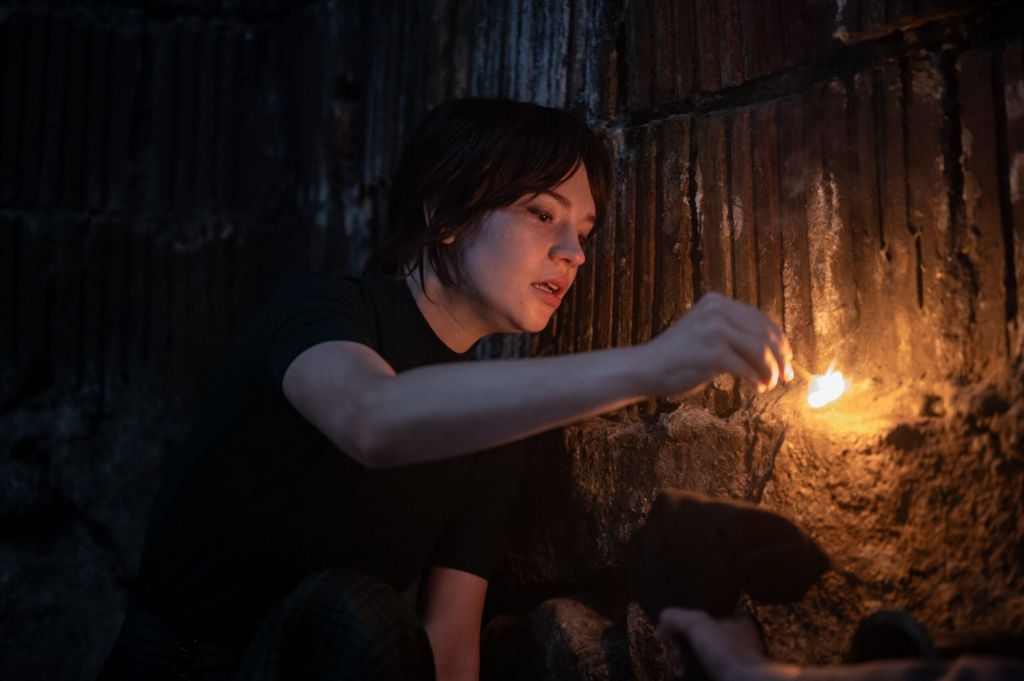
    I’m stalling. What was the movie and what did I think of it? It was small and imteresting. Honestly, it feels like it could’ve been a play — maybe one converted to film at the last second. This is a horror movie tailor-made to play at sorority movie nights at Brigham Young University. Modern girls who freely explore the world, who’ve seen South Park and homemade internet porn, yet firmly believe in their mission: to tell the world about their faith. They’re believable. Exactly as good as young people who’ve never had a reason to question what they believe.

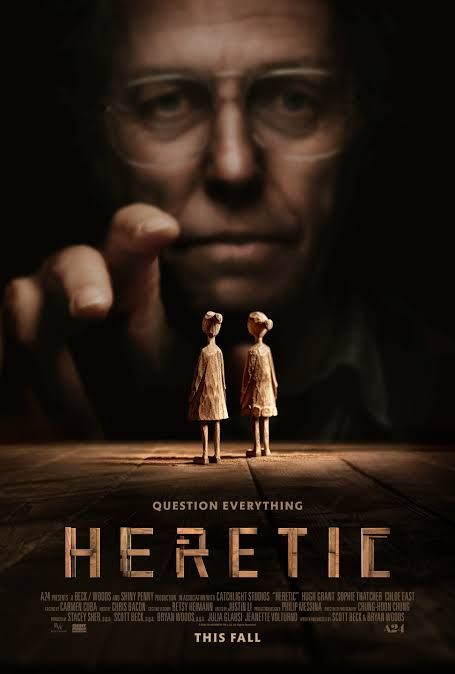
    On the other side of that coin is Hugh Grant as Mr. Reed, the titular “heretic” — every Mormon missionary’s worst nightmare. The poster has him smiling, staring at a game board with the two sisters as miniature chess pieces. Mr. Reed plays with them like a cat tossing a mouse, keeping himself amused before the kill. “You still believe that my wife is in the other room baking blueberry pie, despite all the evidence to the contrary.”
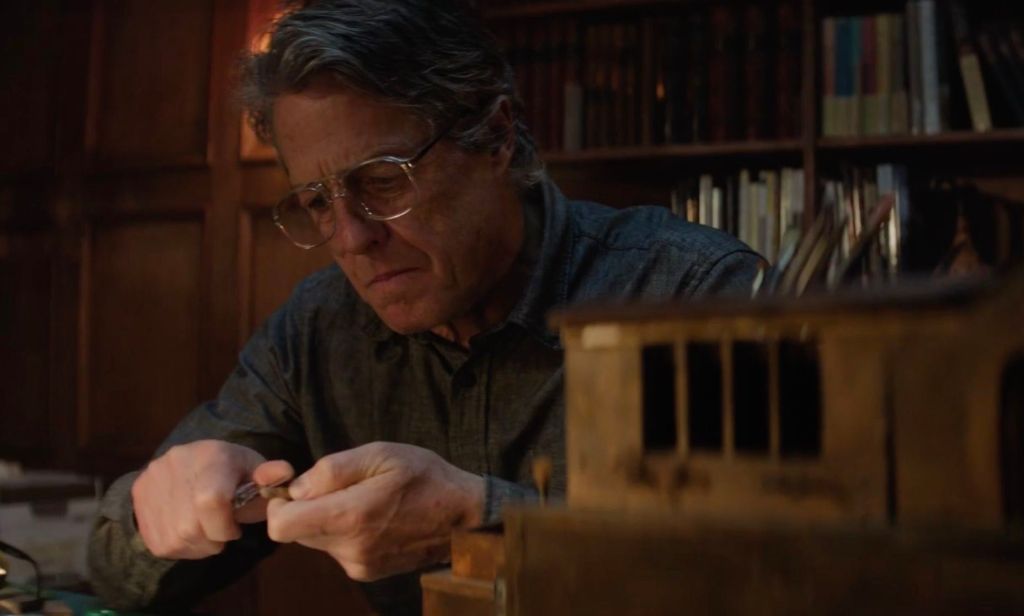
    Heretic has a handful of great ideas, and kind of a boatload of padding. Case in point: in addition to religion, Mr. Reed is obsessed with copyright disputes. He brings up two examples — Monopoly and “Creep” by Radiohead — as evidence that remakes and copies are more successful than originals.

    He’s got a point with Monopoly. I’m a board game hobbyist, and even I’d never heard of The Landlord’s Game, the 1904 prototype Monopoly ripped off almost entirely. Looking it up online made me respect it even more. One of its “Chance Cube” outcomes said, “5: Caught robbing a hen-roost: Go to jail. 10: Caught robbing the public. Take $200 from the board. The players will now call you Senator.” You can’t copyright board-game mechanics — or religious texts, for that matter. Mr. Reed makes that point too: religions are all just cover versions of each other.

    Where he loses me is with his deep affection for The Hollies’ “The Air That I Breathe.” Yes, the guitar progression is the same as “Creep,” and Thom Yorke’s phrasing is similar. But “The Air That I Breathe” has no hook. It’s a song no one under 70 cares about. The Hollies were basically the Thomas Edison of 1970s pop — taking half-forgotten ideas and dressing them up without subtlety. I’d have been way more impressed if Mr. Reed compared Joseph Smith to The Hollies directly, and left Radiohead out of it.

    Screenwriter, I see what you’re doing. But no one likes that song.
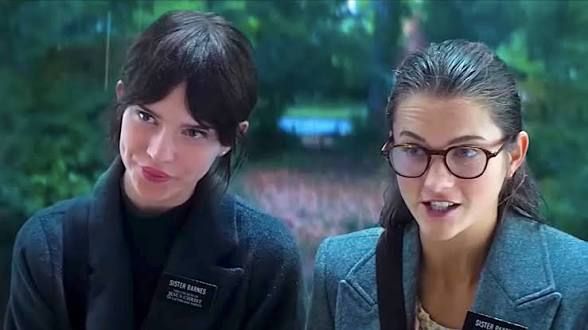
    But that last shot? Very good — it should be studied. It’s nice when little moments call back and actually have purpose. There’s a famous movie that ends with a man believing he survived a horror, cutting into a birthday cake… and we realize he’s still trapped, imagining a happy ending. Heretic’s ending is like that — but more artful. It’s not trying to scare you with a hand bursting from the ground next to a gravestone. It’s believable — truthful about what happens to the mind when coping with an actual human tragedy. A perfect little movie moment.

    Still, this is a decent movie. It feels like a filmed play — one that’s not really worth seeking out unless you’re curious. It doesn’t have much going for it other than novelty and a few twists, almost all in the first 40 minutes.

    If you see it, maybe you’ll agree.

    (That’s not a spoiler.)

    6.5/10
  • Day 5: 28 Years Later (2025)

    Goal: Find a movie that everyone will watch for Halloween this year.

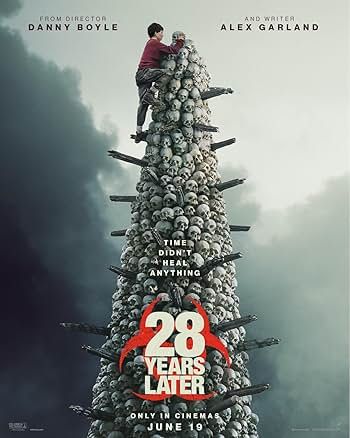
    28 Years Later (2025)

    What I know about it:

    I saw 28 Days Later twice, 22 years ago. There was nothing else like it at the time, and it was great. I was a big George Romero fan at that age, and I even made a short zombie movie as part of my senior project in college. It was called Oh, No! Zombies!!! and was 45 minutes long. I kind of resented 28 Days Later because there were absolutely no zombie movies coming out at that time, and I felt very protective of my own private toy.

    I finally watched 28 Weeks Later (2006) back in March and had a revelation: fast zombies seem very weird in 2025. We now know what zombies are like — they’ve been around in everything from The Walking Dead to Game of Thrones. We’re used to zombie tropes, and it just seems strange now that there is exactly one zombie franchise that thinks it makes sense for zombies to move faster in decay.

    28 Weeks Later arguably did not work. It has more great ideas than any zombie movie since George Romero first injected new life into the genre 50 years ago. But the internal logic was borderline nonsensical, and characters trended toward making inexplicable decisions. It’s the kind of movie that will be great once properly remade (and perhaps remade again).

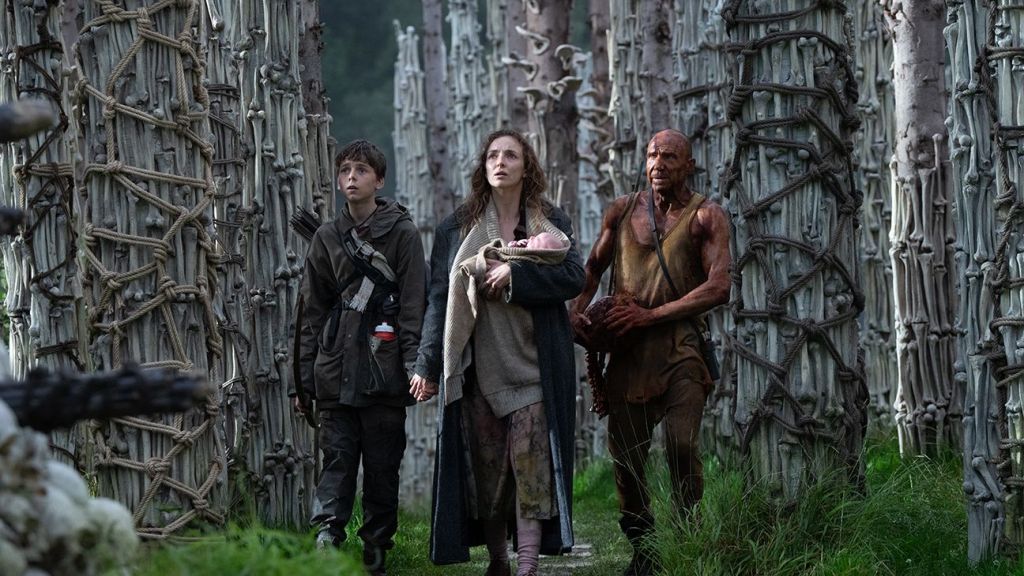
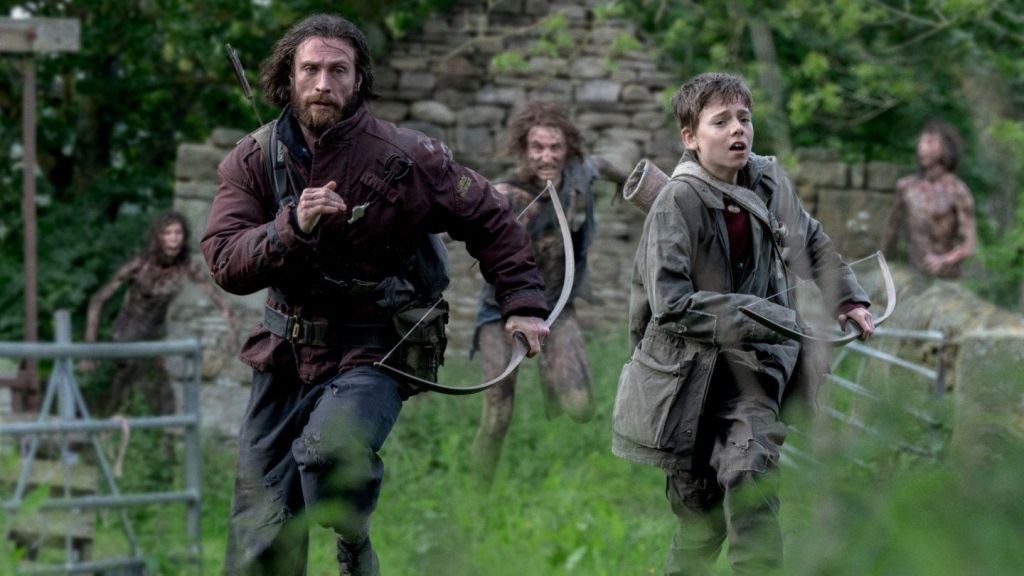
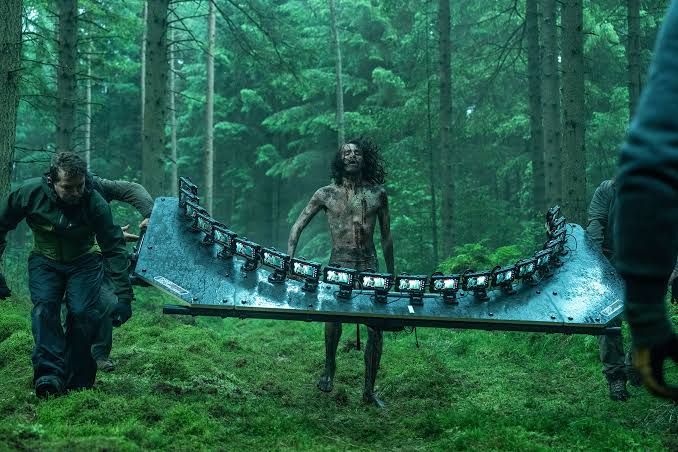
    The pictures from 28 Years Later look phenomenal. 28 Weeks Later seemed kind of like a throwaway movie that somehow got people to really like it. 28 Years Later seems like a very important movie to Danny Boyle. He stepped in to direct this himself. He’s tried to make Oscar-caliber movies for years, with nothing panning out for a while. I believe he saw this as something that had true potential if it was done the right way — and he didn’t want to leave that to anyone else. (I think the flaws of 28 Weeks Later are easy to see, even if you really like the movie.)

    After the movie:

    Bra. Vo.

    If you’re looking for a movie that’s a visceral artistic experience — every sound and visual image contributing to an intense wave of beauty — this is the kind of movie you’re looking for.

    Watching 28 Years Later reminds me of watching hanabi taikai, Japanese firework shows. I once watched the Katakai Fireworks Festival (on YouTube) during a down period in my life. The experience — seeing one 15-minute firework show curated like a living garden, set to music — created this splash of joy that made me feel artistically satisfied. One 15-minute show after another, lasting over two hours. There was no plot, but artistically it could not have made any more sense. 28 Years Later is akin to that, with artfully considered zombie splatter gore.

    This is a child-on-an-Odyssey movie, a strangely under-seen genre in cinema. It has infinite potential, and when done well, it produces many people’s favorite films (The Wizard of Oz, E.T., The NeverEnding Story, Spirited Away, Pan’s Labyrinth, The Iron Giant). Pixar, strangely, rarely makes a true child-on-an-Odyssey movie, other than Coco, which I hate.

    The story is about 90% unintelligible to Americans — which I think is a point of British pride to Boyle and many others who live in that tiny segment of the world. I watched this movie with tiny subtitles, which I couldn’t read quickly, so they were of little use. The brilliance here is that you don’t need to understand the words or sentences to follow the plot. At a certain point, Ralph Fiennes enters the movie, saving the day for most Americans who will finally understand a bloody thing one character is saying.

    This is bravura direction. Every moment is beautifully realized, and the actors inhabit their roles with confidence, understanding what truly matters. The world is shit, but twelve-year-old Spike has nothing to compare it to. The world is full of the diseased, but the only ones who matter to him are his family.

    The movie begins with a room full of little children watching Teletubbies, likely in 2002 — when the world first forever changed. Seeing the world kept to that blueprint, one that knew progress only up to the year when DVD players were all the rage and smartphones had not yet been realized — the world saw very little progress to be undone compared to what we know now. I’m actually a little jealous of the inhabitants of 28 Years Later. If I didn’t have an Android phone in my hand 18 hours a day, I would not know how to do anything.

    The cinematography is as good as you’ll see in a motion picture this year. The editing is extremely strong, stylized in a way that makes sense alongside Danny Boyle’s earlier work. But the MVP here has to be the score, written by the band Young Fathers — a Scottish experimental hip-hop group that’s largely unheard of in the Western Hemisphere. I know of them but never connected with their music in a way that made me want to return to it. I now feel like I was mistaken. The sound of 28 Years Later feels timeless and universal. It sounds equally like the year 2025 and like there is no time at all. This is how gods would likely score a story — with drama and ephemeral curiosity.

    28 Years Later is about accepting true death. The sadness isn’t losing everyone you know to a zombie apocalypse; it’s losing someone you love to one of the stupidest, most mundane ways to go. Cancer. The Big C is alive and well in a world that makes becoming doomed by the rage virus seem merciful.

    This is as good a zombie movie as you could possibly make. Whether you’ll like it is another matter. This is museum-quality art, which means it doesn’t care what you think of it. I loved it, but I am weird.

    Like the best hanabi taikai, it flares, fades, and leaves you staring at the afterimage — in awe and grateful that something so immediate could feel so eternal.

    9/10