Goal: Find a horror movie I am embarrassed to have never seen.
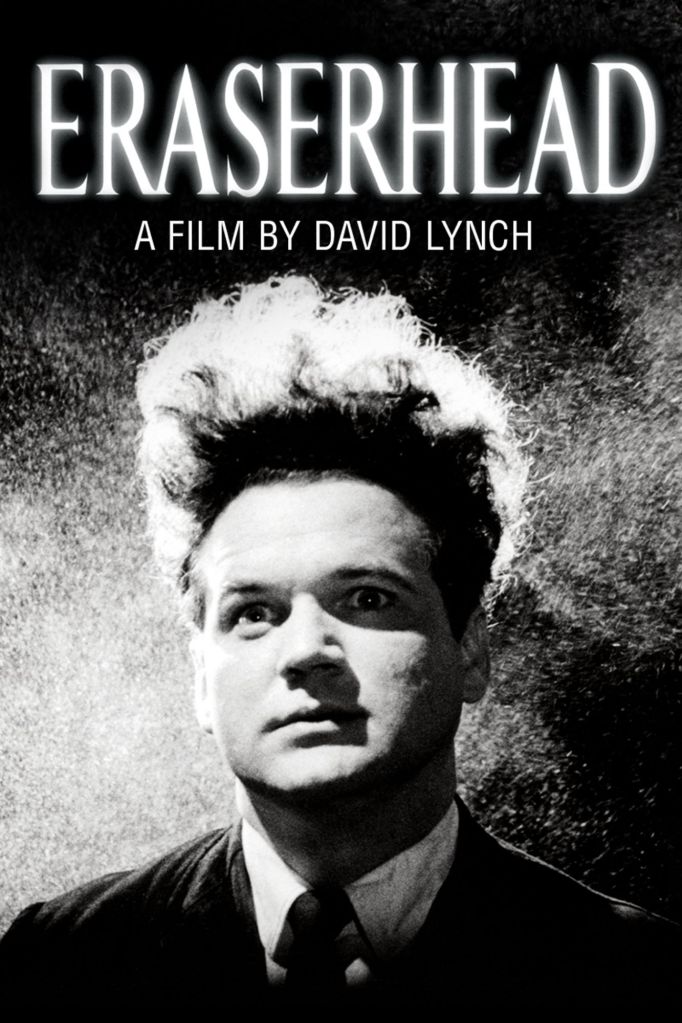
Eraserhead (1977)
What I know about it:
A black and white horror movie from the same guy that did Twin Peaks and Mulholland Dr. RIP. This has a very strange trailer that I can’t remember, and I saw it last week. Long static shots of a guy with a high-cut hairstyle looking blankly at the camera. Ok, now I’ll read the premise on IMDb.
So this is a survival movie. “Henry Spencer tries to survive the screams of his newborn mutant child.” Shouldn’t those adjectives be in reverse order? Does Henry have a mutant newborn child, or does he have a newborn mutant child? Describing the child like that makes it sound like some sort of irregular baseball card, or like he came with a set of superhero clothes. “Mutant Child here! Now with a detachable umbilical cord and noise chip!”
As someone who regularly saw the grosses for midnight movies nationwide, this was one of the standards, particularly in New York and California. If you specifically like watching cult or midnight films, you have already knocked this off your list long ago. I don’t know what it is, but it’s the type of movie that I want to know as little about as possible.
—
After the movie:
Hair in the 1970s. You couldn’t mess with it. Today, if someone looked in the mirror and said, “You know, my hair kind of looks like a pencil eraser,” they would then get clippers and a pair of scissors and cut it down until it seems like the average length trending right now. But in 1976, that length was inches, which equated to a white man afro on some unlucky men. So all you could do was look out the bedroom window from the fetal position and sulk.
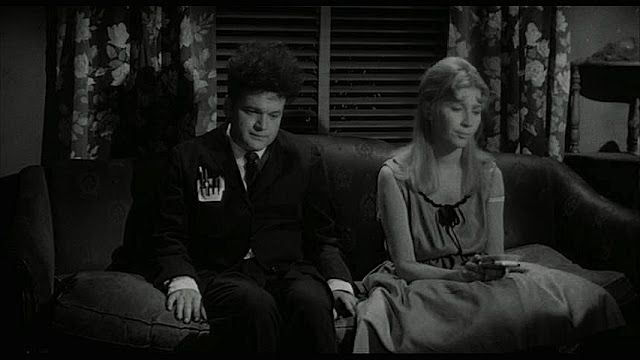
The terminology “newborn mutant baby” is definitely accurate. It isn’t a mutated normal baby. It is a normal mutant baby, with a head that looks curiously like a human elbow. David Lynch deserves some sort of medal for comedy for playing such a long game for such a minor joke. Blink and you’ll miss it.
I watched this with Josh, who seemed to mostly agree with me on Dead Calm. With Eraserhead, he realized it was boring and considered leaving 30 minutes in. “This movie is just *dull*. People in 1977 watched this because there wasn’t anything else to do.” He never left the room and watched the screen the entire time. He said he kept waiting for it to get better, although I think just enough new things happened to—not keep him interested, maybe—but to keep him from becoming bored out of his mind.
I realized while watching this: mostly, this was an extremely influential movie for certain directors. It is clear that Barton Fink, which won the Palme d’Or in 1991, was about 70% Eraserhead when the Coen Brothers thought out what to do for their fourth feature film. Is it a drama? Thriller? Comedy? The decision to give it the biggest award was unanimous, which is as if they were saying, “Bravo. We saw Eraserhead, too.”
This was pre–the mutated creature film boom of the late 70s and 80s, from directors David Cronenberg, John Carpenter, Joe Dante, Ridley Scott, et al. The stop-motion and practical effects were influential on many 1980s films. David Lynch figured out how to take the effects used in Jason and the Argonauts and claymation movies and do them on a next-to-nothing budget. The sequences don’t last long, but the effect feels straight out of Beetlejuice a decade later. The body imagery, which includes a rib cage split open, feels right out of John Carpenter’s The Thing.
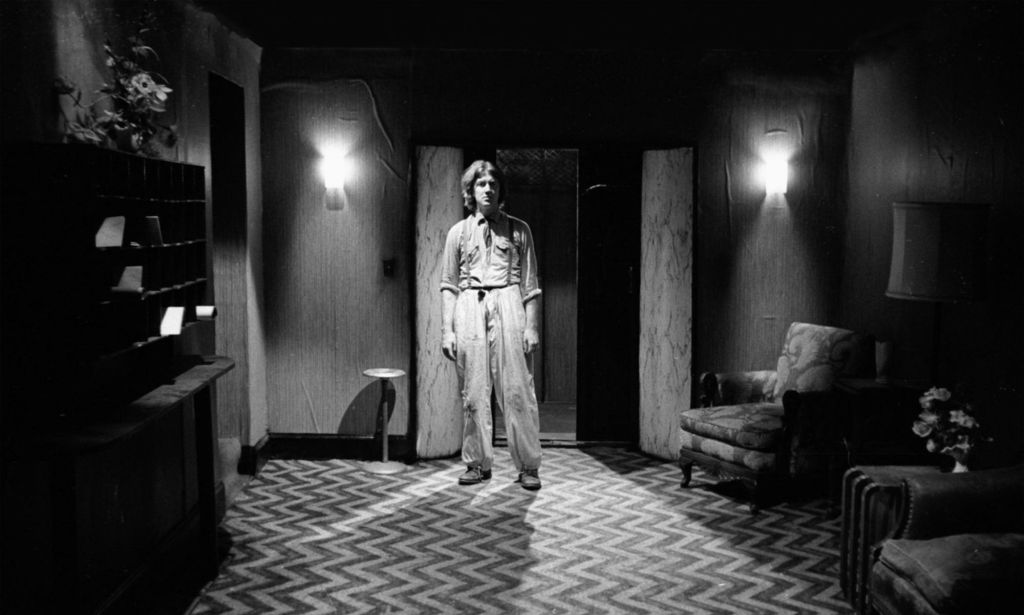
If the film is about anything, it is the crushing routine and existence of working-class, industrialized city life. Henry Spencer lies down and looks out his bedroom window, and then we cut to his perspective and see what it is he sees. When someone’s bedroom has a contender for “world’s worst view,” I always think, “How did he get stuck here? Henry must be the worst person alive at finding a job. Or the worst at finding an apartment.”
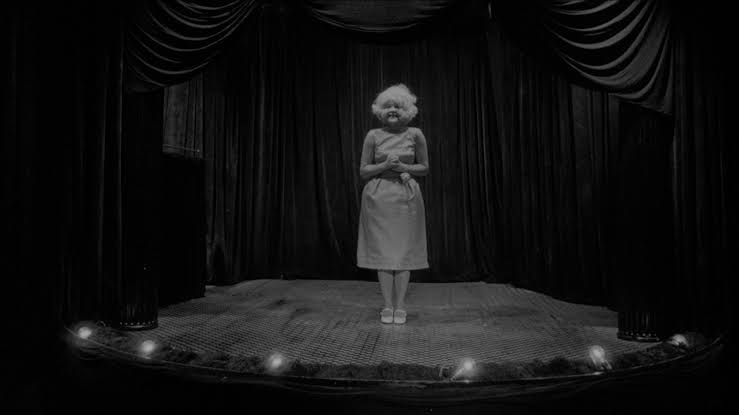
I always assumed Angelo Badalamenti specialized in 1950s jukebox-style music, which is where the strange lounge act aesthetic came from in Blue Velvet, Twin Peaks, et al. But no. That seems to mostly be Lynch’s idea as the origin point. The song here, “In Heaven,” was mostly written by the man himself. I like to think he started with this idea just to find something absurd to be “the mutant squish-y” song, and then he just decided to keep that style and really commit. The Twin Peaks aesthetic started here, in this bizarre, dark horror movie that no one was supposed to see.
Because Eraserhead is must-see cinema. For anyone who grew to love David Lynch for Twin Peaks or Mulholland Dr., this is where a surprising amount of his craft was first seen. I could name 30 movies now considered classics released in the next 20 years that were directly indebted to Eraserhead. The entire 1980s cult movie genre was trying to be the next Eraserhead!
9/10
 Avidavr: Media Reviews