Week 1: Find a movie that will actually scare me.
Explaining the Film-of-the-Week Horror Adventure 2026: link
Last year, I began my horror series with Dead Calm. Truth be told, movies rarely scare me anymore. Watching Hellraiser in my 40s makes it seem like the kids-coaster version of the movie I want it to be. Dead Calm was an insanely scary premise slightly let down by plot contrivances and mysterious character motivations. I feel slightly more optimistic about this next one.
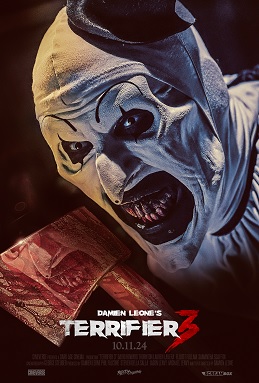
Terrifier 3 (Damien Leone, 2024)
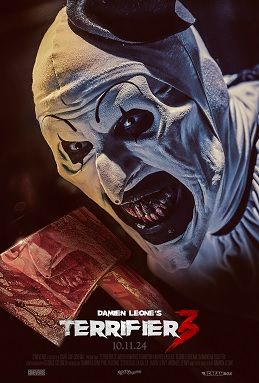
What I know about it: Art the Clown makes no sense, but that is a lot of what makes him scary to me.
In October 2024, I watched 45 horror movies. Only two were perceived as even slightly scary: When Evil Lurks and Terrifier 2. Art the Clown is deranged, delusional, and only half real. Somehow, this added up to something unpredictable and scary in a way that tapped into a lot of my darkest fears. He is somebody’s schizophrenic delusion that somehow came to life, and Art has his own schizophrenic delusions, creating extraneous characters in his mind that may or may not be real. Is Art the Clown real? The deaths of his victims are certainly real…
I hope Art’s imaginary girlfriend returns. She seemed incapable of hurting a fly. But that doesn’t mean she can’t take glee from watching said fly get ripped into pieces. The trailer for Terrifier 3 heavily implies the brutal deaths of little children. I don’t know how I feel about that.
I rated Terrifier 2 a 7.5. It was legitimately unnerving—read: very scary—but the second half ran out of expendable characters, and it didn’t really have anywhere to go for the last half hour. I am happy I saw it, but I wasn’t really planning on watching another one of these.
After the movie:
That was certainly a Christmas-y movie. Not just a Christmas-themed horror movie. I think this movie is built for watching at the family’s house, late at night, after all of the little ones have gone to sleep. Compare this to The Rock’s trainwreck Red One, or even the vaguely stagnant Violent Night, and I would take this during the holidays in a heartbeat. Not only is this my favorite Christmas horror movie, but this is—no joke—perhaps one of my top five Christmas movies of all time.
However, the question of the day was: did the movie scare me?
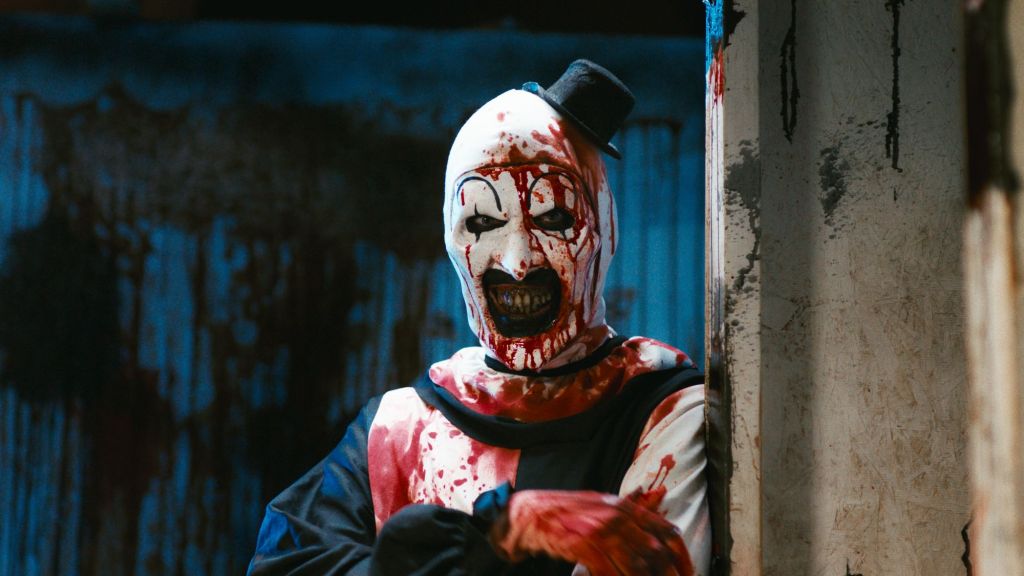
The answer is no.
Art the Clown seems hokier here than I wanted him to. His victims are also peculiar choices. One of the first major killing scenes involves a couple of mall Santas talking to a bartender. They look up and see a very scary, mute clown pantomiming excitement, and the mall Santas act as though he is a star-struck little kid. Never mind that he is obviously an adult and his makeup seems completely insane. One of the Santas takes initiative. “I am the one wearing the suit,” so as far as the weird, grotesque clown is concerned, “I’m Santa today.” We proceed to watch these three moronic men get butchered.
In Terrifier 2, I thought the characters who were killed made smart choices and more or less did nothing wrong. They were mostly shopkeepers and high-school-aged teenagers who knew to be skeptical of strangers hiding their faces. The girl who meets the most grisly end in Terrifier 2: Art the Clown knocks on her door and asks for candy. She refuses because the man is an adult. “Children only.” He refuses to leave, and she finally relents. “If I give you candy, will you just leave?” Art says yes. Then he hallucinates that she threw something like rotting dead fish into his bag.
Surely she has to die now.
That gets at one of my problems with Art in this movie. He wants to torture and kill whoever is standing in front of him. How did he choose his victims? Is there someone that ge spares, and why? In No Country For Old Men, merciless Anton Chigurh occasionally doesn’t kill a person for one reason or another. It is generally only luck, or a flip of a coin. Art the Clown never shows mercy.
The exact mechanics might be insane, but the destination is becoming strangely dependable. I would almost like to see him do something completely harmless once in a while. Return someone’s dropped wallet. Help a kid reach something on a high shelf. Walk past a vulnerable person and inexplicably leave them alone. Then brutally murder somebody else ten minutes later. That would scare me more.
Terrifier 2 had a last half hour that was slow and kind of went nowhere, but I could still take everything that happened seriously. Terrifier 3 is interesting dramatically, but as a horror movie it doesn’t really work in the way most Freddy or Michael Myers movies do. Time and again, Art the Clown turns his murders into Grand Guignol—shocking pieces of grotesque theater staged for an audience of no one except the victim, who will be dead in a few seconds. Maybe Art is aware of the audience watching in the movie theater, making everyone watching complicit collaborators.
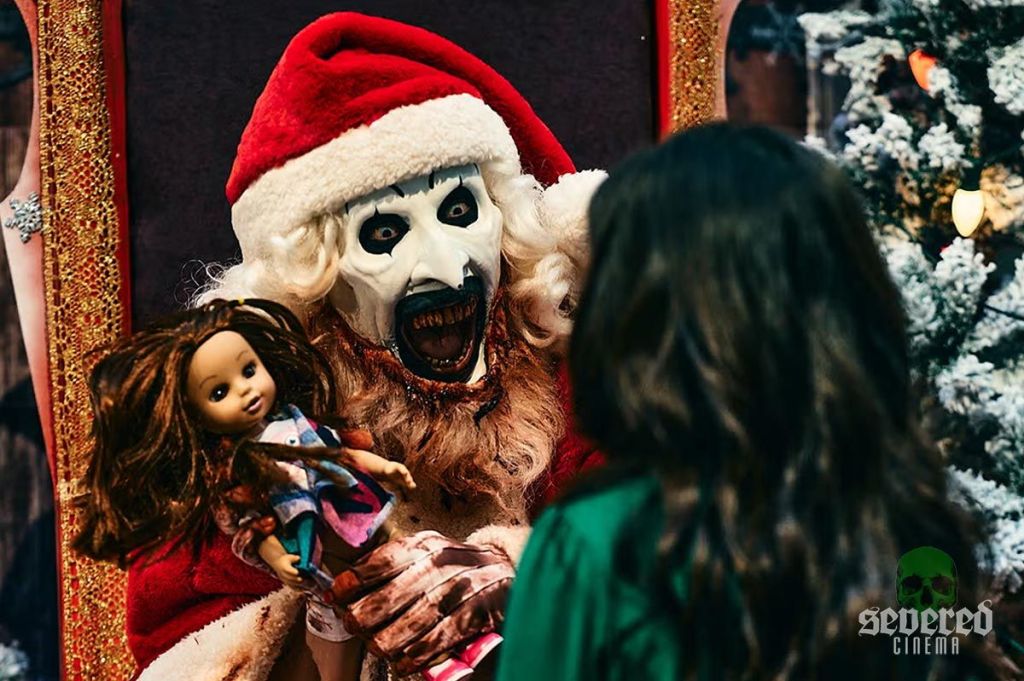
“There is no reason to be concerned here.”
I kept saying this phrase to myself as a joke whenever someone saw a clearly bloody Santa Claus with grotesque makeup and discolored teeth. In a world where a killer clown murdered so many people that he became the subject of a popular college podcast, you would think there would be some innate fear of clowns instilled in everyone where the killings actually happened. But no. “There is no reason to be concerned,” I say ironically, then laugh and roll my eyes.
Other strange decisions: a lot of the most noteworthy victims are killed completely off camera. Characters get knocked out, moved somewhere else, and then wake up just in time for us to see the shock on their faces when they realize what has happened. Art the Clown also seems to have an encyclopedic knowledge of historical torture techniques, doing things that seem designed specifically for history nerds who have spent countless hours watching YouTube videos about humanity’s worst inventions. At one point, he impales someone with a plastic tube, drops a mouse into it, and then uses a lighter so the mouse has no choice but to burrow farther into the victim’s body. Yes, I saw the Simple History video about this one too.
Does Art the Clown have YouTube?
Just another question that strains my disbelief.
However, I liked this movie overall, mostly because it seems to be a case of very smart people making a very dumb thing. The movie wisely follows victims from the last movie, partially because Terrifier 2 actually had victims of Art the Clown survive. Sienna, our brave heroine from the last movie who once cut off Art the Clown’s head with a magical sword, is struggling with PTSD and survivor’s guilt from the events of the last film. She has been in a mental hospital for five lonely years, during which time she apparently has barely been in contact with her family. We don’t really know why. She seems very stable. Do the police not believe her? A world that listens to podcasts certainly seems to believe her.

The setup does not quite make sense, but there is a lot of truth here about living in the aftermath of trauma. All of the material involving mental health seems extremely well researched and thought out. Sienna’s relationship with her surviving family is picture-perfect and believable, almost too Norman Rockwell—too perfected, too idyllic. The contrast is so extreme that everything starts to feel black and white. I would have liked to see director Damien Leone color outside the lines a little. Make the good guys slightly less perfect. Let Art behave inexplicably decent once in a while. He is scarier when he is impossible to categorize, not when he is simply an efficient chaos machine programmed to kill.
Art eventually gets his hands on a gun and even some high-class explosives. He doesn’t seem to like using these easy killing contraptions. But he is not completely opposed to them either. If he gets extremely angry, he will shoot you in the head, with a rare frown appearing on his face. That is actually funny.
I am going to end this review before I spoil it anymore. The final verdict: a fun popcorn horror movie that veers even further into ridiculousness than the previous entry did. I haven’t even mentioned the assistant killer, who was not properly set up in either this movie or the previous one. For anyone who stopped watching Terrifier 2 when the credits started, like I did, you missed a scene where Victoria Heyes, Art’s victim in the first movie, somehow gives birth to Art’s decapitated head.
What happened to the demon little girl from the second movie? She isn’t even mentioned here. Or if she was, it is never really explained why she isn’t onscreen. The demon little girl was my favorite part of Terrifier 2. The fact that she completely disappears with nary a mention is the main reason I would call this installment a notable step down in the series overall.
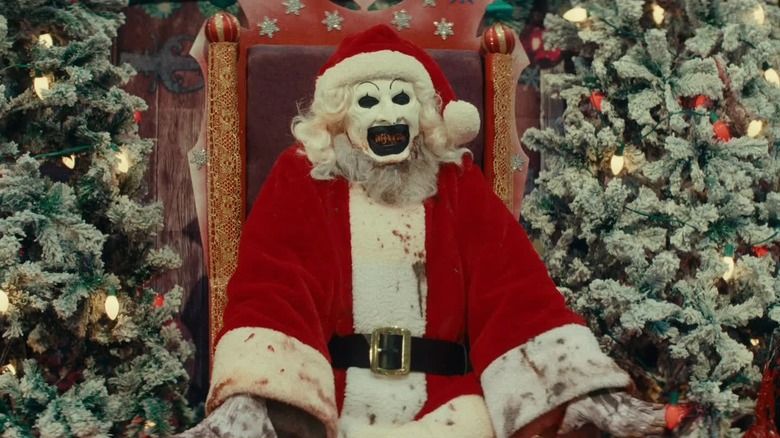
I like it as a Christmas movie a lot.
But as a horror installment in this series, it feels silly more than scary.
7/10