Goal: What is the one horror movie I would still like to watch before closing the book on this year’s project?
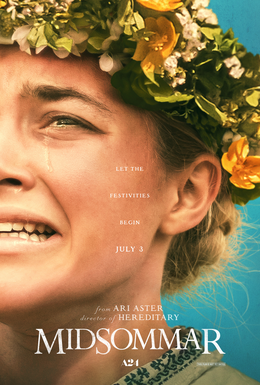
—
What I know about it:
Basically nothing. For years I assumed it had something to do with ancient Roman elites — something about the poster gave me a Caligula vibe; maybe it’s the hairstyle. Only now am I looking it up.
Apparently it’s closer to The Wicker Man than I, Claudius: a remote European commune hosting a mysterious summer festival. I’ve heard it takes place almost entirely in daylight — a neat subversion for horror — and that it falls under the “folk horror” umbrella.
So why watch it if I know so little?
About a year ago, a friend told me it was really messed up. She stopped before spoiling anything — impressive, since she hadn’t seen it herself. That was enough to lodge it in my head.
Also, I more or less tuned out new releases around 2019. As a rule:
> If you were released between 2018–2021 and scored under a 77 on Metacritic, there’s a good chance I never heard of you.
On paper, Midsommar was a hit — but the reputation seems complicated. It came after Ari Aster’s breakout Hereditary, and the consensus appears to be something like: “good, but not as good.” I never cared much for Hereditary anyway, so this actually raises my hopes. Sometimes the follow-up to a major work — the one that gets dinged for being weirder, less focused, or more self-indulgent — ends up being the real gem.
It’s the Kid A to OK Computer: a stranger evolution of the same concerns, initially received as a disappointment but later appreciated on its own, maybe even preferred.
I actually like Punch-Drunk Love more than Boogie Nights or Magnolia, so I’m open to the possibility that a “disappointment” can be the quietly great one.
So I’m excited for this. Let’s hope this is the Return of Saturn to Hereditary’s Tragic Kingdom.
—
After the movie:
Hmm. That was a very pretty bad movie. It has all of the makings of a good moral fable, but it tries to do too many vague things with character motivations. Too many beats are awkwardly piled on at the same time, so the overall effect is watching a filmmaker grasping at straws.

A key dynamic concerns Dani (Florence Pugh) and Christian, who are in a relationship that seems to continue mostly from inertia. Christian isn’t exactly the villain, but he is shapeless and passive. The film never fully convinces us why these two would have gotten together in the first place.
Christian and his friends decide to travel to Sweden to visit a fellow student’s rural commune during the midsummer festival. Given their ages, you might expect a hedonistic vacation driven by drugs and hookups, but the draw seems more like cheap cultural tourism — the promise of “experiencing something authentic.”
—
What educational value is there in Midsommar?
What do we learn?
First, there is a portion of Sweden where the sun does not set for part of the summer (“the midnight sun,” as they call it).
Midsommar is a real cultural tradition across Sweden, and it takes place during the summer solstice, so the timing overlaps.
The film also references ättestupa, a legendary cliff from which elderly people were said to leap once they became a burden to their family. Importantly, this is folklore only — there is no historical evidence that such a practice ever occurred. The stories were meant to shock or caution, not to endorse the act or portray it as noble.
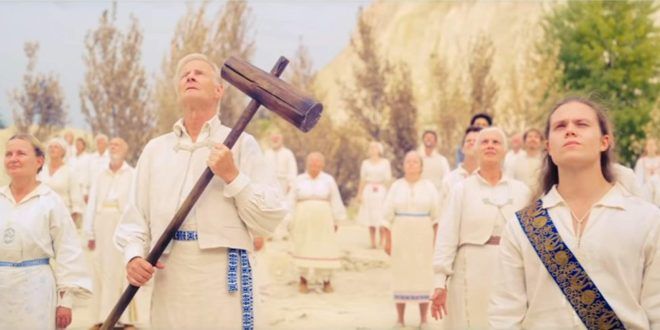
The rest? Pure fantasy. The architecture of the ceremonial building is not based on anything recognizable in Swedish culture. There are no psychedelic rituals at Midsommar; no fertility ceremonies to choose a queen; no temples built intentionally to be burned to the ground. They could have made this about the Burning Man festival and it would have been just as true to factual life — if not more so.
You also get the sense that Swedish people believe life is grounded in reincarnation, which is not representative of Swedish culture broadly; that’s an invention of the fictional commune
So what is this movie trying to be?
It imagines a culture that treats outsiders as expendable, but believes that someone with no family or sense of belonging can be absorbed into the group — if they are willing to surrender themselves totally.
The most haunting part of the movie comes when Dani screams in furious grief and the surrounding women mimic her cries. They are not mocking her; it is presented as a communal expression of empathy.
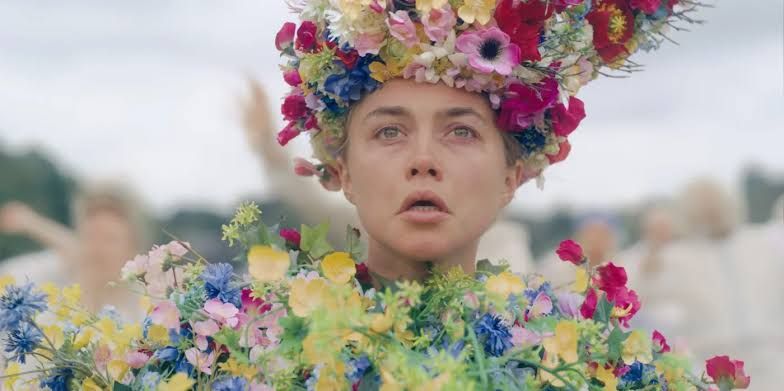
Aster seems interested in how grief can isolate as much as it bonds. Dani’s personal tragedy is so extreme that she becomes untethered from ordinary life, and the commune offers what her real world does not: absolute emotional mirroring, however sinister the cost.
In that sense, Midsommar is about the seductiveness of belonging. When genuine support systems fail or prove indifferent, even a dangerous one can feel like salvation.
> “The last known whereabouts of his cell phone was where, officer?”
—
5/10
 Avidavr: Media Reviews