A personal archeology of fear: what I unearthed in fifteen first-time horrors.
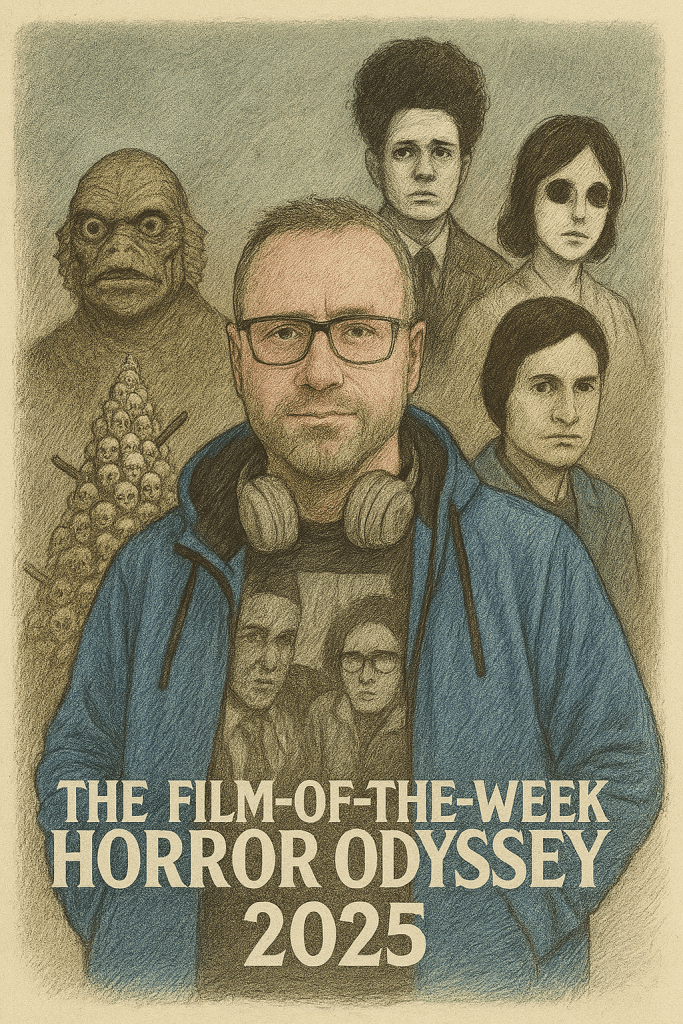
I’m ending the project at 15 movies. My goal was 16, but the season is long over, and I’m itching to watch other movies.
What have we learned?
There was a French horror movie that was basically as important as Psycho.
Eyes Without a Face proposes that a face transplant is as simple as cutting around the outside of someone’s face with a scalpel and lifting the skin off like a Halloween mask. I don’t think the procedure is quite that simple, but the movie shows it in its entirety, and the only thing keeping you from fainting is pure disbelief (or hope) that it wouldn’t work that easily.
In 1960, this was shocking enough to make some audience members pass out—and probably caused a few to wish they could.
It was one of the first films to make the respected father the villain, even a killer. If that doesn’t equate to brilliance, it comes close.
The Best and Worst Zombie Movies Since 1980
By sheer luck, I watched both the best zombie movie made since 1980 and the worst.
28 Years Later was the first in the series that felt like a true “franchise picture” in the best meaning of the phrase. It’s not really about the rage virus—it’s about losing a parent to cancer. The score by Young Fathers (virtually unknown in the U.S., semi-popular in the U.K., and respected everywhere else) is phenomenal. The “tower of skulls,” a modern mausoleum for treasured loved ones, is instantly iconic. The characters actually do know how to handle fast zombies, but the threat becomes the backdrop for a story about people who only have their families left.
World War Z, on the other hand, is one of the worst movies I’ve ever seen. Expensive-looking, hollow at every level, and completely neutered by its PG-13 rating. The zombie virus seems to spread through aura or osmosis. No one ever actually gets bitten on screen, yet everyone instantly looks like they’ve been rotting for a month. How does that even work?
Every scene is a problem except for the car chase.
Eraserhead and The Lighthouse: Two Triumphs
Eraserhead was another highlight. It’s the movie that inspired half the 1980s cult creature-features. Poor Henry’s life is staring at a brick wall outside his bedroom window while his mutant baby screams in the next room. His partner is gone; she couldn’t take it anymore.
It’s brilliant—part Cronenberg, part Twin Peaks, part stop-motion nightmare—and possibly the biggest spiritual influence on Beetlejuice. Next time I see this playing at midnight somewhere, I’m going.
Almost as good was Robert Eggers’s The Lighthouse. Hallelujah: I finally liked one of his movies as much as people say I should. The “lighthouse drives men mad” trope deserved a full exploration, and this one dives straight into mythology, sea legends, and Cthulhu-adjacent imagery. The lighthouse setting itself is spectacular. You’ll see more of these in the future—there have already been two: this and The Vanishing from a year earlier.
The Creature, The Camp, and The Witches
After those, I recommend Creature from the Black Lagoon. Not respected enough then or now, but the monster’s theme music is one of the best ever written (alongside Bride of Frankenstein). The editing, music, and cinematography could have made this a masterpiece, if the script hadn’t seemed like it was written in a weekend.
Friday the 13th was almost brilliant—for half an hour. It feels like it was written by a playwright trying to compete with Halloween, but lost a tug-of-war with producers who just wanted something fast and sellable. It’s preposterous, but believable enough that the silliness becomes irritating. The score is as good as Creature’s for the first 30 minutes, then even the editor gets bored of it.
And The Witches—the makeup work by Jim Henson’s team on Anjelica Huston is indelible. Huston never became the next Meryl Streep, but this is a role no one else would’ve played that way. I didn’t show the full getup in my review because seeing it for the first time is the reason you pay for admission. The mouse work feels like an afterthought, but everything else? The mouse work feels like an afterthought, but everything else? Burned into the psyche of every kid whose parents mistakenly took them.
And Then There Was Midsommar
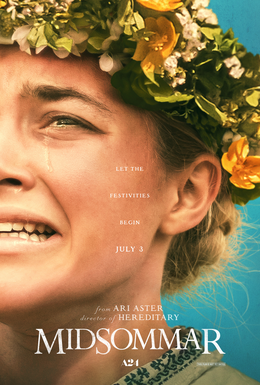
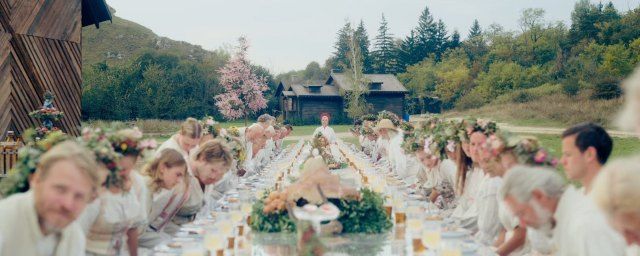
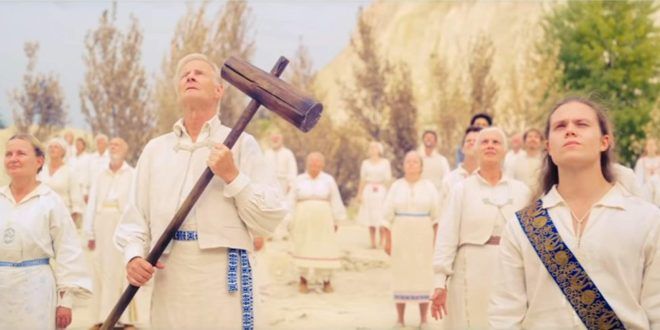
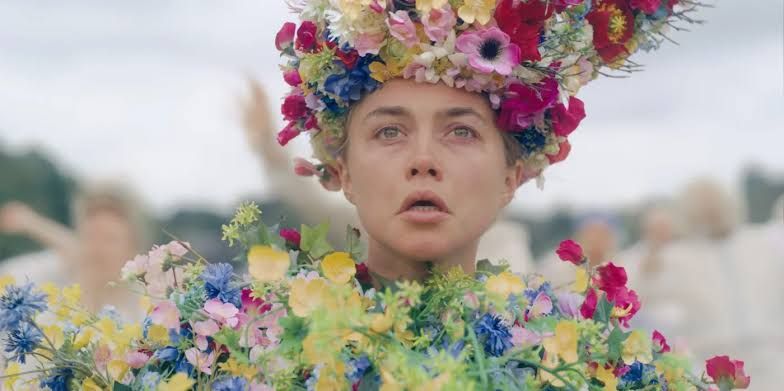
The other lowlight was Midsommar. In some ways brilliant, in most ways incoherent. It did, however, introduce me to the Swedish folklore of elderly people jumping off a cliff once they became a burden. (Folklore only, but compelling enough for a filmmaker to say: “Okay… make this a movie.”)
It’s the Tokyo Story or Make Way for Tomorrow of human-sacrifice rituals, but the execution is a B- for the assignment. A C overall.
—
Horror Movies Seen for the First Time in 2025 (ranked)
1 Eyes Without a Face (1960) – 9.5
2 Possession (1981) – 9
3 Eraserhead (1977) – 9
4 28 Years Later (2025) – 9
5 Strange Darling (2023) – 8.5
6 The Lighthouse (2019) – 8.5
7 Onibaba (1964) – 8
8 House (1977) – 8
9 Creature of the Black Lagoon (1954) – 8
10 The Stepford Wives (1975) – 8
11 Weapons (2025) – 7.5
12 Final Destination: Bloodlines (2025) – 7.5
13 Sinners (2025) – 7.5
14 Train to Busan (2016) – 7.5
15 Revenge (2017) – 7
16 The Witches (1990) – 7
17 Night of the Creeps (1986) – 7
18 I Saw the TV Glow (2024) – 7
19 Ringu (1988) – 7
20 The Invitation (2017) – 7
21 X (2022) – 7
22 Possessor (2020) – 7
23 Paranormal Activity (2007) – 6.5
24 Nosferatu (2024) – 6.5
25 Heretic (2024) – 6.5
26 Mandy (2018) – 6.5
27 Blade II (2002) – 6
28 Dead Calm (1989) – 6
29 Frankenstein (2025) – 6
30 Arcadia (2024) – 6
31 Cube (1997) – 5.5
32 28 Weeks Later (2007) – 5
33 Midsommar (2019) – 5
34 Scream (2022) – 5
35 Friday the 13th (1980) – 5
36 Death of a Unicorn (2025) – 5
37 The Conjuring (2013) – 4.5
38 Longlegs (2024) – 4
39 The Endless (2017) – 4
40 The Coffee Table (2022) – 4
41 House on Haunted Hill (1959) – 3
42 Nosferatu the Vampyre (1979) – 2.5
43 World War Z (2013) – 1
—
Twenty horror movies on my docket for October 2026 (if not before then):
Dr. Jekyll and Mr. Hyde (1931)
Cat People (1942)
What Ever Happened to Baby Jane? (1962)
Pirhana (1978)
The Changeling (1980)
The Howling (1981)
Tenabrae (1984)
Critters (1986)
Monkey Shines (1988)
Jacob’s Ladder (1990)
Saw (2004)
The Orphanage (2007)
It’s Such a Beautiful Day (2012)
A Monster Calls (2016)
Under the Shadow (2016)
The Killing of a Sacred Deer (2017)
Halloween (2018)
The Wolf House (2018)
Oddity (2024)
Dangerous Animals (2025)
—
Final Thoughts
Of those upcoming films, Dr. Jekyll and Mr. Hyde and Cat People are the ones I wish I’d squeezed in this year. I always hope to find new personal classics, but it’s rare that any actually qualify.
I also recommend Sinners and Weapons, two mainstream horror films that might even be nominated for Best Picture next year. I’d give them both a 7.5—which for me qualifies as a personal classic, just barely.
Every October feels like a tunnel you walk into, hoping something in the dark will change you. The best horror isn’t about fear at all; it’s about seeing the ordinary world more clearly afterward. Give me truth, memorably distorted and I’m a happy Crystal Lake camper.
The full list of reviews are here.
 Avidavr: Media Reviews