If you only see one movie before the 2026 Oscars, why not make it this one?
Blue Moon (2025)
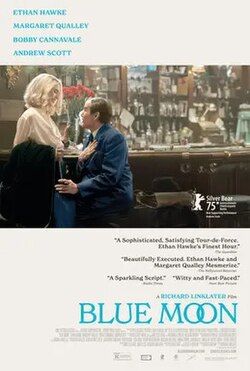
Why would an obviously gay man living in New York City in the 1940s get utterly plastered in straight bars when gay bars existed—places where he could have had a drink, relaxed, and maybe even enjoyed himself? “What, are you my therapist now, Eddie?”
Richard Linklater’s film is about Lorenz Hart, the legendary lyricist. But even more than that, it is about a man who cannot stop circling the idea of happiness while suspecting it was designed for other people. Hart had far more to say than the near-meaningless love songs that made him famous, and the script—drawn from his real letters—lets him say it, slightly. What he had to say was that love seems suspiciously easy for everyone else. “Oklahoma! exclamation point, no less.”
Hart’s great claim to fame was writing the lyrics to “Blue Moon,” a melody by Rodgers that other lyricists had failed to turn into a hit. Hart found the angle: a lonely soul who has given up on love suddenly, miraculously, finds it. That idea landed during the Depression because it promised that despair might reverse itself overnight.
The irony, of course, is brutal. Hart never seems to have found anything resembling that kind of love himself. He found brilliant conversation, wit, companionship, and drinking partners, but not the thing his lyrics sold to millions.
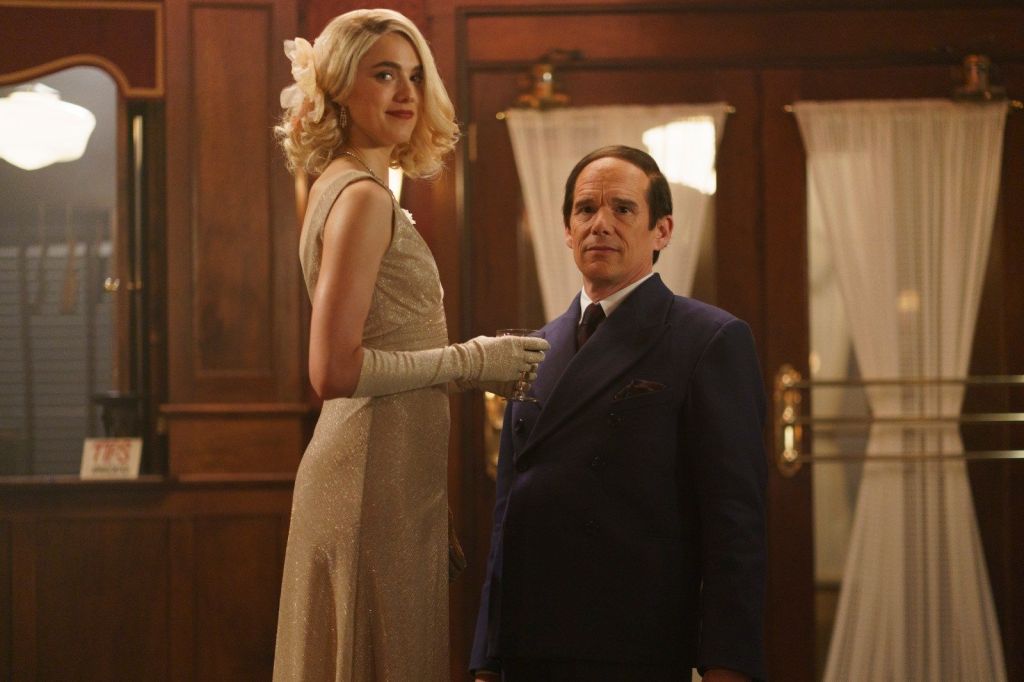
There is another irony too: today, most people remember “Blue Moon” as a melody more than as a lyric, and even in Blue Moon—a film about Lorenz Hart—the soundtrack leaves you feeling how little the world retained of what he actually contributed. The song became a standard through singers like Ella Fitzgerald, Frank Sinatra, Dean Martin, Bobby Vinton, Elvis, and especially the Marcels, whose doo-wop version transformed it so thoroughly that it barely even sounds like the same song anymore. It survives as cultural wallpaper. Hart did not.
Blue Moon makes a serious case for itself as one of the best movies ever made about what it was like to be gay in the 1940s. Not because it lectures, but because it observes. Hart seems to have lived in a permanent state of fantasy that the right woman might somehow arrive and quiet everything in him that made life difficult. That never happened, so he drank.
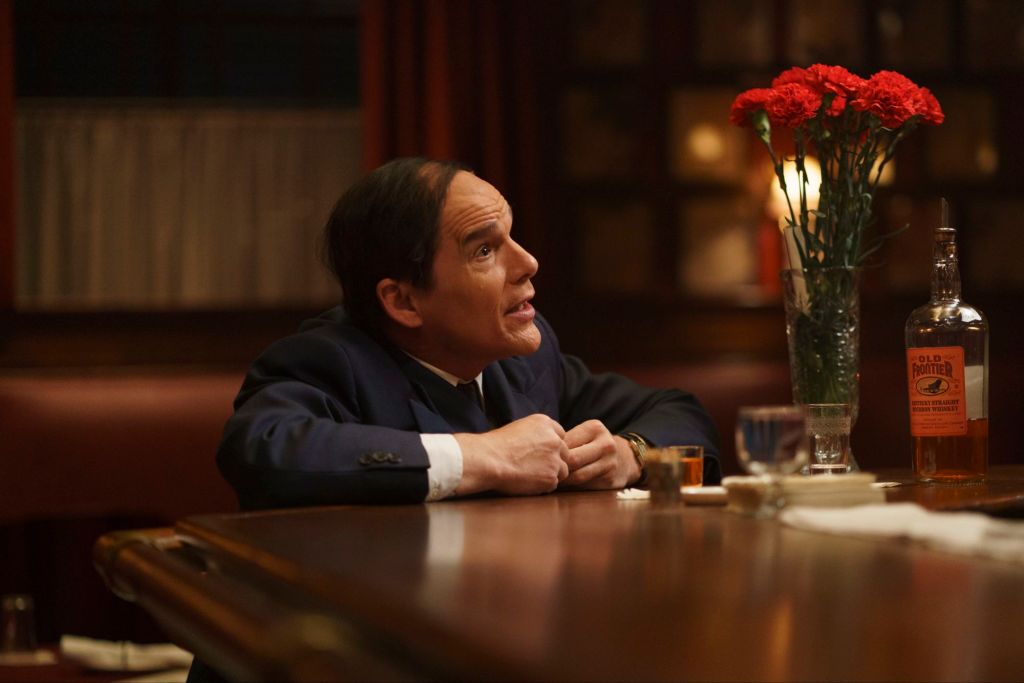
He drank and talked and flirted and performed intelligence for bartenders, strangers, and anyone else who would listen. He built a substitute version of romance out of conversation, alcohol, self-mythology, and pop culture. That is the premise of the film.
Hart, doomed to drink himself to death in 1943, slips out during the second act of Oklahoma!—partly because he can’t stand its extroverted optimism, partly because he wants a head start on the evening. He sits down at a bar, orders a shot he claims he will only stare at longingly, and begins the familiar ritual of trying to outtalk, outwit, and outmaneuver the bartender into letting him have the one thing he has supposedly come there not to touch.
The movie does something remarkable here: it makes an entire era of romantic cliché newly legible. To someone like Hart, all those happy endings and moon-June platitudes were not stupid. They were sacred. They represented the life he wanted and could never quite enter.
Ethan Hawke is splendid. The physical transformation alone is great—he often appears tiny, shrunken, almost swallowed by the world around him—but the real achievement is that he plays Hart as a person rather than a type. This is not a stock tragic homosexual, not a camp caricature, not a clever drunk dispensing epigrams. Hawke gives him anxiety, vanity, ache, bitterness, hunger, and genuine romantic feeling. He seems believable, recognizable.
Linklater, who I already admire to an almost unreasonable degree, has made something that belongs with Boyhood and the Before films among his best work.
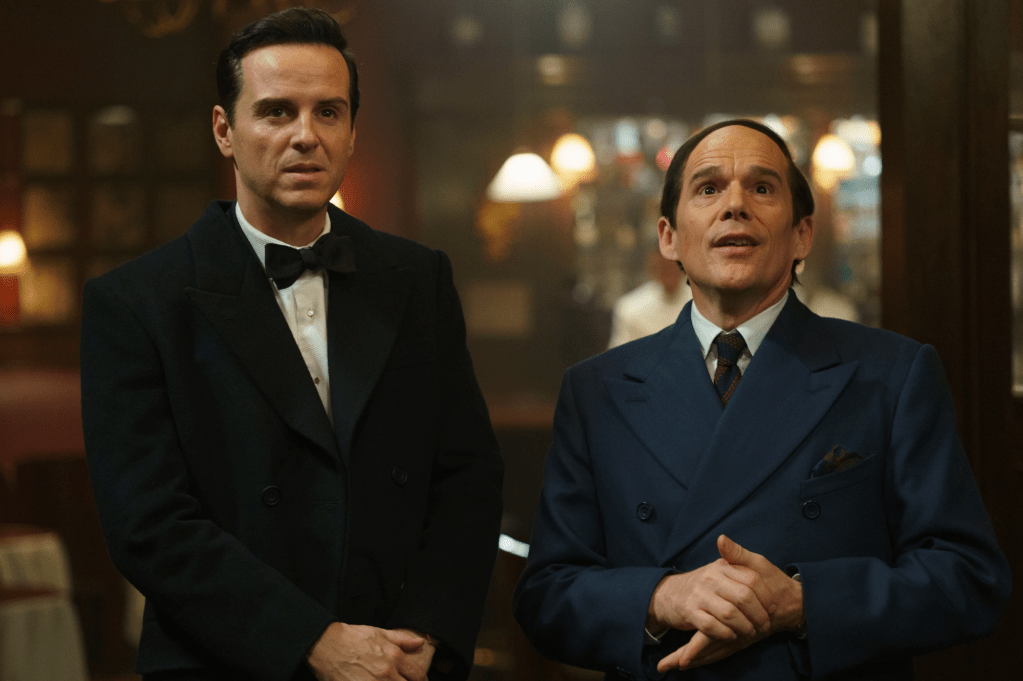
Blue Moon is smart, sad, and piercingly observant about the way pop culture can sustain a person while also ruining them. Everyone should get to look this hip and this intelligent while being this intensely miserable—at least once.
9.5/10
 Avidavr: Media Reviews