A Sexy Baseball Classic That Leaves Its Most Interesting Conversations Offscreen
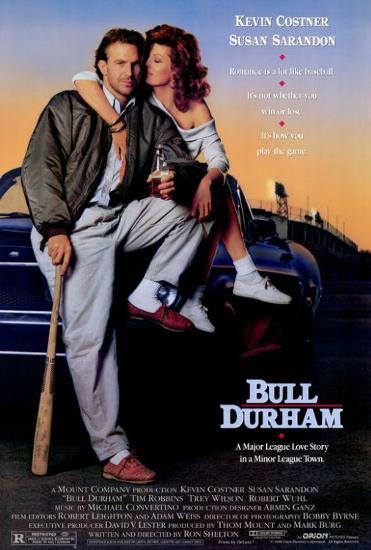
Bull Durham is a romantic comedy about an aging minor-league catcher brought in to guide a talented but wildly undisciplined young pitcher, although both men have their hearts set on the same woman. It is widely regarded as one of the best baseball movies ever made, celebrated for treating the sport, sex, and adult disappointment with humor and sophistication. Is it also one of the sexiest movies of the 1980s? Some fans certainly seem to remember it that way, although I suspect many of them have not seen it in a while.
Kevin Costner may be the featured player on the poster, but this is Susan Sarandon’s movie through and through. She plays Annie, a mystical baseball groupie who chooses one player each season to become both her lover and her personal project. The screenplay initially positions Annie as an older, sexually authoritative variation on the manic pixie dream girl, a woman whose eccentric worldview gives direction to earnest men who are completely lost and unfocused. If you are thinking Annie may be getting a little old for this ritual, she seems to think so too. Annie believes in her powers as a muse in the art of baseball. Before she gives up the ritual, can she work her magic one last time?
After 20 minutes, I thought this was quite promising as the male version of A League of Their Own, a movie that could make me laugh, cry, and watch it on repeat. Instead, it was amiable, sexy, and only intermittently convincing. It expects the audience to accept its romantic and baseball mythology without supplying many of the details that would make its characters, relationships, and emotional stakes feel fully realized.
The reason I do not quite love this movie is that much of its appeal depends on one’s appreciation for the mystical qualities of Major League Baseball. My least favorite scene is the one in which Crash describes his 21 days in the majors to the other Durham Bulls on the bus. Everyone becomes entranced by his story. Crash names the obvious differences between the majors and the minors: grander ballparks, better hotels, handled luggage, sophisticated women, and much more dangerous pitchers. What he never provides is a specific memory that explains why those 21 days became the emotional summit of his life. I cannot tell whether he is intentionally romanticizing the experience, teasing the other players, or revealing that his brief period in the majors was the best his life was ever going to get.

Nuke is such an erratic pitcher that he sometimes seems incapable of throwing the ball anywhere near the plate, but I do not really have a problem with that. The idea that everyone can still recognize a “million-dollar arm” beneath all that chaos is goofy, but convincingly so. The movie gains much of its sex appeal from the fantasy that someone can possess so much raw talent that he barely needs to care about the sport, asks for another quickie three minutes before a game, and is still treated as an irresistible investment. Who would not want this guy’s life?
Maybe what bothered me was not the movie’s appreciation for baseball, but its appreciation for monogamy. For all intents and purposes, Annie is monogamous during the baseball season, guiding one minor-league player through a combination of seduction, withholding, and instruction. She calls this ritual her religion, but the movie makes her sexual freedom surprisingly safe for a mainstream audience by insisting that she remain monogamous within each baseball season. Nuke seems suddenly monogamous as well. Crash is the adult alternative she also desires, but he refuses to fit himself into her seasonal ritual. For a moment, she seems outraged and sexually frustrated beyond belief, and the audience is invited to enjoy a satisfying flash of schadenfreude.
I do not disbelieve Annie because of her age or sexuality. I disbelieve the oddly specific ritual the screenplay has constructed for her because it never shows us how she persuades these players to accept its rules. Did Annie demand monogamy from Nuke? Was she simply so desirable that monogamy was implied? The movie appears to know what their arrangement is, but it never quite tells the audience.

I also found Nuke’s journey strange. At the beginning of the movie, he treats sex as so urgent and casual that he asks for another quickie three minutes before taking the mound. Yet after Annie ties him up, reads poetry to him, and withholds the sex he expects, he goes to work the next day with barely more frustration than someone who is mildly hungover. The movie reneges on one of Nuke’s defining traits: the sense that sex is his one non-negotiable.
If this movie were made in 2026, Annie might read Walt Whitman all night to a tied-up Nuke and then imply that she allowed him to pleasure himself to orgasm before going to sleep. Or the movie might include a scene in which Annie explicitly sets expectations for Nuke in a way that is sexy, persuasive, and consistent with her unconventional personality. Either scene would be difficult to write, but the movie avoids that difficulty by leaving the necessary conversation out.
Bull Durham as a whole feels incomplete to me. It presents itself as sexually adventurous, but it feels sanitized for a mainstream audience and only goes halfway. Tim Robbins is the only actor who seems completely committed to the movie’s strange combination of baseball comedy and sexual fantasy. He makes Nuke seem believable and sexy in a way that might actually be possible, even when he resembles a seven-year-old who has just discovered that he was bitten by a radioactive spider.
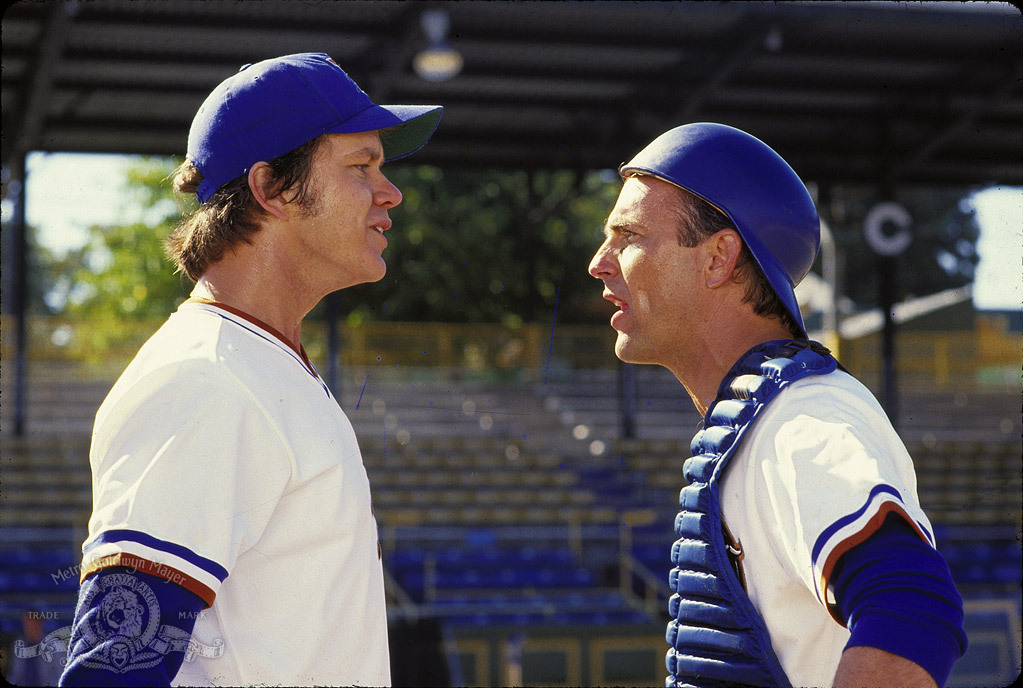
Susan Sarandon is magnetic but underwritten, while Kevin Costner often seems to simply exist. Crash is an experienced, self-righteous know-it-all who enjoys arguing and proving that he was correct all along. I do not know why the world once thought Costner was so sexy that he would not be expected to prove it onscreen. Tim Robbins at least bares his backside. No jockstrap for Costner.
I keep encountering a particular kind of late-1980s studio-comedy stiffness. I recently rewatched Roxanne (1987) and found it to be an awkward bummer compared with movies released just a few years earlier or later. Bull Durham is a great idea for a movie that plays as though someone became nervous about how far its sexual and emotional complications might go. Its reputation promises a funny, adult, sexually frank examination of baseball, aging, and desire. The movie simply needed to think through its characters’ motivations a little more, or at least let the audience hear more of the conversations that apparently took place offscreen.
6.5/10
 Avidavr: Media Reviews