Blog

  • Serpico (1973)

    My 27 movie A-Z film-a-thon: day 20.
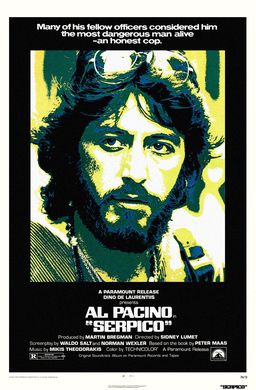
    Serpico (1973)

    Serpico is life summarized. If I could recommend it to one group, it’d be college-aged people considering law enforcement. This should be required viewing. It’s a true story — and it feels like one.
    The effect is sobering. Serpico isn’t a saint; he just sticks to a couple of moral rules, and for that, he’s targeted. Mostly, he’s punished for being a nonconformist who won’t take bribes. Turns out that’s a real problem.

    There’s one scene that nearly derailed the film for me. Early on, Serpico stumbles on a group of young Black men assaulting a woman. It’s brief and has no impact on the story. I initially excused it as something that “probably happened.” But it didn’t. It’s not in Serpico’s memoir and appears to be completely invented. That makes its inclusion worse. It plays into a racist stereotype under the guise of “filling in context.” This isn’t harmless background — it’s racially charged mythmaking.

    Structurally, the movie is messy. It jumps between years, jobs, and relationships with little concern for narrative momentum. The fabricated scene I mentioned only exists to make Serpico look sympathetic — even to a rapist. He helps the man, walks him to a café, and threatens to shoot him if he runs. It’s absurd and undermines the film’s credibility.

    And that’s the problem: if this film invents major scenes, how much can we trust the rest? So much of the runtime is spent on relationships and moments that never happened. Serpico’s partner leaving him in the bathtub to marry someone else? Pure invention. These scenes feel like homework: are they fair to minorities, to Serpico, to the police?

    Still, the core story remains: Serpico faced relentless pressure to conform, constant harassment, baseless rumors, and professional roadblocks. He did the right thing, and it made his career stagnant and his personal life chaotic.

    The film feels endless by design. That’s part of the truth it captures: being a good cop in a corrupt system leads to isolation, thanklessness, and futility. No promotions, no recognition, no peace.

    Serpico is not a great film. Its liberties are frustrating. But it’s essential viewing. If someone sees this and still wants to be a cop, maybe — just maybe — that’s the kind of person we need.

    7.5/10
  • Rio Bravo (1959)

    My 27 movie A-Z film-a-thon: day 19.

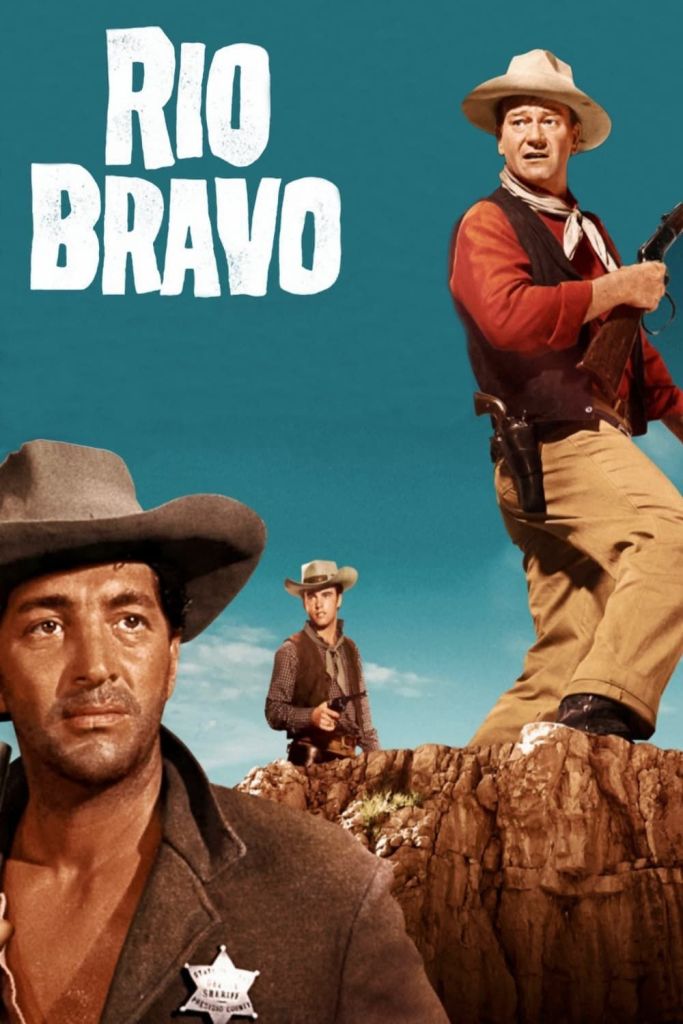
    Rio Bravo (1959)

    High Noon ranks among my favorite action movies, so I was curious about Rio Bravo, especially after hearing it described as Howard Hawks’s response to that classic. High Noon follows Sheriff Kane, abandoned by his town as he faces a returning outlaw alone.

    Rio Bravo centers on John T. Chance (John Wayne), an unattached sheriff trying to hold a killer in jail while the man’s brother schemes to break him out. Unlike Kane, Chance finds dependable deputies—even if they’re flawed: a drunk, a kid, and an old man.

    Where High Noon is an economical thriller, Rio Bravo is a greatest-hits collection of Western tropes. It’s sentimental rather than suspenseful. High Noon pushed the genre forward; Rio Bravo settles into its comforts.
    Still, it likely felt very adult for its time. Chance exudes mature, casual masculinity. He drinks beer like water, kisses men on the head to get their help, and handles romantic advances with cool detachment. He’s a man’s man with bigger concerns.

    You can tell this is a Howard Hawks film from the rich, natural dialogue—always moving, never cliché. Tropes abound, but they’re delivered with warmth and confidence. The character interactions are lively and, at times, very funny. Misunderstandings unfold like in Bringing Up Baby, with believable conversational stumbles.

    Action takes a backseat. There’s a plot ripe for tension, but even the shootouts are relaxed. Characters chat across gunfire like they’d rather swap stories than bullets. The film seems to ask, “Do we really care about the action, or are we here for the company?”

    Sometimes it tries a bit hard to be charming. An eight-minute scene has the deputies singing in perfect harmony while one strums a guitar. If White Christmas was made to make my grandma smile ear to ear, Rio Bravo was made to do the same for my grandfather.

    There’s no bitter end here. It’s about men reaching understandings, earning respect, and charming the women around them. The film looks gorgeous—great cinematography, sets, and costumes. It’s a template for spaghetti Westerns, minus their grit and thrill. Long, quaint, and precious, Rio Bravo doesn’t transcend its genre, but it’s a polished example of how to do the fundamentals right.

    8/10

  • Quest for Fire (1981)

    My 27 movie A-Z film-a-thon: day 18.

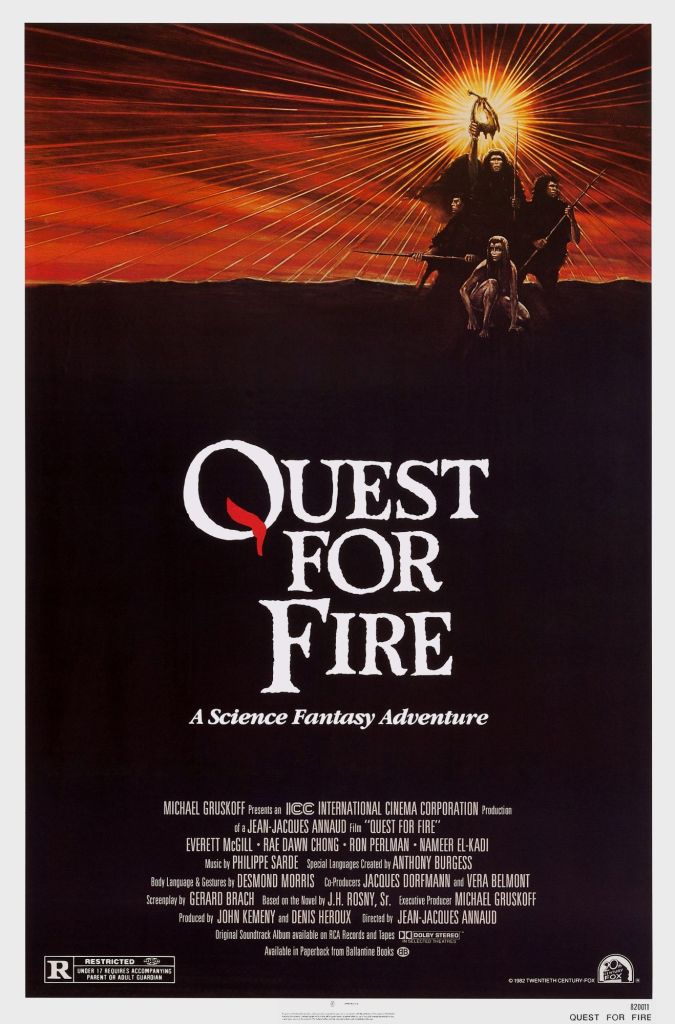
    What an odd film. I’d never heard of it, despite it being a huge hit—$55 million at the box office (about $186 million today). Yet it looks like something made for European television. At least, the version I saw—Prime only had the pan & scan cut.

    The best way to describe Quest for Fire is prehistoric cosplay. It’s as if some guys grabbed loincloths, covered themselves in mud, and staged grunting battles. Elephants are dressed up as mastodons. Lions get fake sabretooth fangs. The commitment is admirable.

    The plot is simple. Fire is precious—no one knows how to make it, only to preserve it. A small nomadic tribe in the Paleolithic Era (80,000+ years ago) guards a flame they’ve kept alive for years. After an attack by a more primitive tribe, they flee with their fire still intact. But later, while traveling through swampy terrain, one of the three men accidentally extinguishes it. With no idea how to reignite it, they go in search of more. They find the remnants of another tribe that also had fire. They roll around in the ash like deranged loons. There are human skulls. Cannibals. That can’t be good.

    They come across a few women held captive by another tribe and free them. One woman follows them, smart and determined, refusing to be underestimated.

    Now, this is worth addressing. The film includes a r*** scene. One of the three men forces himself on the woman. She protests—until the film shifts tone, implying she enjoys it. Meanwhile, Ron Perlman’s character silently turns away, offering them “privacy.” It’s one of those ’80s movie scenes where r*** is treated as inevitable, even romantic. Some might excuse this as fitting the primitive setting, but that’s lazy. A more thoughtful filmmaker wouldn’t present assault this irresponsibly, especially in a movie marketed broadly. The subtext is vile: “R*** is natural, and she liked it.”

    The film’s logic also strains believability. We’re told the tribe has kept fire alive for years—but it’s carried in a basket. No fuel. No bags. No protection from weather. The idea that this fragile flame could survive travel is hard to accept.

    The rest of the film is mostly grunting, tribal battles, and encounters with animals dressed as prehistoric beasts. It doesn’t teach you much, but it’s undeniably ambitious. The actors go all in. It looks muddy and bleak and physical in a way few films do. It even won the Oscar for Make-up, and fair enough.

    Should you see it? That depends. The film is strange, illogical, and morally questionable—but unique. I’ve never seen anything quite like it. (Sasquatch Sunset might be next on my A-to-Z list.)

    Yes, you should see it. With an asterisk.

    7/10

  • Paprika (2006)

    My 27 movie A-Z film-a-thon: Day 17.


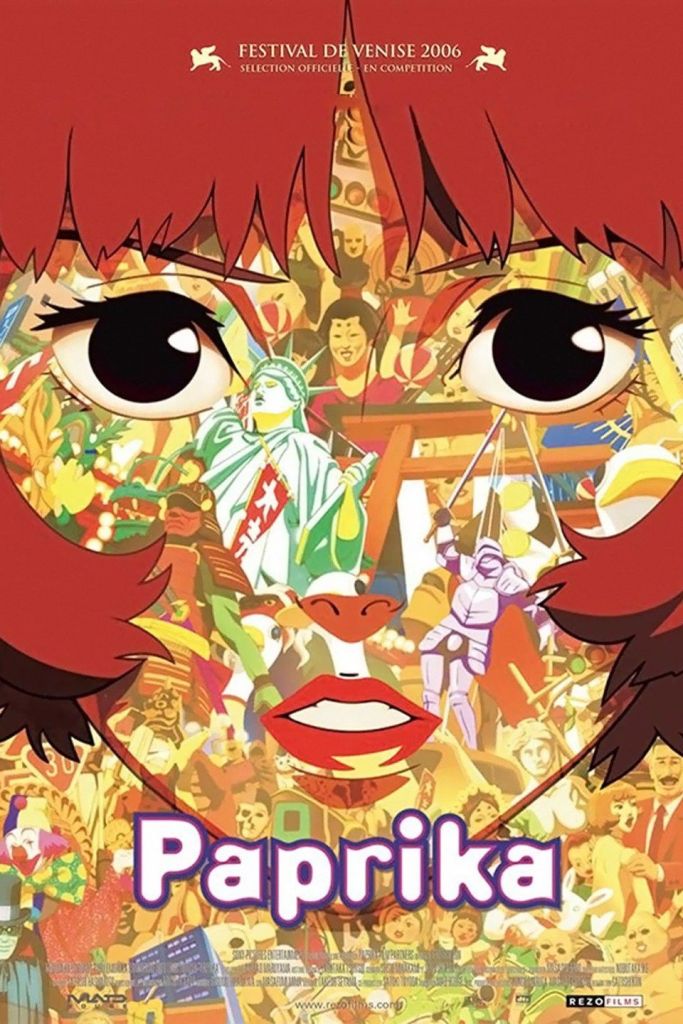
    A colorful whir of technological bliss.


    It’s impossible to watch Paprika without thinking of Inception (2010). In Inception, Dominic Cobb (Leonardo DiCaprio) enters people’s dreams to extract secrets from their subconscious. In Paprika, Dr. Atsuko Chiba does something similar, using a device called the DC Mini to enter dreams and help patients through their therapy. The twist: the DC Mini is stolen, and its thief begins to manipulate people’s dreams—and minds—on a mass scale.


    The idea of dream infiltration isn’t new. Roger Zelazny’s novel The Dream Master (1966)  shares a premise that closely resembles Paprika’s in broad strokes, and Philip K. Dick’s Ubik isn’t far off either. But Paprika takes those seeds and runs wild with them, injecting the concept with color, chaos, and visual invention. The result feels like a dream within a dream—not unlike a fantasy RPG campaign, full of wild, surreal encounters and world mechanics waiting to be explored.


    The animation bears a clear influence from Hayao Miyazaki’s Spirited Away. The dream world sequences—especially the parade—are filled with characters and creatures that feel spiritually descended from Miyazaki’s more whimsical creations. “Granny” even makes a cameo of sorts. But where Spirited Away is magical and serene, Paprika is frenzied, glitchy, and technological.


    Having seen director Satoshi Kon’s previous film, Tokyo Godfathers, I was surprised by how different Paprika feels. Tokyo Godfathers is dingy and dialogue-heavy, grounded in a gritty, real-world setting. I often struggled to keep up with the subtitles, and the story—while simple—felt hard to follow without a recap.

    Paprika is the opposite: colorful, fast-paced, and visually stunning. The action doesn’t rely on walls of text to explain itself, and the subtitles are easy to read without falling behind. Where Tokyo Godfathers felt drab, Paprika bursts with vivid blues, reds, and golds, animated with fluidity and precision. Characters are distinctive and memorable. The soundtrack, with its glitchy electronic palette, feels right at home alongside the cutting-edge video game music of its era.


    I especially appreciate works that pick up the baton and keep running with it. Has Paprika invented wholly new ideas? Maybe not. You can see traces of A Nightmare on Elm Street in its horror elements, and Eternal Sunshine of the Spotless Mind in its emotional dissection through surrealism. But Paprika refines and reimagines those ideas in its own hypnotic, high-tech voice. (And for the record, Paprika is based on a 1993 novel, so Eternal Sunshine likely drew from it—not the other way around.)


    Is it a little confusing? Sure. The story is clear at first, but around the halfway mark, plot developments start coming fast, and the rules of the dream world get hazier. The villain, while intriguing, could have been more clearly defined—I wasn’t even sure what he looked like for most of the film. It’s one of those cases where a quick Wikipedia read helps connect the dots.

    But compared to the convoluted multiverse films of the past decade, Paprika is refreshingly streamlined. It’s dense, but not overloaded. You can follow it, even if some pieces slip by on first watch.


    More than anything, Paprika is a sensory experience. The music, animation, editing, and pacing all work in tandem to create a world that feels as real as it is unreal. It is dream logic, sharpened into high art. The film doesn’t just explore dreams—it feels like one.


    Sadly, Satoshi Kon passed away in 2010 from pancreatic cancer, leaving this as his final feature. That makes Paprika not just a masterpiece, but a culmination—the crowning achievement of an artist and team at the height of their powers.


    9/10

  • Onibaba (1964)

    My 27 movie A-Z film-a-thon’: day 16.

    Onibaba (1964)

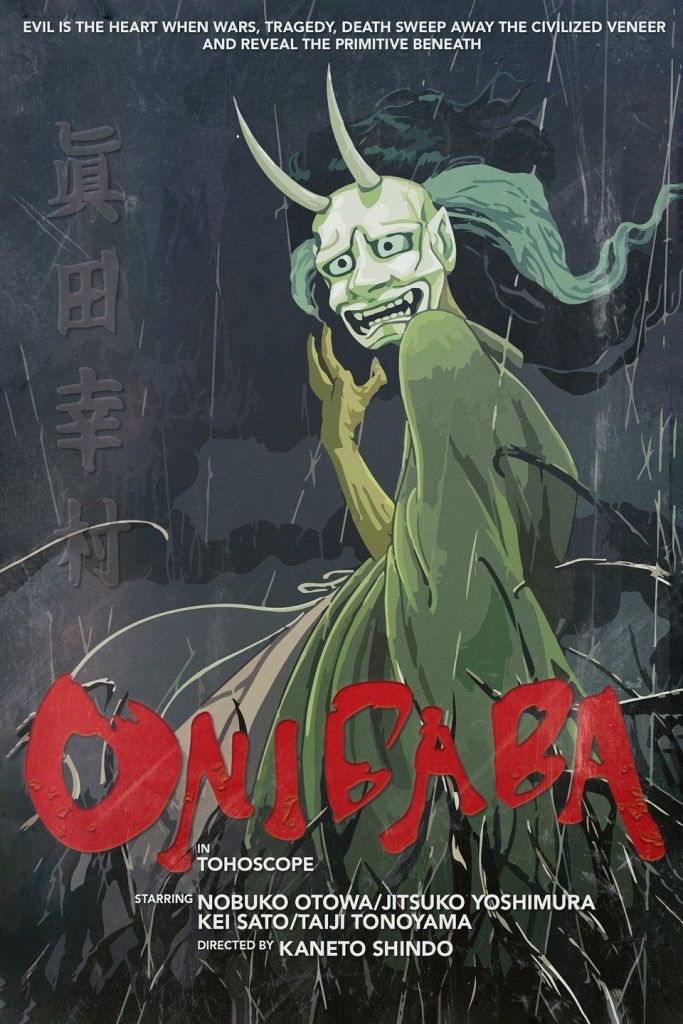
    Onibaba: Demon Woman feels like a 1970s grindhouse movie — except it came out of Japan in 1964. Though “pink films” and exploitation movies had already been made since 1959, Onibaba isn’t a sex picture. It’s a folk-horror art film, and it features some of the best black-and-white cinematography of all time. It looks like Seven Samurai in its craftsmanship. That much effort was put into it.

    The plot is slight and semi-ludicrous. Two women, a mother and daughter-in-law, have no way to fend for themselves while the son is off fighting a war. They kill wandering samurai and sell their belongings. I expected them to lure men and poison them, or attack them in their sleep — something two normal women could plausibly do. Nope. When a samurai happens to wander near, they stab him with a spear or bludgeon him with a rock. Killing a fully armored samurai with a single spear thrust seems as far-fetched as saying: Hungry? Just bend this crowbar with your bare hands!

    The story centers on Hachi, a soldier who returns home without the son. He claims the son was killed, but the mother suspects Hachi may have murdered him. Hachi quickly discovers the women’s killing scheme and demands a share of the spoils. “Mind your own business,” the mother tells him.

    Tension builds as Hachi becomes attracted to the daughter-in-law, now a widow, much to the mother’s horror. She fears losing her killing partner — and maybe something more. She tries to drive a wedge between them, but her interference only fuels their desire.

    Tarantino has never explicitly cited Onibaba, but it’s hard to believe he hasn’t seen it. He loves both Japanese art films and pink films from this era, and the ending here feels very Death Proof-esque. The movie wrings everything it can from its setting: a well-scouted marsh, a fearsome demon mask, and immaculate framing. It is unforgettable visually — any frame could be hung in a gallery. It looks exquisite.

    The movie has atmosphere, but not necessarily much content. About 30% of the dialogue is filler, with characters repeating key lines three or four times. Still, it is never boring, which is a rare thing for me to say about a 1960s film. Onibaba is rich with emotion, captured against the wild beauty of nature. It’s a rare hybrid: an exploitation film with real artistry, and an art film that embraces sex and nudity with surprising frankness for its time.

    If you’re a fan of cult cinema, Japanese film, old horror, or any combination thereof, Onibaba is a relic worth unearthing.

    8/10

  • No Way Out (1987)

    My 27 Movie A-Z Film-a-thon: Day 15.

    Day 15: N


    No Way Out (1987)


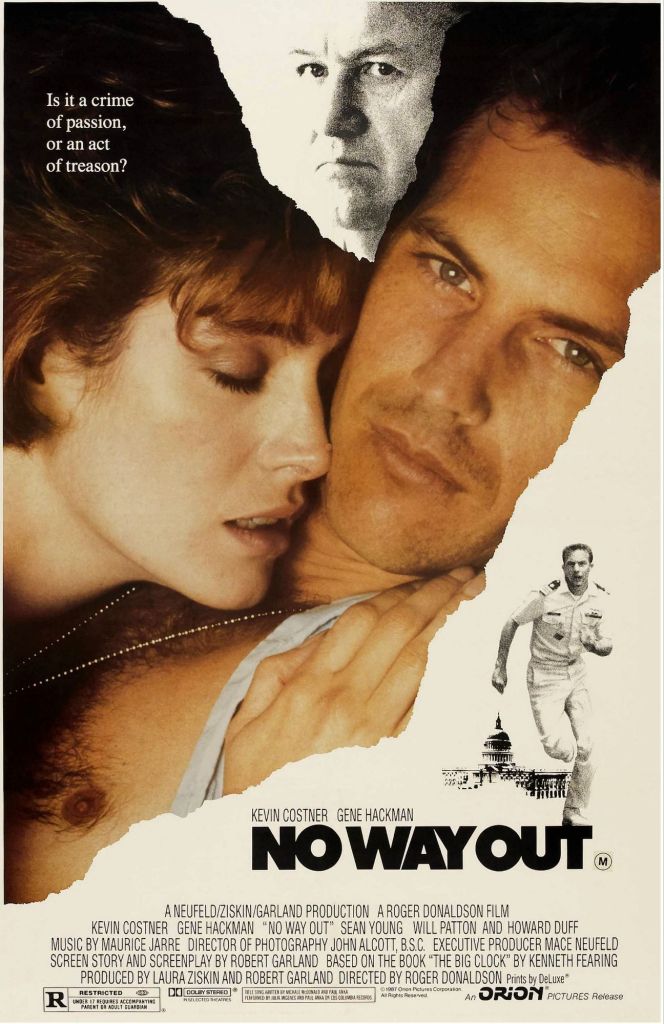
    Let’s get the elephant in the room out of the way: it is absolutely ridiculous that Kevin Costner walks around in a Navy uniform the entire movie. Yes, he’s a high-ranking officer, and Gene Hackman’s Secretary of Defense would likely want a military figure nearby to lend credibility to his authority. But for Costner to walk around in uniform all the time feels like a producer’s decision, not the director’s. (“Just have him in uniform every scene — otherwise how will people understand the trailer?”)


    The direction is a little shaky. During the love scene, the characters listen to a song on the radio where the lyrics literally say, “No way out. None whatsoever.” It’s not just a musical cue for the audience — it’s actually playing inside the scene. So, which is it? Is the movie called No Way Out because there’s no way out, or because there’s a song called “No Way Out”? If it’s both… wow. Super cheesy.


    The ‘80s really didn’t understand technology, at least not in movies. In Blow Out, it was somehow plausible for John Travolta to turn magazine photos into a moving film. Here, the characters scan a Polaroid negative into a computer to “enhance the pixels.” Of course, Polaroids don’t have pixels — they have pigments — and even today, you can’t magically clarify a bad analog photo with a few keystrokes. And if you somehow could, it wouldn’t take days to do it.


    The plot’s logic is generally flawed — because it has to be. Not just the technology, but the basic chain of clues. She only takes one Polaroid? She only leaves behind one negative? If the image enhancement process is so painstaking, they’re awfully lucky there’s just one photo to worry about.


    Good things:


    I really loved the music. The synth score was probably seen as cheesy at the time, but it has aged surprisingly well. It’s smooth when it needs to be, exciting when the action picks up — the kind of distinctively polished sound that could only have existed a few years after Vangelis’s work on Chariots of Fire. I’m glad movies don’t sound like this anymore, but the ones that do each have a unique charm that adds something you can’t fake.


    The actors make the most of what they’re given. The characterizations are astute: both Costner and Sean Young’s characters recognize the practical realities of their situation. Susan (Young) accepts her arrangement, and David (Costner) resigns himself to it. It’s practical and matter-of-fact, up to a point — and relationships portrayed this way are rare. The only other film that comes to mind is The Servant (1963).


    Costner is serviceable. Sean Young is great — I honestly don’t know why she didn’t become a bigger star. Gene Hackman has a rather thankless part but, as usual, he makes the most of it. He cuts right to the heart of the power and authority his role demands, without any wasted motion.


    This moves briskly, hits its marks, and has some interesting plot turns. It’s not a great story: there are plot holes, no truly standout scenes, and it could have used a sharper director. Costner’s suit stays perfectly clean all the way through, even when he gashes his hand — until the very last scene, where a single drop of blood is ceremonially smeared on the jacket. Wouldn’t it have been better storytelling to have the uniform gradually degrade alongside the rising tension?


    Still, No Way Out is a smartly written thriller, one of the better political thrillers of its era. It’s worth checking out — if only to watch Gene Hackman quietly nail yet another role.


    7/10

  • Make Way for Tomorrow (1937)

    My 27 movie A-Z film-a-thon: Day 14

    Day 14: M

    Make Way for Tomorrow (1937)

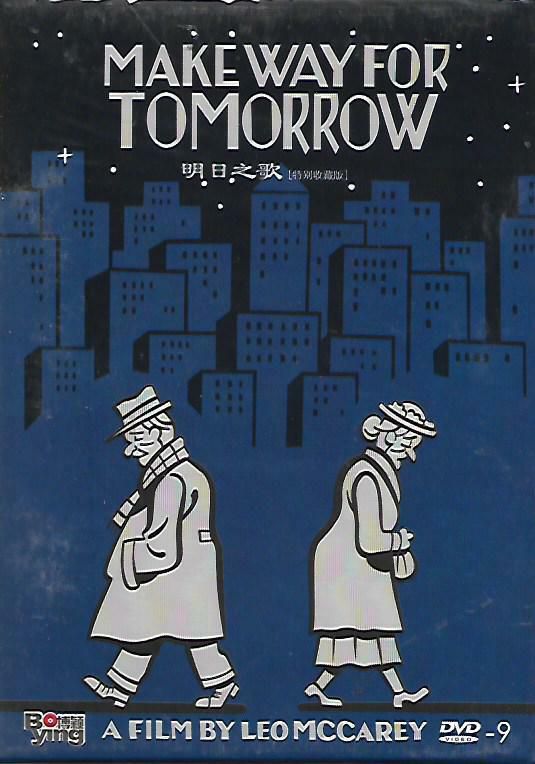
    A minor tragedy and heartfelt romance wrapped in one package, Make Way for Tomorrow is a little bit of Casablanca mixed with Tokyo Story. And yet it predates both.

    The setup is a little like a horror story. Barkley (Pa) is an elderly man who hasn’t worked in four years—he’s simply considered too old. He and his wife, Lucy (Ma), secretly mortgaged their house, hoping some sort of work would turn up. They don’t tell their kids until they are about to be homeless next Tuesday.

    This scenario may be a little extreme, and yet it is a very familiar fear for most people. Luckily, Ma and Pa’s kids are very understanding—at first. They quickly come up with a plan. One daughter says she has room for them to live with her, but needs six months to warm her husband up to the idea. Temporarily, Ma is to live with one child and Pa is to live with another. The first daughter’s husband, it turns out, is not so keen on the idea.

    Did you know people used to teach bridge? Like, to an entire classroom’s worth of students? Bridge used to be that popular. She doesn’t just teach the basics—this is college-level theory and strategy. Bridge mattered. There were national competitions, and even wives didn’t see it as just a social pastime. Most people took it that seriously in the ‘30s. Why have I never heard of this outside of this movie?

    So Ma spoils the bridge class. Ma spoils a secret romance for the granddaughter. Ma even spoils movies for strangers on the street. She does this—like many elderly women—accidentally and innocently. She becomes aware of her presence as a household nuisance, but she doesn’t know how to be less of a bother. She finds a letter from the “Home for Aged Women.” Knowing her children likely inquired about sending her away, Ma sulks but then dutifully volunteers, pretending like it is only her idea.

    What is happening to Pa in all this? It turns out Pa isn’t just old; he is sickly old. At least, he is living in the harsh winter climates of NYC. One of his kids lives in California. So, Pa is to move thousands of miles away. Ma stays behind, never telling her husband she plans on moving into the Home for Aged Women, worrying that the stress might kill him.

    Make Way for Tomorrow is sad—but in a quiet, bittersweet way. It helps sort through the noise of day-to-day life to focus and remind us what really matters. The grandparents truly were in love, and the children *know* they are horrible people. Ma and Pa are very lucky to have their family, though. And they are very lucky to have each other.

    Before Pa leaves for California, the two walk through the park reminiscing about their honeymoon and all the good times they had together. I’m reading The Grapes of Wrath, which takes place at almost the exact same time. I was worried for Ma and Pa—that their lives were destined for similarly tragic ends. But they’re not. At least, not entirely. The effect of Make Way for Tomorrow is melancholic but sweetly romantic. Make Way for Tomorrow is the perfect Valentine’s Day card.

    9.5/10

  • Living in Oblivion (1995)

    My 27 movie A-Z film-a-thon: Day 13.

    “I’m sorry, Nick. Something came up and I forgot to call. I feel like such an a__-hole.”
    “You’re only saying that because you’ve got Preparation H on your face.”

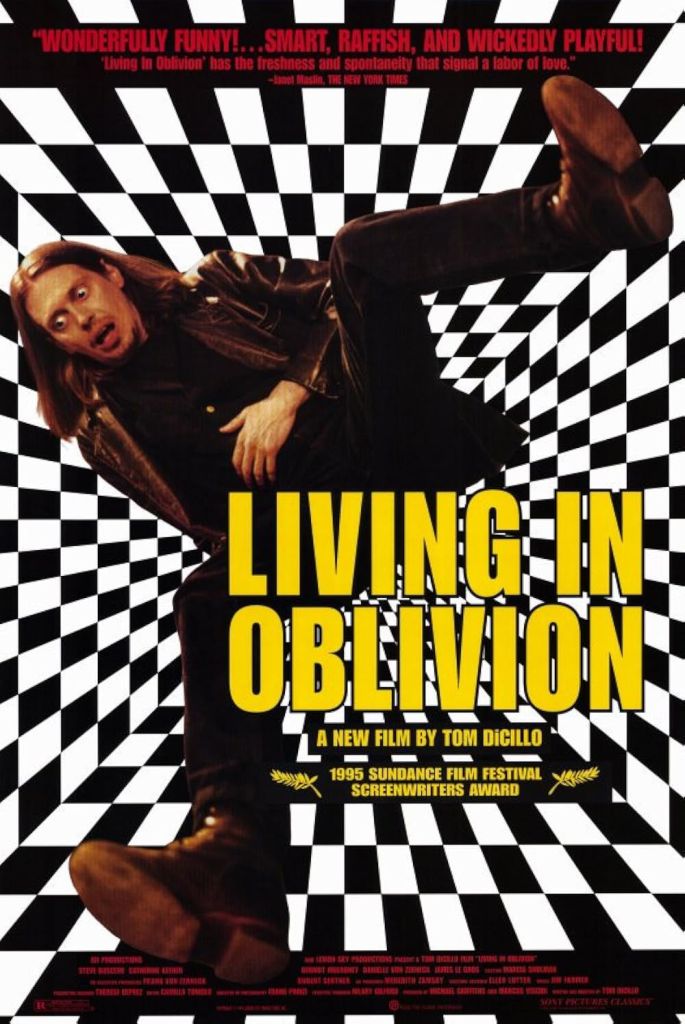
    There are stretches of Living in Oblivion that feel Oscar-worthy. The writing is so sharp, so inspired, you forget how small the production really is.

    Despite being a Sundance hit and critically beloved, this movie flew under the radar. It somehow escaped Roger Ebert entirely—rare for a ’90s indie. Maybe it felt too “made for L.A.” and never caught on in middle markets, even in Chicago.

    Tonally, it’s about 70% of a Christopher Guest film—For Your Consideration comes to mind—but with more bite. The satire lands because it’s grounded in genuine frustrations of indie filmmaking.

    Nick Reeve (Steve Buscemi) is directing a film that seems… off. Most shots have actors delivering lines directly to the camera, side by side. It might be a nod to old Hollywood style, but it reads like clunky direction—probably by design, to reflect the chaos behind the scenes.

    That chaos is part of the charm, but also the limitation. The “film within the film” is never compelling enough to fully anchor the story. The structure is scattered, with a handful of scenes that feel like endings, none of which really stick. It’s an odd way to finish a film with such smart momentum early on.

    But the cast—what a cast. DiCillo somehow assembled Steve Buscemi, Catherine Keener, Peter Dinklage, and Dermot Mulroney before they broke big. Buscemi and Keener especially seem fully formed here, already doing what they do best.

    I’d say there are about seven standout moments that feel like they were lifted straight from an A-list film, and another seven full scenes that showcase genuinely brilliant writing. But while these parts shine on their own, they don’t quite add up to a cohesive whole. The film is less than the sum of its best moments..

    This seems like it was made five years before it possibly could have. It is great. As someone that has seen almost every prominent English language movie from the 90s, this seems like a lost relic of the era. A forgotten keepsake that continuously earns its “cult film” label.

    8/10

  • Kubo and the Two Strings (2016)

    My 27 movie A-Z film-a-thon: Day 12


    This era of animated films contains many clunkers.
    Okay, that’s a little unfair. It doesn’t just apply to animated films, but to almost any large, big-budget or franchise movie from 2016 to 2019. Scripts from this time often offered nothing new—or if they did, it felt like the result of throwing darts at a wall.


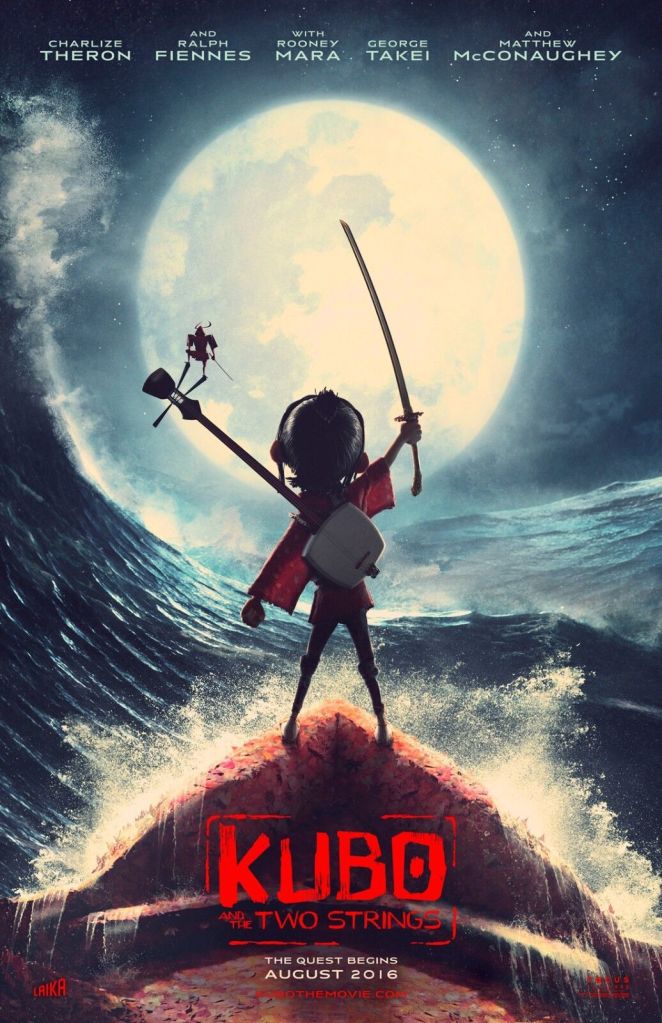
    Kubo and the Two Strings is creative, yes, but also absolute nonsense. Nothing here is grounded in reality. Kubo can control origami by playing a magical shamisen—but where did that power come from? The movie isn’t interested in asking, or answering, that question. Compare this to Miyazaki’s Spirited Away, where every surreal moment still feels rooted in something emotionally familiar. In Kubo, things just… happen. Every minute, it feels like another random idea is yanked from a grab bag and dropped into the script with little development or organic integration.


    The animation is impressive, considering the budget, but the character models are oddly generic. Everyone seems to have Gru’s face shape from Despicable Me, and the animation feels a little “floaty”—there’s not much weight when characters fly or step. Not a dealbreaker, but noticeable.


    More frustrating is how little the film resembles the culture it supposedly draws from. Set in early feudal Japan, Kubo features no Asian voice actors in key roles, and everyone speaks in a flat, stereotypically American tone. Why build a story around such a specific cultural setting, only to strip it of that culture in execution?


    In the end, it’s a jumble: generic animation, generic music, a scattershot script that relies on its uniqueness of ideas rather than their development. Worst of all, the movie constantly tells instead of shows. Kubo is sent away with his mother’s magic, then wakes in a snowy field next to a talking monkey—who was once a wooden charm named Monkey. “I said, your mother is gone. Your village is destroyed! Burned to the ground!” Monkey yells. Would’ve been nice to see that scene, right?


    Kubo and the Two Strings isn’t a bad movie. In fact, it’s rather engaging, and refreshingly distinct in a sea of interchangeable animated films. It’s just… this could have been so much more in the right hands. I enjoyed it—even though I found something to complain about in every scene.


    6.5/10

  • The Joy Luck Club (1993)

    My 27 movie A-Z film-a-thon: Day 11.5.

    I added another J entry, this time a request. I decided that both Johnny Guitar and the movie would have enough to write about to do them both.

    A beloved critical darling at the time of its release, The Joy Luck Club has largely faded from public memory. I first heard of it in Roger Ebert’s year-end collections, but for some reason, I always assumed it was a relationship drama among recent college grads—something more in the vein of St. Elmo’s Fire. I was way off.

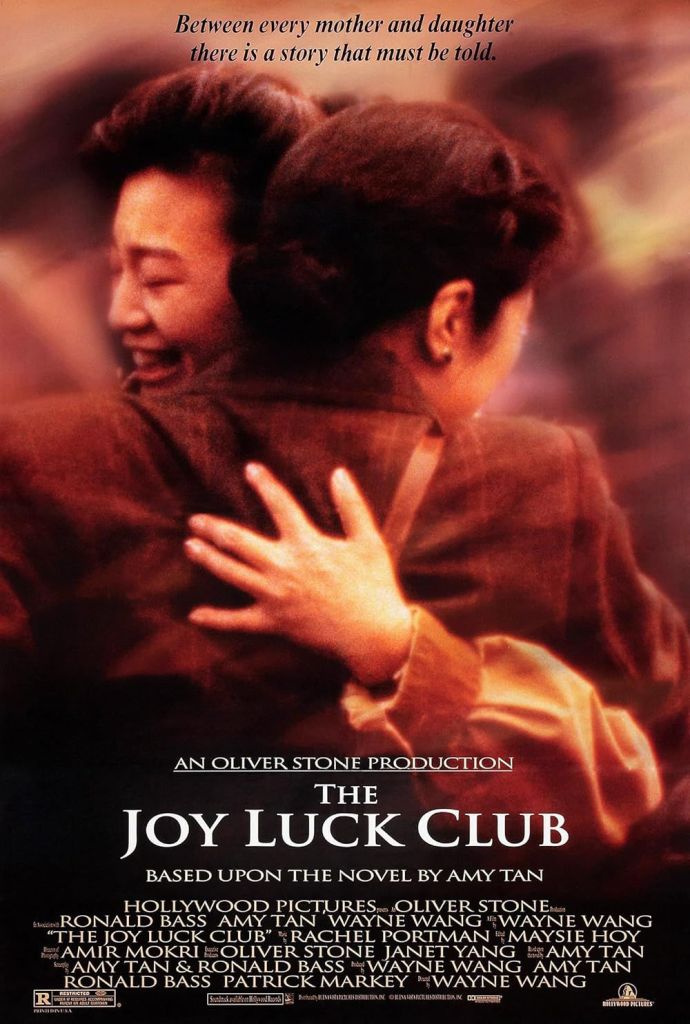
    In reality, The Joy Luck Club is one of the first major Hollywood films centered entirely on Asian characters, played by Asian actresses. The title refers to a mahjong club formed by the main character’s mother during wartime in China. “Joy luck” is the idea that, even in the worst of circumstances, one can find fortune through joy and friendship.

    The film follows four Chinese-American women and their immigrant mothers, weaving together stories from both generations. I’ll be honest: I had trouble telling some of the characters apart. The actresses have similar looks, voices, and even plot arcs. At times, I thought the same woman had multiple white husbands. A more exacting director—maybe someone like Spielberg—might have pushed harder to visually or tonally differentiate the stories.

    That said, this is a compelling “women’s picture,” packed with enough plot turns to stay engaging without dipping into melodrama or cliché. The central thread follows June Woo and her mother, who escaped from war-torn China after abandoning her infant twin daughters by the side of the road. The film asks, “How could a mother do such a thing?”—and then slowly, powerfully, answers it.

    The other daughters of the Joy Luck Club all carry histories that echo each other in meaningful ways. Second-generation immigrants often face similar tensions, especially when navigating between tradition and assimilation.

    I feel like this film is a perfect introduction to Amy Tan’s novel. I never thought I’d want to read it, but now I might. The characters are strong on screen, but you can sense there’s even more to them on the page—more cultural nuance, more inner life.

    A strong, meaningful film with a clear place in cinematic history. It’s just a shame the writing/directing team couldn’t quite replicate the success—Maid in Manhattan is a far cry from this. But this one’s great.

    8.5/10