Blog

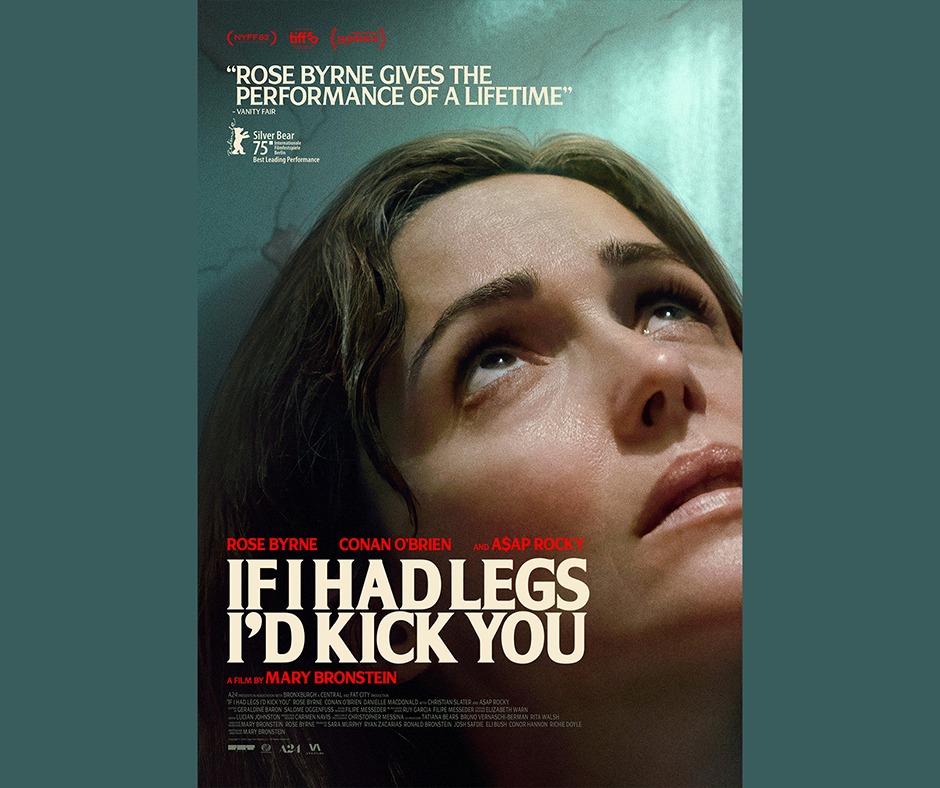
  • If I Had Legs I’d Kick You (2025)

    A minor masterpiece of stress, shame, and the feeling that reality is beginning to warp.

    The way Rose Byrne is shot and edited in If I Had Legs I’d Kick You makes her feel like an uncredited fifth character in Requiem for a Dream. If she were in that movie, audiences would be asking where her drugs are—but here, she needs none. Her mental illness behaves like a drug anyway, distorting time and flattening reality. She sees a therapist, though she is one herself. It makes you wonder: is this what my therapist is like when they’re not talking to me?

    Linda’s life collapses quite literally when a hole opens in her apartment ceiling—possibly from flooding, faulty plumbing, or maybe an alien in the walls. The film never clarifies, because Linda can’t. Her grip on cause and effect is slipping. At the same time, she is responsible for caring for her daughter, who can technically eat but refuses food because it feels “squishy,” and who is graded daily on how much she consumes. The entire household revolves around a single goal: getting her weight up to fifty pounds. Linda is never alone, yet utterly abandoned.

    Byrne carries the entire film, delivering a performance built on quiet humiliation and sustained dread. Linda isn’t heroic or admirable; she’s exhausted, brittle, and increasingly convinced she is failing at everything she is supposed to do well. Everyone else feels like a walk-on cameo. Conan O’Brien actually acts, briefly, and his presence reminded me of Dylan Baker in Requiem for a Dream: when someone is unraveling, the most others will do for them is ask a few questions and then discreetly step away.

    For a first feature, director Mary Bronstein shows impressive control. This could easily have been an amateurish mess—a pile of anxiety with no shape—but instead it becomes a low-budget, quietly devastating minor masterpiece. Byrne somehow landed a role most actresses would have killed for, had they known what Bronstein was after. Onscreen, it feels uncomfortably familiar.

    This is what I felt like during COVID.

    8/10

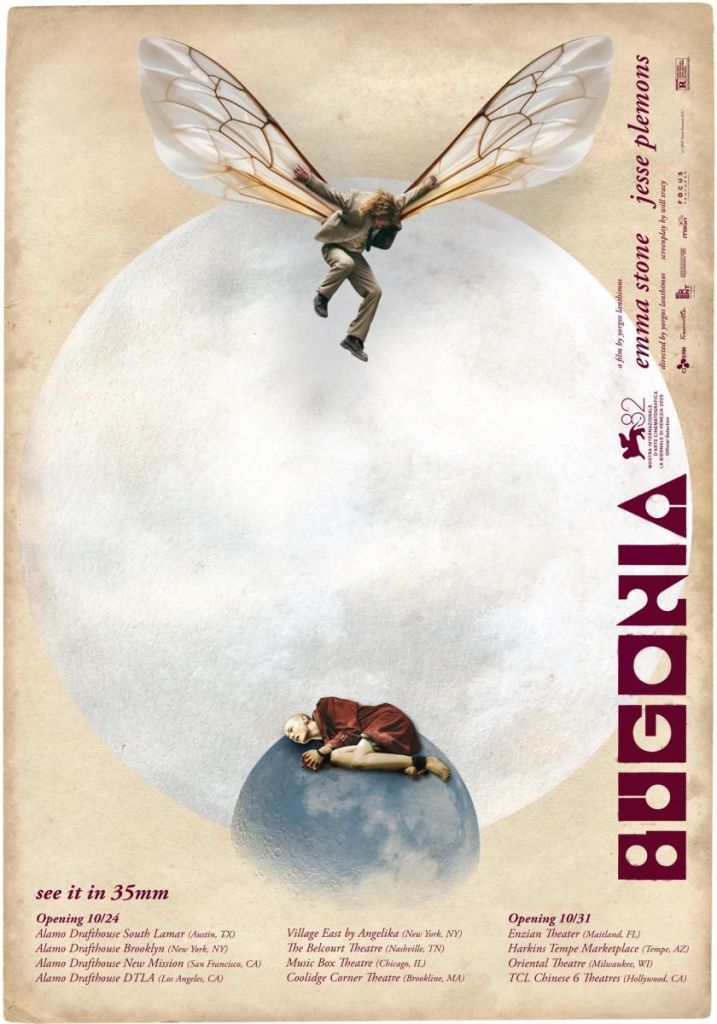
  • Bugonia (2025)

    The bees are dying, the executives are talking, and the joke may be on us.


    Is Bugonia a place? A character’s name? Apparently it has something to do with Greek mythology and bees. I’ve always thought that if the human race died out, it would have something to do with colony collapse disorder. I just never imagined it could happen—or look quite like this.

    Emma Stone plays Michelle, an executive at a vast, vaguely defined conglomerate—something like Amazon filtered through the pharmaceutical industry. She delivers corporate edicts that sound humane while being quietly coercive, the kind of language designed to make people work harder for less while thanking management for the privilege. Stress is treated as a given. Burnout is reframed as responsibility. Somewhere in the background, the bees are dying.

    There’s enough good in Bugonia to almost compensate for Yorgos Lanthimos’s increasingly questionable sense of humor. The film has the shape and texture of something very familiar—procedural, paranoid, vicious. With only minor adjustments, it could easily pass for a season of Fargo. The score and cinematography are immaculate, and the performances are absurd in ways that still feel recognizable. Everything seems carefully built. It might even feel like a masterpiece—right up until it decides not to be one. But what’s the fun in that?

    The Oscar buzz around Stone feels less about nuance than about her continued commitment to being Lanthimos’s most pliable collaborator. Yes, she really shaved her head for this. The film flirts with weighty ideas—mental illness, institutional power, corporate systems managing human behavior—in ways that feel unnerving and recognizable. But it keeps shifting, nudging, testing how much disbelief the audience is willing to suspend.

    The whole thing plays like a meticulously structured Upright Citizens Brigade sketch that refuses to announce where the joke is—or when it’s over. I understood what it was doing. I admired the confidence. This could have been No Country for Old Men or The Silence of the Lambs. I just couldn’t shake the feeling that it was laughing at a version of the movie I would have liked better.

    Bugonia is handsome and deeply committed to its own logic. In real life, we probably already know these characters. Whether we recognize them as such is another matter.

    7.5/10

  • Hamnet (2025)

    A thoughtful elegy that ends as a plea for significance.

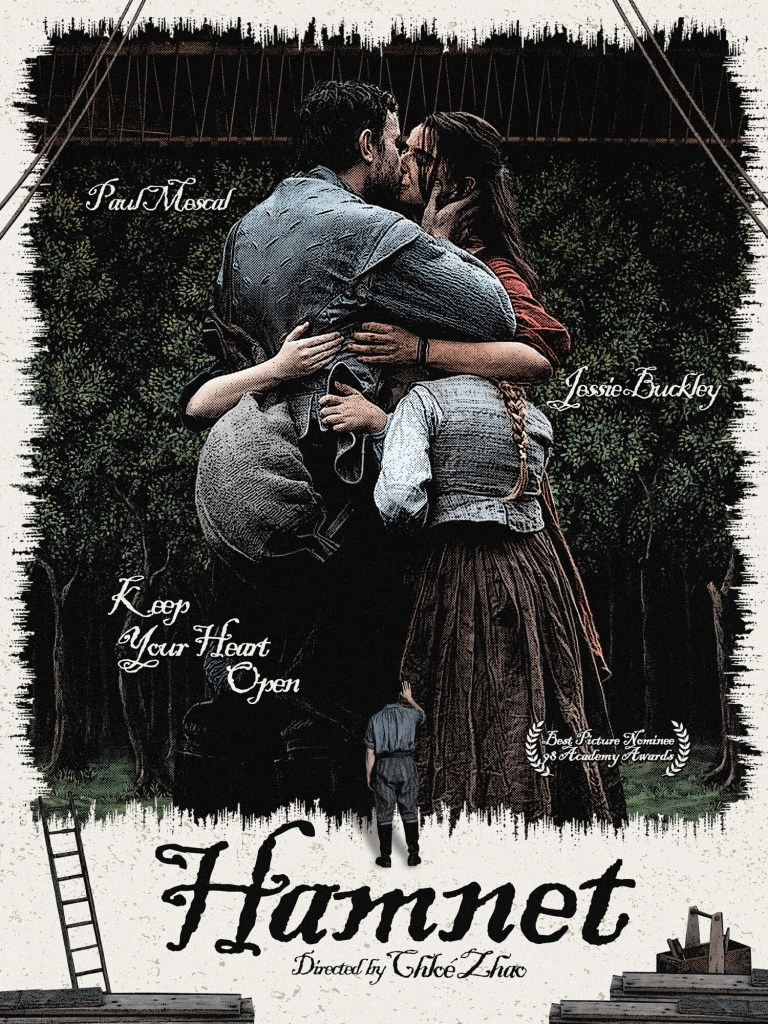
    Hamnet is intermittently compelling while you’re watching it, but I don’t think the world will ultimately care very much. The first half works surprisingly well, unfolding with a meditative patience that recalls the style of Chloé Zhao—a comparison that will excite the half of the audience that tolerated Nomadland and bore everyone else senseless. There’s a quiet confidence early on, an observational calm that treats grief as a lived condition rather than a dramatic event. For a while, Hamnet feels like it knows exactly what kind of movie it wants to be.

    That confidence collapses by the end. Some have positioned Hamnet as the “real” Shakespeare in Love, but that comparison only highlights how much that film got right. Hamnet can’t decide how its characters are supposed to exist: they often speak like modern people who binge Outlander, then suddenly shift into scenes written in full Shakespearean verse. The tonal whiplash is baffling. Are we meant to believe the audience can’t handle period language—except when it’s convenient?

    The final act fails outright. Leaning on Adagio for Strings—arguably the most famously depressing piece of music ever written—to sell Shakespearean tragedy feels desperate, not profound. The camera lingers on Jessie Buckley’s face for so long that people around me literally fell asleep, and the staging of the finale makes entering the center of the Globe Theatre feel about as casual as finding a spot near the stage at a rock concert. I liked too much of Hamnet to recommend against seeing it, but I give a thumbs down to the very elements most people seem to admire.

    6/10

  • Zootopia 2 (2025)

    A Disney sequel with jokes, momentum, and—miracle of miracles—reason to exist.

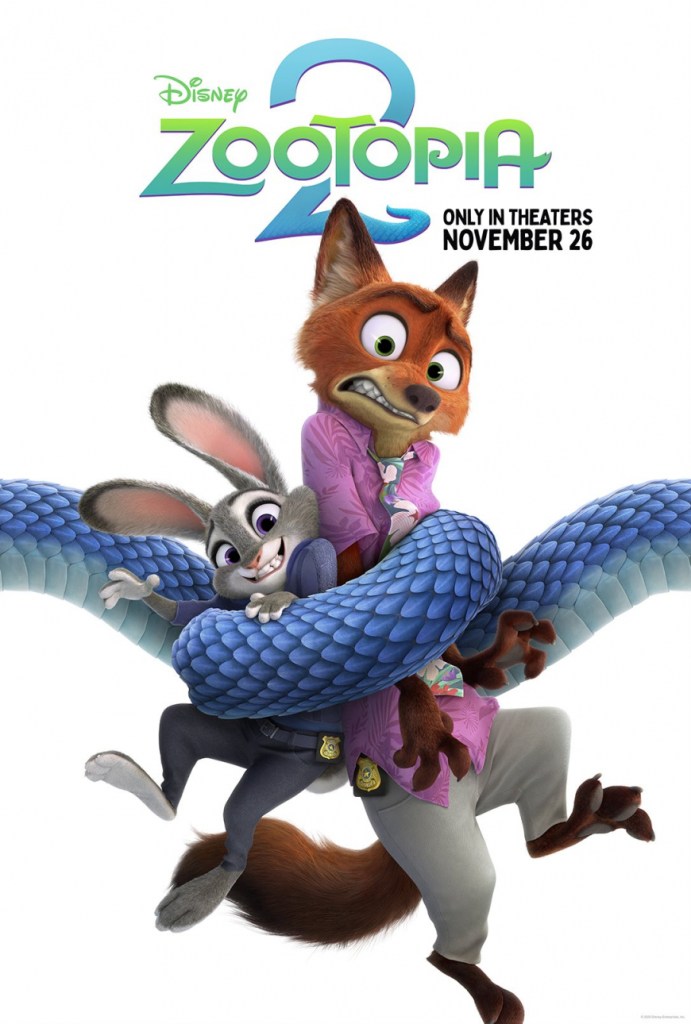
    Zootopia 2 benefits enormously from revisiting Zootopia, which has aged surprisingly well—far better than Moana, which now feels small and oddly muted, like a would-be epic propped up by great songs. The problem with Moana as a franchise is structural: it barely has characters. There’s Moana, her stern father, her dead grandmother, Maui, a chicken, and the ocean. That’s not a world; it’s a fable. Moana 2 clearly had no idea where to take those pieces next, and the result felt pointless. (Also: why did no one ever eat the chicken?) Disney’s recent sequel strategy has been so uninspired that it briefly makes you wonder whether they should stay out of theatrical follow-ups altogether.

    Or maybe not. Zootopia 2 is fun, clever, and densely packed with jokes. The original film had a deceptively simple premise with plenty of room to grow, and this sequel smartly picks up only a week after the first movie ends. That initially sounds odd, but it works: the film plays like episode two of a disposable detective TV show that accidentally became excellent. Unlike Moana 2, which has four credited screenwriters, Zootopia 2 comes from a single writer, Jared Bush, who also co-directs. That cohesion matters. Even when the movie settles into procedural rhythms, it feels confident—like an artist cracking himself up, testing ideas, and trusting his own instincts. It’s lighter than the original, but refreshingly aware of what made the first one work.

    8/10

  • Sentimental Value (2025)

    Family ily estrangement, artistic legacy, and the limits of self-mythology.

    Sentimental Value (2025) review

    Sentimental Value is another deceptively slight movie about coping with tragic loss, but one that feels far more likely to linger. Stellan Skarsgård plays Gustav Borg, a Lars von Trier–like director who hasn’t made a film in over a decade and now feels pressure to deliver one final artistic statement before he dies. His daughters have long since stopped needing him, and the distance feels permanent. Gustav is the kind of man who only loves punishing, perverse cinema—to the extent that he thinks DVDs of Irreversible and The Piano Teacher would be appropriate gifts for a twelve-year-old’s birthday.

    Movies about filmmakers rarely thrill me—they tend to be self-congratulatory, and therefore less honest—but this one is handled with restraint and surprising humility. The central question cuts deep: how do you convince anyone your story is worth hearing when you’ve spent a lifetime showing no interest in listening to others? Elle Fanning plays one of his collaborators, and even she seems uncertain whether this man’s vision deserves her faith. And honestly: why isn’t she already regarded as one of the finest actors of her generation?

    Sentimental Value comes and goes for me a little. It says something real, and I don’t doubt that it matters, but it didn’t stay with me in quite the way The Worst Person in the World did, which felt like the movie I’d want all my friends to watch when I die. That film felt big—about terminal illness, infidelity, and the stories people tell themselves about their own lives. Sentimental Value feels smaller by comparison, more about famous people having problems that will probably never apply to me. My boyfriend loves it. I admired it. I’m just not sure how much I’ll think about it later.

    8.5/10

  • Song Sung Blue (2025)

    A gentle love story about music, missed chances, and making the most of the time we have.
    Song Sun Blue (2025) review

    Song Sung Blue feels like exactly the kind of movie that would play the Heartland Film Festival, doesn’t it? Let me check… okay, it didn’t. But they gave it some sort of award anyway. You can almost hear the thought process: “We’re not letting a movie this modest—and this transparently engineered to make audiences cry—go by without our name attached to it.”

    And yet.

    This is actually a very sweet love story about two people dealing with genuinely relatable problems—at least to me. Kate Hudson does her own singing, and she sounds great: exactly like an extremely talented performer who can’t quite turn that talent into a full career.

    The real pang here is that Hugh Jackman never played Neil Diamond in a biopic. He looks and sounds uncannily like him. That said, I can’t imagine there’s a story we urgently need to see about a 60-year-old Neil Diamond—and, truth be told, this story didn’t strictly need to be told either.

    But it was told, and it’s very sweet. The film gently reminds us of the importance of making the most of our lives while we still have time on Earth. I’m glad to have this one available for people grieving the loss of family members.

    7/10

  • Train Dreams (2025)

    A somber meditation on solitude, memory, and the slow passing of a life.

    Train Dreams

    Train Dreams may be one of the most somber movies ever made. For comparison, I thought of films like Bringing Out the Dead, Palindromes, and Synecdoche, New York—all famously bleak works that offer little to no emotional reprieve. This film is quieter, sadder, and somehow lonelier still.

    It captures the immensity of solitude: what it feels like to be briefly, modestly happy; to watch that happiness erode; and then to wake up one day and realize the world has kept moving without you—that you may be the only truly sad person left in it. The performances are restrained and affecting, communicating grief and endurance without overt dramatics.

    Still, the film’s devotion to mood comes at a cost. It often feels less like a story unfolding than an emotional state being sustained, and at times it nearly forgets to become a story at all.

    8/10

  • Sorry, Baby (2025)

    Sorry, Baby existing at all may be one of the best things to come out of the MeToo movement.

    While the exposure of real monsters—like Bill Cosby and Danny Masterson—showed how power can be abused through drugs, fame, or violence, Sorry, Baby reminds us that none of that is required to permanently damage someone. More than one person I talked to (in real life) called the film “quietly devastating.”

    Its premise is deceptively simple: “Something bad happened to Agnes.” The film never fully shows what that something is, and many viewers may wonder whether the ambiguity justifies a movie at all.  What we learn is enough. Someone Agnes admired desired her for her mind but had no respect for her autonomy. She wasn’t allowed to decide. She was coerced into something she wasn’t ready for. That quiet violation—the kind some people still struggle to even name—is the film’s subject, and it is more than worthy of examination.

    Men can be awful, particularly when entitlement overrides empathy. The film understands that harm doesn’t come from brute force alone, but from insistence—from wanting what you are explicitly denied. Eva Victor, pulling triple duty as writer, director, and lead actor, tells this story with restraint and discomfort rather than spectacle. Sorry, Baby is labeled a dark comedy mostly because it’s too minimal and too emotionally raw to fit anywhere else.

    I laughed at times, but rarely out of joy…more out of tension, desperation, and the human need to feel something break through the numbness. I wanted Agnes to laugh at life again, so I laughed loudly, hoping she might too. Whether or not this story draws from Victor’s own life, it announces a rare talent: someone capable of articulating pain with clarity, intelligence, and moral weight. I hope she finds more stories to tell that live up to this first promise if brilliance.

    9/10

  • Frankenstein (2025)

    The look is right, but everything else feels off.


    Frankenstein is not Mary Shelley’s Frankenstein, and it bears almost no resemblance to the golden-era films directed by James Whale. So what is it? A Marvel origin movie with literary set dressing. At one point, the creature approaches a ship frozen in the ocean and casually pushes it until it tilts at an angle. I ask, how does the movie expect to get away with this. Does this. Make. Sense?

    In the novel, Dr. Frankenstein discusses electricity at a time when it was still a mysterious, barely understood force. That idea—later visualized by Whale with lightning bolts and switches—gave the creature a sense of stored, barely contained power. The original monster moved like an ogre, slow and heavy, as if animated by a single catastrophic surge of energy. That logic I understood. Here, the creature is absurdly strong, with no explanation beyond “because the movie needs him to be.” He isn’t just as powerful as the Incredible Hulk. The Hulk wouldn’t stand a chance. Why? What element gained the Hulk (creature) this power?

    Worse, this super-strength comes bundled with what appear to be hypnosis powers, making the creature function less like Frankenstein’s monster and more like Dracula. Mia Goth’s character falls for him almost instantly after seeing him alone in a basement, walking toward him as if under a charm spell. The moment doesn’t read as romantic or tragic—it’s incoherent, stripping the creature of his horror and her of her agency. I enjoyed Pinocchio, but this belongs firmly in the category of fun-but-messy genre fare like Blade II or Hellboy. It’s entertaining, but thematically muddled. The caskets include openable windows, and why? If you said, “Because it looks super cool” then you are on the movie’s exact wavelength.

    This Frankenstein favors spectacle over logic, power over consequence, and superhero mythmaking over Gothic dread. It mostly gets the look of Mary Shelley’s novel correct, but by way of Marvel.

    6/10