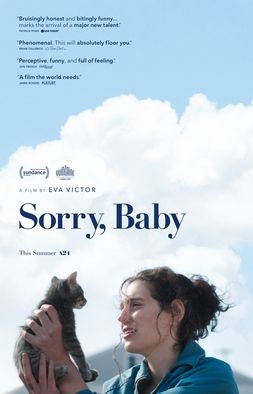
Sorry, Baby existing at all may be one of the best things to come out of the MeToo movement.
While the exposure of real monsters—like Bill Cosby and Danny Masterson—showed how power can be abused through drugs, fame, or violence, Sorry, Baby reminds us that none of that is required to permanently damage someone. More than one person I talked to (in real life) called the film “quietly devastating.”
Its premise is deceptively simple: “Something bad happened to Agnes.” The film never fully shows what that something is, and many viewers may wonder whether the ambiguity justifies a movie at all. What we learn is enough. Someone Agnes admired desired her for her mind but had no respect for her autonomy. She wasn’t allowed to decide. She was coerced into something she wasn’t ready for. That quiet violation—the kind some people still struggle to even name—is the film’s subject, and it is more than worthy of examination.
Men can be awful, particularly when entitlement overrides empathy. The film understands that harm doesn’t come from brute force alone, but from insistence—from wanting what you are explicitly denied. Eva Victor, pulling triple duty as writer, director, and lead actor, tells this story with restraint and discomfort rather than spectacle. Sorry, Baby is labeled a dark comedy mostly because it’s too minimal and too emotionally raw to fit anywhere else.
I laughed at times, but rarely out of joy…more out of tension, desperation, and the human need to feel something break through the numbness. I wanted Agnes to laugh at life again, so I laughed loudly, hoping she might too. Whether or not this story draws from Victor’s own life, it announces a rare talent: someone capable of articulating pain with clarity, intelligence, and moral weight. I hope she finds more stories to tell that live up to this first promise if brilliance.
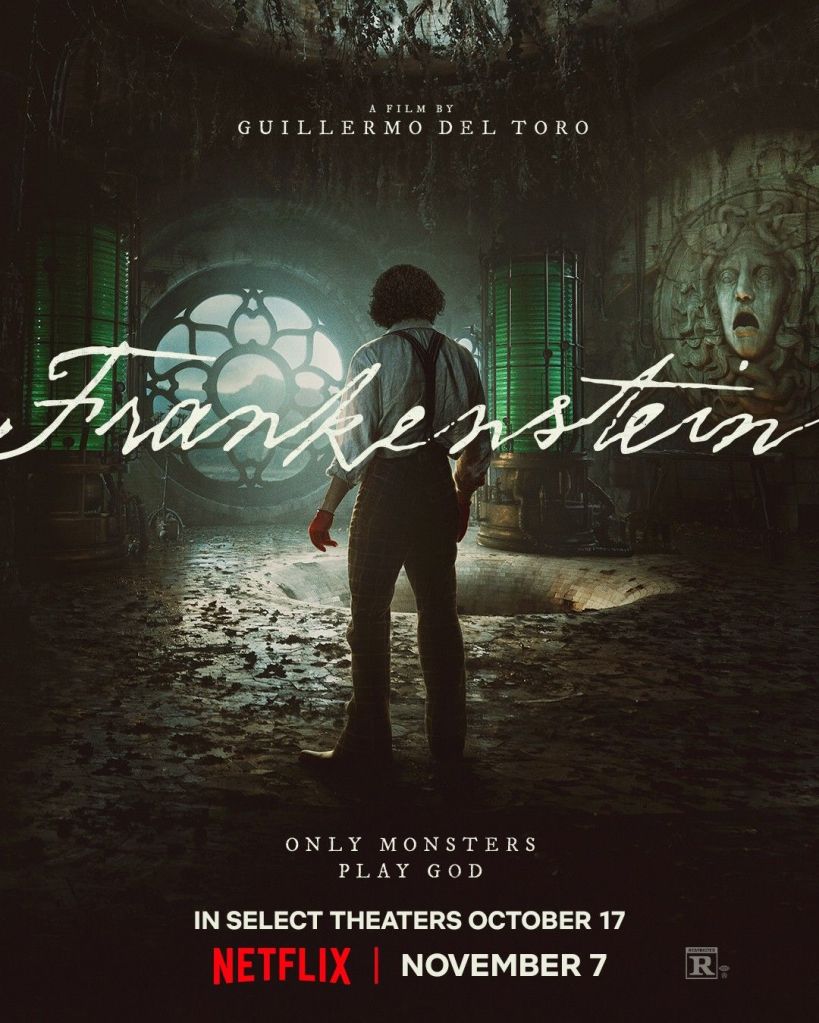
Frankenstein is not Mary Shelley’s Frankenstein, and it bears almost no resemblance to the golden-era films directed by James Whale. So what is it? A Marvel origin movie with literary set dressing. At one point, the creature approaches a ship frozen in the ocean and casually pushes it until it tilts at an angle. I ask, how does the movie expect to get away with this. Does this. Make. Sense?
In the novel, Dr. Frankenstein discusses electricity at a time when it was still a mysterious, barely understood force. That idea—later visualized by Whale with lightning bolts and switches—gave the creature a sense of stored, barely contained power. The original monster moved like an ogre, slow and heavy, as if animated by a single catastrophic surge of energy. That logic I understood. Here, the creature is absurdly strong, with no explanation beyond “because the movie needs him to be.” He isn’t just as powerful as the Incredible Hulk. The Hulk wouldn’t stand a chance. Why? What element gained the Hulk (creature) this power?
Worse, this super-strength comes bundled with what appear to be hypnosis powers, making the creature function less like Frankenstein’s monster and more like Dracula. Mia Goth’s character falls for him almost instantly after seeing him alone in a basement, walking toward him as if under a charm spell. The moment doesn’t read as romantic or tragic—it’s incoherent, stripping the creature of his horror and her of her agency. I enjoyed Pinocchio, but this belongs firmly in the category of fun-but-messy genre fare like Blade II or Hellboy. It’s entertaining, but thematically muddled. The caskets include openable windows, and why? If you said, “Because it looks super cool” then you are on the movie’s exact wavelength.
This Frankenstein favors spectacle over logic, power over consequence, and superhero mythmaking over Gothic dread. It mostly gets the look of Mary Shelley’s novel correct, but by way of Marvel.
If you only see one movie before the 2026 Oscars, why not make it this one?
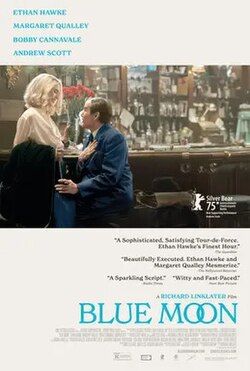
Blue Moon (2025)
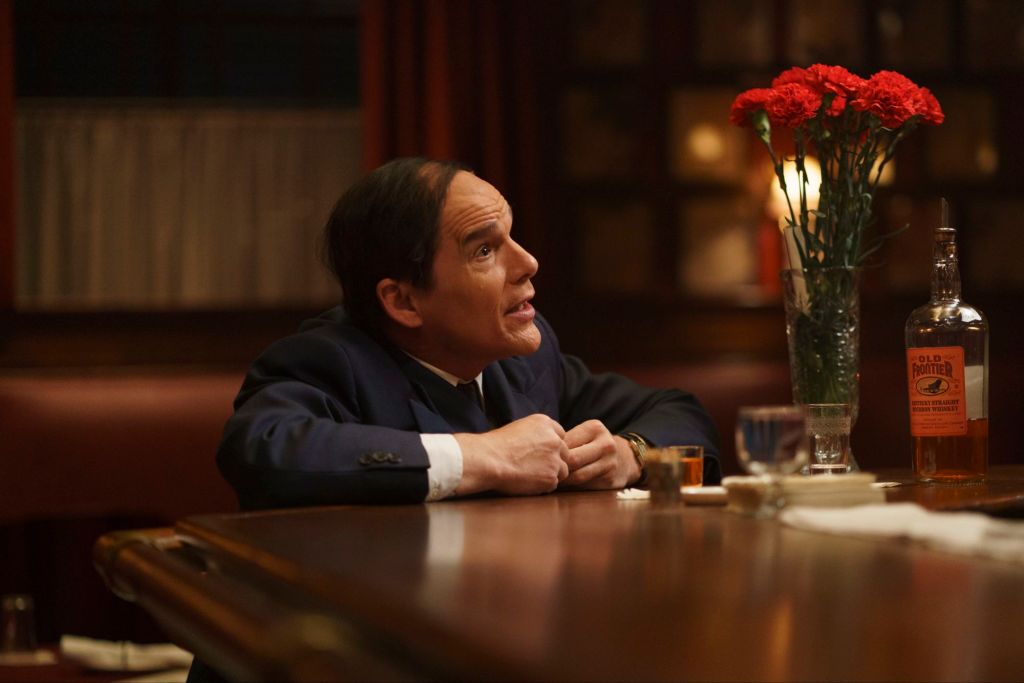
Why would an obviously gay man living in New York City in the 1940s get utterly plastered in straight bars when gay bars existed—places where he could have had a drink, relaxed, and maybe even enjoyed himself? “What, are you my therapist now, Eddie?”
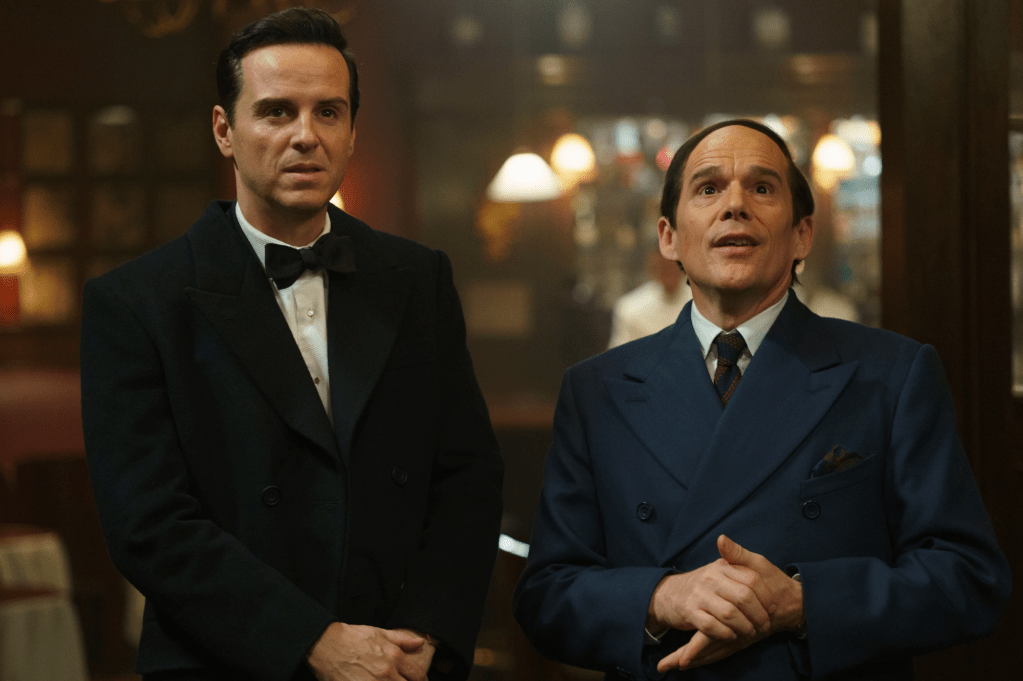
Richard Linklater’s film is about Lorenz Hart, the legendary lyricist. But even more than that, it is about a man who cannot stop circling the idea of happiness while suspecting it was designed for other people. Hart had far more to say than the near-meaningless love songs that made him famous, and the script—drawn from his real letters—lets him say it, slightly. What he had to say was that love seems suspiciously easy for everyone else. “Oklahoma! exclamation point, no less.”
Hart’s great claim to fame was writing the lyrics to “Blue Moon,” a melody by Rodgers that other lyricists had failed to turn into a hit. Hart found the angle: a lonely soul who has given up on love suddenly, miraculously, finds it. That idea landed during the Depression because it promised that despair might reverse itself overnight.
The irony, of course, is brutal. Hart never seems to have found anything resembling that kind of love himself. He found brilliant conversation, wit, companionship, and drinking partners, but not the thing his lyrics sold to millions.
There is another irony too: today, most people remember “Blue Moon” as a melody more than as a lyric, and even in Blue Moon—a film about Lorenz Hart—the soundtrack leaves you feeling how little the world retained of what he actually contributed. The song became a standard through singers like Ella Fitzgerald, Frank Sinatra, Dean Martin, Bobby Vinton, Elvis, and especially the Marcels, whose doo-wop version transformed it so thoroughly that it barely even sounds like the same song anymore. It survives as cultural wallpaper. Hart did not.
Blue Moon makes a serious case for itself as one of the best movies ever made about what it was like to be gay in the 1940s. Not because it lectures, but because it observes. Hart seems to have lived in a permanent state of fantasy that the right woman might somehow arrive and quiet everything in him that made life difficult. That never happened, so he drank.
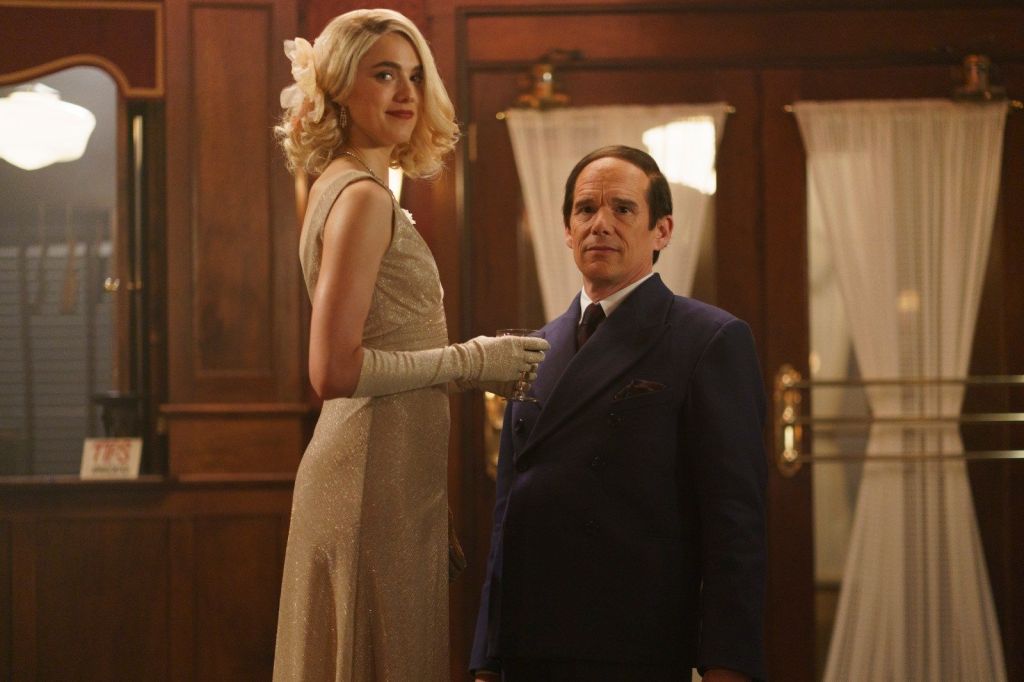
He drank and talked and flirted and performed intelligence for bartenders, strangers, and anyone else who would listen. He built a substitute version of romance out of conversation, alcohol, self-mythology, and pop culture. That is the premise of the film. Hart, doomed to drink himself to death in 1943, slips out during the second act of Oklahoma!—partly because he can’t stand its extroverted optimism, partly because he wants a head start on the evening. He sits down at a bar, orders a shot he claims he will only stare at longingly, and begins the familiar ritual of trying to outtalk, outwit, and outmaneuver the bartender into letting him have the one thing he has supposedly come there not to touch.
The movie does something remarkable here: it makes an entire era of romantic cliché newly legible. To someone like Hart, all those happy endings and moon-June platitudes were not stupid. They were sacred. They represented the life he wanted and could never quite enter.
Ethan Hawke is splendid. The physical transformation alone is great—he often appears tiny, shrunken, almost swallowed by the world around him—but the real achievement is that he plays Hart as a person rather than a type. This is not a stock tragic homosexual, not a camp caricature, not a clever drunk dispensing epigrams. Hawke gives him anxiety, vanity, ache, bitterness, hunger, and genuine romantic feeling. He seems believable, recognizable. Linklater, who I already admire to an almost unreasonable degree, has made something that belongs with Boyhood and the Before films among his best work.
Blue Moon is smart, sad, and piercingly observant about the way pop culture can sustain a person while also ruining them. Everyone should get to look this hip and this intelligent while being this intensely miserable—at least once.
Two more reviews from the tail end of movie season.
This turned out to be a surprisingly strong year for awards-caliber films. What made it especially encouraging is that many of the standouts came from filmmakers who seem genuinely interested in making movies that are both carefully constructed and emotionally risky. There aren’t many directors right now aiming for polished and interesting at the same time, which makes these final entries feel like a small but meaningful vote of confidence in the future of cinema.
If I Had Legs I’d Kick You
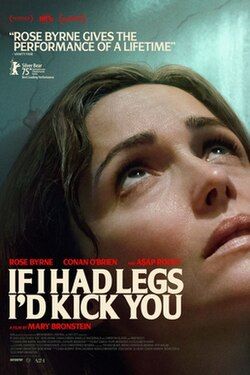
The way Rose Byrne is shot and edited in If I Had Legs I’d Kick You makes her feel like an uncredited fifth character in Requiem for a Dream. If she were in that movie, audiences would be asking where her drugs are—but here, she needs none. Her mental illness behaves like a drug anyway, distorting time and flattening reality. She sees a therapist, though she is one herself. It makes you wonder: is this what my therapist is like when they’re not talking to me?
Linda’s life collapses quite literally when a hole opens in her apartment ceiling—possibly from flooding, faulty plumbing, or maybe an alien in the walls. The film never clarifies, because Linda can’t. Her grip on cause and effect is slipping. At the same time, she is responsible for caring for her daughter, who can technically eat but refuses food because it feels “squishy,” and who is graded daily on how much she consumes. The entire household revolves around a single goal: getting her weight up to fifty pounds. Linda is never alone, yet utterly abandoned.
Byrne carries the entire film, delivering a performance built on quiet humiliation and sustained dread. Linda isn’t heroic or admirable; she’s exhausted, brittle, and increasingly convinced she is failing at everything she’s supposed to do well. Everyone else feels like a walk-on cameo. Conan O’Brien actually acts, briefly, and his presence reminded me of Dylan Baker in Requiem for a Dream: when someone is unraveling, the most others will do for them is ask a few questions and then discreetly step away.
For a first feature, director Mary Bronstein shows tasteful control. This could easily have been an amateurish mess—a pile of anxiety with no shape—but instead it becomes a low-budget, quietly devastating minor masterpiece. Byrne somehow landed a role most actresses would have killed for, had they known what Bronstein was after. Onscreen, it feels uncomfortably familiar.
This is what I felt like during COVID.
8/10
Marty Supreme
I went into Marty Supreme assuming I was about to watch a straightforward, inspirational true story about a legendary ping-pong player. Which immediately raised a question: why have I never heard of this person?
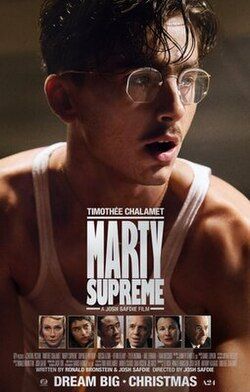
That confusion never really goes away—and that’s the point. Whose story is this, exactly? And when is it being told? The film feels like it’s been assembled inside Marty’s own head, cut together from half-remembered movies, cultural artifacts, and emotional highlights. It’s as if Marty walked out of a theater in 1989 after seeing Look Who’s Talking and thought about his own life, then edited the memories together with needle drops from Peter Gabriel, Alphaville, and Tears for Fears. The soundtrack is wall-to-wall ’80s pop for no obvious reason. That’s before you even get to the score by Oneohtrix Point Never, which is one of the most exhilarating film scores in years, so good that Pitchfork rightly highlighted it in its Best New Music section. . Marty Mauser has one supreme goal: to prove he’s the best at something. Unfortunately, he’s only exceptionally good at two things—selling shoes and ping pong. No one wins trophies or headlines for selling shoes, so ping pong it is. He robs his own family’s cash register to fund a trip to an international tournament, because that’s what belief looks like when it borders on delusion.
The year is 1952, and the film mostly couldn’t care less about anything else happening in the world. Marty is Jewish, carrying the psychic weight of WWII while refusing to be seen as a victim. He disarms people by insulting Jews in public, then reassuring friends in private: “It’s fine—I’m Jewish.” It’s ugly, funny, defensive, and very human.
Marty Supreme is buoyant and exciting. Marty is an archetype—the Rocky Balboa fantasy most of us secretly entertain. We may never be Michael Jordan or Babe Ruth, but maybe, if we really applied ourselves, we could become the world’s greatest pickleball champion. The movie understands that hunger perfectly.
This is one of the most exhilarating collections of well-written scenes I’ve seen in years. Timothée Chalamet produced the film, the first from the Safdie brothers since Uncut Gems—to the eternal disappointment of Adam Sandler’s Netflix fans. Try comparing this to something broadly beloved like Forrest Gump, and you can feel how unsure audiences might be. Is it a tragedy? A comic romp? A true story? It’s all of those things, but never long enough to be comfortable.
Like Marty himself, the film wants to prove it’s extraordinary, hilarious, and capable of shocking you at any moment. It brushes up against crime-movie territory—poverty, desperation, proximity to ruin—without ever collapsing into cliché. It’s a genuine delight.
I want to be like Marty one day.
9.5/10
My Top 10 Movies of 2025 (So Far)
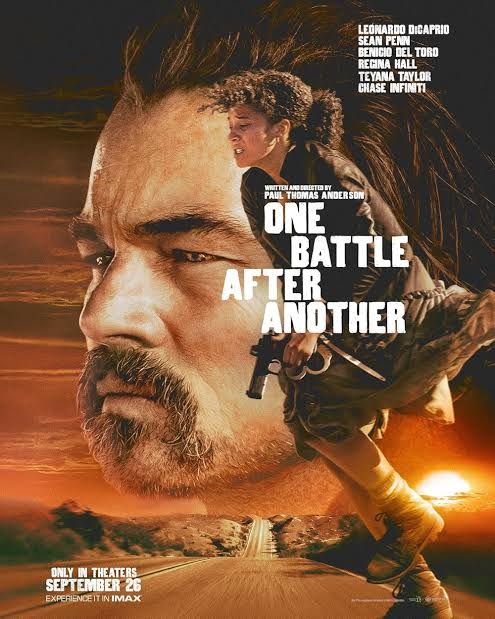
1 One Battle After Another 2 Marty Supreme 3 Blue Moon 4 Ocean with David Attenborough 5 Sorry, Baby 6 28 Years Later 7 The Alabama Solution 8 On Becoming a Guinea Fowl 9 Sentimental Value 10 Bridget Jones: Mad About the Boy
Next up, I’ll be posting a standalone review of Blue Moon, followed by individual posts for each film on this list—partly to give them the space they deserve, and partly to let future readers find them more easily through search. Some of these movies will age well. Others might not. Either way, they’re worth arguing with.
After that comes my 27-Day A–Z “I Might Actually Enjoy This Movie” Film-a-Thon. The idea is simple: one letter per day, one movie per letter—but only films that most people don’t seem to like very much. These are the movies that get shrugged off, dismissed, or quietly forgotten, but that I suspect might contain something interesting if given another chance. I’m hoping to uncover a few underrated gems, maybe even a hidden masterpiece or two. Think of it as detective work. I’ll be your movie sleuth—a Daryl Zero of cinema.
Enjoy movies. Catch up on the great ones, no matter how old they feel now.
I am not retired from blog writing—I am just busy. I’ve been sick off and on, or at least sick enough that a good chunk of my “time off” disappeared into fevers and whatever mysterious bug was going around. Mostly, though, I’ve been cooking. I dusted off my apron, my knife skills, and my immersion blender and made all kinds of interesting things, as my mom would say. Chicken spinach quesadillas, for one. Next up: chicken pot pie (with the crust on the bottom). Carla Hall’s Cooking With Love has quietly become my culinary Bible.
But I have also been watching things. New movies, mostly—and all five seasons of Stranger Things since December, which I’d give a solid B overall. I realized I was too far behind to pretend this would be a single post, so consider this the first part of a recent movie round-up. I wanted to get it out before the Oscars. Ideally before the nominations. Life had other ideas.
First up.
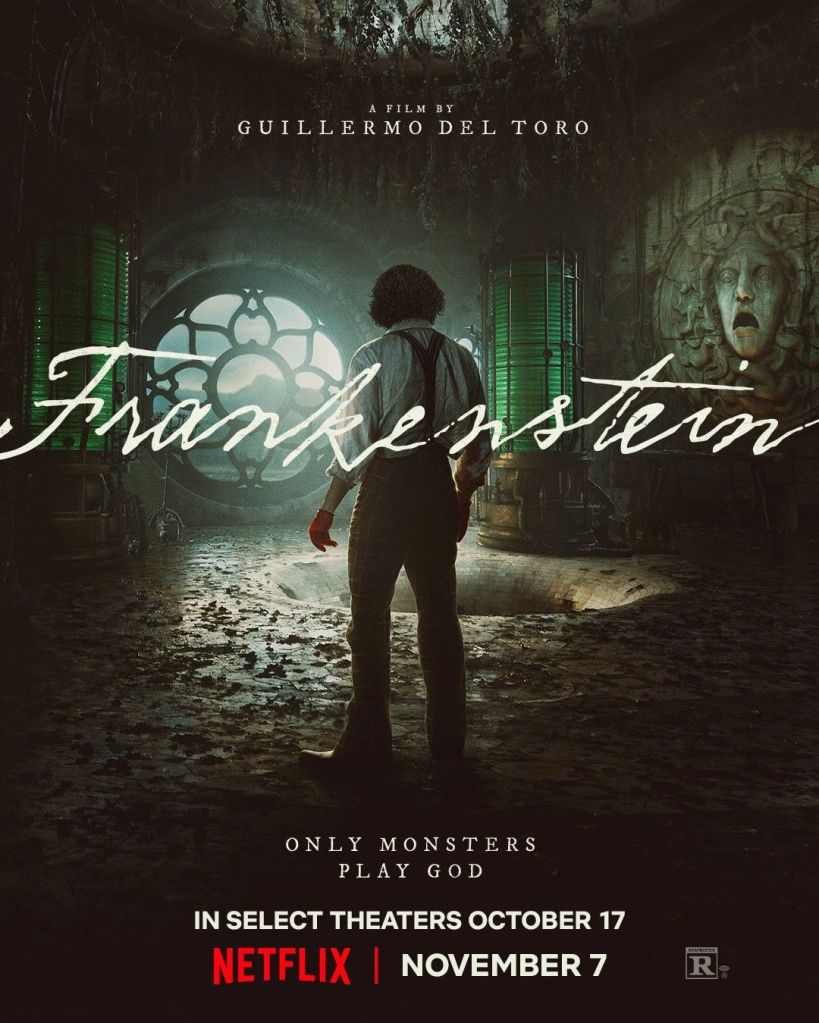
Frankenstein
Frankenstein is not Frankenstein’s Frankenstein, and it bears almost no resemblance to the golden-era films directed by James Whale. So what is it? A Marvel origin movie with literary set dressing. At one point, the creature approaches a ship frozen in the ocean and casually pushes it until it tilts at an angle. My question is simple: why does this movie think that makes sense?
In the novel, Dr. Frankenstein discusses electricity at a time when it was still a mysterious, barely understood force. That idea—later visualized by Whale with lightning bolts and switches—gave the creature a sense of stored, barely contained power. The original monster moved like an ogre, slow and heavy, as if animated by a single catastrophic surge of energy. That logic made sense. Here, the creature is absurdly strong, with no explanation beyond “because the movie needs him to be.” He isn’t just as powerful as the Hulk—he’s as powerful as ten Hulks put together, and the film never bothers to justify it.
Worse, this super-strength comes bundled with what appear to be hypnosis powers, making the creature function less like Frankenstein’s monster and more like Dracula. Mia Goth’s character falls for him almost instantly after seeing him alone in a basement, walking toward him as if under a charm spell. The moment isn’t romantic or tragic—it’s incoherent, stripping the creature of his horror and her of her agency. I enjoyed Pinocchio, but this belongs firmly in the category of fun-but-messy genre fare like Blade II or Hellboy. It’s entertaining, but thematically muddled and largely uninterested in Shelley’s ideas. Even basic period details feel careless—why are bodies buried with uncovered faces, as if people in the 18th century simply tossed dirt directly onto the dead?
This Frankenstein favors spectacle over logic, power over consequence, and superhero mythmaking over Gothic dread.
6/10
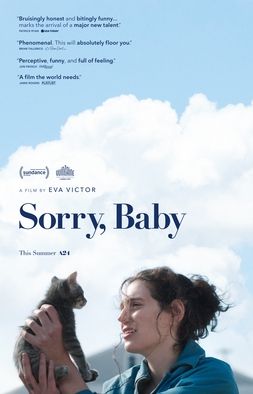
Sorry, Baby
Sorry, Baby existing at all may be one of the best things to come out of the MeToo movement. While the exposure of real monsters—like Bill Cosby and Danny Masterson—showed how power can be abused through drugs, fame, or violence, Sorry, Baby reminds us that none of that is required to permanently damage someone.
Its premise is deceptively simple: “Something bad happened to Agnes.” The film never fully shows what that something is, and many viewers may wonder whether the ambiguity justifies a movie at all. It does. What we learn is enough. Someone Agnes admired desired her for her mind but had no respect for her autonomy. She wasn’t allowed to decide. She was coerced into something she wasn’t ready for. That quiet violation—the kind some people still struggle to even name—is the film’s subject, and it is more than worthy of examination.
Men can be awful, particularly when entitlement overrides empathy. The film understands that harm doesn’t come from brute force alone, but from insistence—from wanting what you are explicitly denied. Eva Victor, pulling triple duty as writer, director, and lead actor, tells this story with restraint and discomfort rather than spectacle. Sorry, Baby is labeled a dark comedy mostly because it’s too minimal and too emotionally raw to fit anywhere else.
I laughed at times, but rarely out of joy—more out of tension, desperation, and the human need to feel something break through the numbness. I wanted Agnes to laugh at life again, so I laughed loudly, hoping she might too. Whether or not this story draws from Victor’s own life, it announces a rare talent: someone capable of articulating pain with clarity, intelligence, and moral weight.
9/10
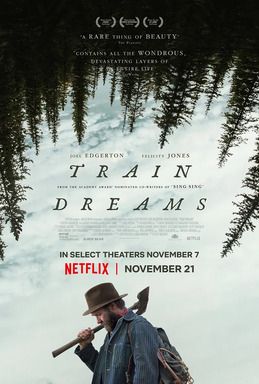
Train Dreams
Train Dreams may be one of the most somber movies ever made. As a point of reference, I thought of films like Bringing Out the Dead, Palindromes, and Synecdoche, New York—all famously bleak works that offer little to no emotional reprieve. This film is quiet, sad, and ever lonelier.
It captures the immensity of solitude: what it feels like to be briefly, modestly happy; to watch that happiness erode; and then to wake up one day and realize the world has kept moving without you—that you may be the only truly sad person left in it. The performances are beautifully restrained, communicating grief and endurance without overt dramatics.
Still, the film’s devotion to mood comes at a cost. It often feels less like a story unfolding than an emotional state being prolonged, and at times it nearly forgets to provide a plot at all.
8/10
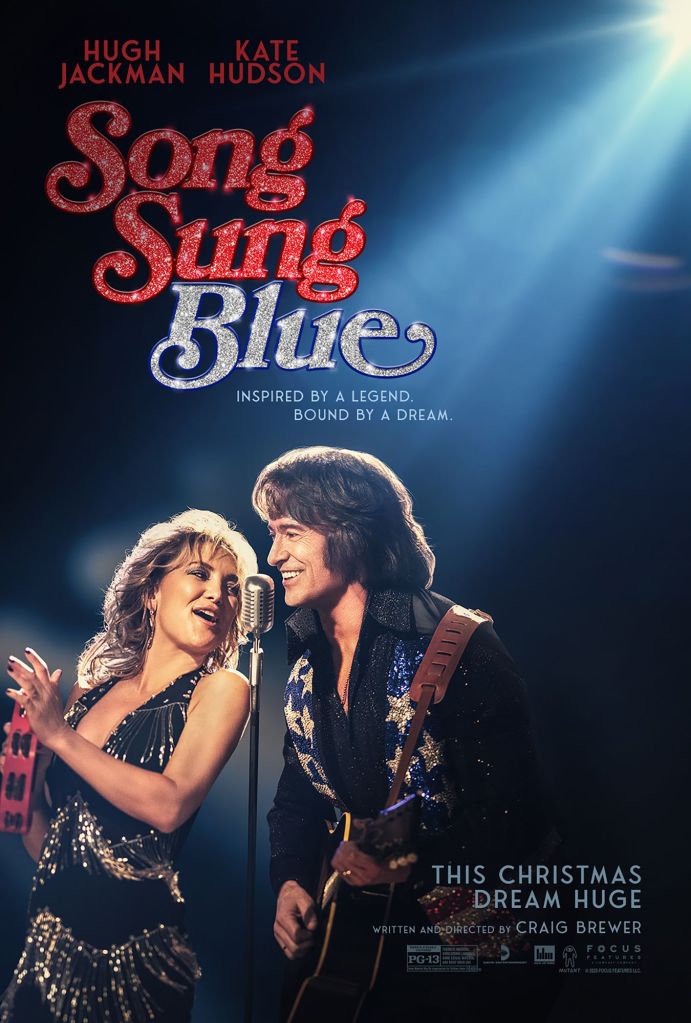
Song Sung Blue
Song Sung Blue has to be a movie that played the Heartland Film Festival, right? Let me check… okay, it didn’t. But they gave it some sort of award anyway. You can almost hear the thought process: “We’re not letting a movie this paltry—and this transparently engineered to make audiences cry—not have our name attached to it.”
And yet.
This is actually a very sweet love story about two people dealing with genuinely relatable problems—at least to me. Kate Hudson does her own singing, and she sounds great. Exactly like an extremely talented singer who can’t quite turn that talent into a full career should sound.
The saddest thing of all is that Hugh Jackman never played Neil Diamond in a biopic. He looks and sings exactly like him. That said, I can’t imagine there’s a story we urgently need to see about a 60-year-old Neil Diamond—and, truth be told, this story didn’t strictly need to be told either.
But it was told, and it’s very sweet. The film gently reminds us of the importance of making the most of our lives while we still have time on Earth. I’m glad to have this one in my back pocket for people who are grieving the loss of family members.
7/10
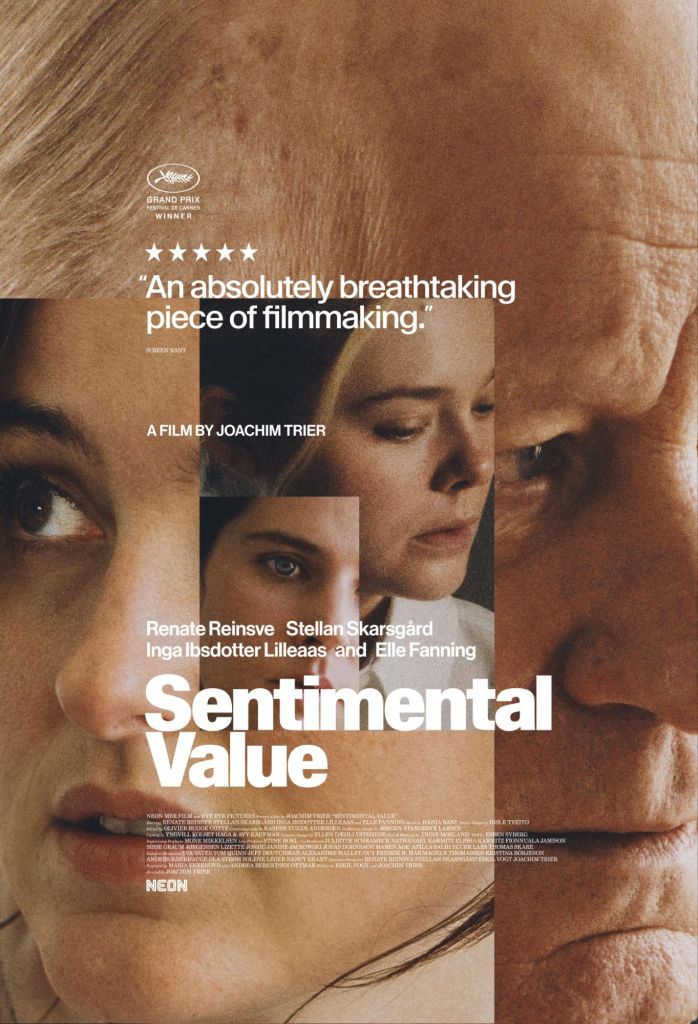
Sentimental Value
Sentimental Value is another deceptively slight movie about coping with tragic loss, but one that feels far more likely to linger. Stellan Skarsgård plays Gustav Borg, a Lars von Trier–like director who hasn’t made a film in over a decade and now feels the pressure to deliver one final artistic statement before he dies. His daughters have long since abandoned their need for him, and the distance feels permanent. Gustav is the kind of man who only loves punishing, perverse cinema—to the extent that he thinks DVDs of Irreversible and The Piano Teacher would be appropriate gifts for a twelve-year-old’s birthday.
Movies about filmmakers rarely thrill me—they tend to be self-congratulatory and therefore less honest—but this one is handled with restraint and surprising humility. The central question cuts deep: how do you convince anyone your story is worth hearing when you’ve spent a lifetime uninterested in listening to others? Elle Fanning plays one of the finest actors of her generation, and even she seems uncertain whether this man’s vision deserves her faith. (And honestly—why isn’t she already regarded that way?)
Sentimental Value kind of comes and goes for me. It says something real, and I don’t doubt that it matters, but it didn’t stay with me in the same way The Worst Person in the World did, which felt like the movie I’d want all my friends to watch when I die. That movie felt big—about terminal illness, infidelity, and how people explain their lives to themselves. Sentimental Value feels smaller by comparison, more about famous people having problems that will probably never apply to me. My boyfriend loves it. I admired it. I’m just not sure how much of it I’ll think about later.
8.5/10
Part two will come next week or sooner, I promise.
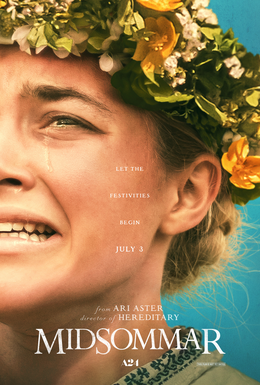
Goal: What is the one horror movie I would still like to watch before closing the book on this year’s project?
—
What I know about it:
Basically nothing. For years I assumed it had something to do with ancient Roman elites — something about the poster gave me a Caligula vibe; maybe it’s the hairstyle. Only now am I looking it up.
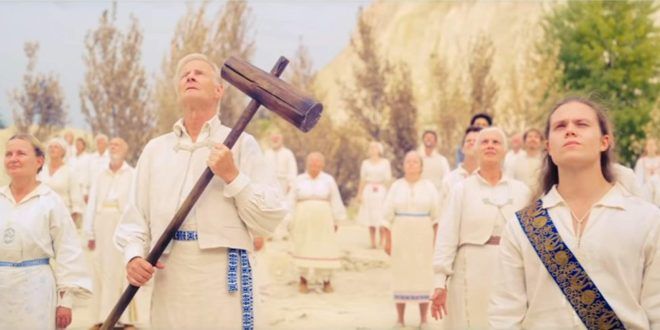
Apparently it’s closer to The Wicker Man than I, Claudius: a remote European commune hosting a mysterious summer festival. I’ve heard it takes place almost entirely in daylight — a neat subversion for horror — and that it falls under the “folk horror” umbrella.
So why watch it if I know so little?
About a year ago, a friend told me it was really messed up. She stopped before spoiling anything — impressive, since she hadn’t seen it herself. That was enough to lodge it in my head.
Also, I more or less tuned out new releases around 2019. As a rule:
> If you were released between 2018–2021 and scored under a 77 on Metacritic, there’s a good chance I never heard of you.
On paper, Midsommar was a hit — but the reputation seems complicated. It came after Ari Aster’s breakout Hereditary, and the consensus appears to be something like: “good, but not as good.” I never cared much for Hereditary anyway, so this actually raises my hopes. Sometimes the follow-up to a major work — the one that gets dinged for being weirder, less focused, or more self-indulgent — ends up being the real gem.
It’s the Kid A to OK Computer: a stranger evolution of the same concerns, initially received as a disappointment but later appreciated on its own, maybe even preferred.
I actually like Punch-Drunk Love more than Boogie Nights or Magnolia, so I’m open to the possibility that a “disappointment” can be the quietly great one.
So I’m excited for this. Let’s hope this is the Return of Saturn to Hereditary’s Tragic Kingdom.
—
After the movie:
Hmm. That was a very pretty bad movie. It has all of the makings of a good moral fable, but it tries to do too many vague things with character motivations. Too many beats are awkwardly piled on at the same time, so the overall effect is watching a filmmaker grasping at straws.
A key dynamic concerns Dani (Florence Pugh) and Christian, who are in a relationship that seems to continue mostly from inertia. Christian isn’t exactly the villain, but he is shapeless and passive. The film never fully convinces us why these two would have gotten together in the first place.
Christian and his friends decide to travel to Sweden to visit a fellow student’s rural commune during the midsummer festival. Given their ages, you might expect a hedonistic vacation driven by drugs and hookups, but the draw seems more like cheap cultural tourism — the promise of “experiencing something authentic.”
—
What educational value is there in Midsommar?
What do we learn?
First, there is a portion of Sweden where the sun does not set for part of the summer (“the midnight sun,” as they call it).
Midsommar is a real cultural tradition across Sweden, and it takes place during the summer solstice, so the timing overlaps.
The film also references ättestupa, a legendary cliff from which elderly people were said to leap once they became a burden to their family. Importantly, this is folklore only — there is no historical evidence that such a practice ever occurred. The stories were meant to shock or caution, not to endorse the act or portray it as noble.
The rest? Pure fantasy. The architecture of the ceremonial building is not based on anything recognizable in Swedish culture. There are no psychedelic rituals at Midsommar; no fertility ceremonies to choose a queen; no temples built intentionally to be burned to the ground. They could have made this about the Burning Man festival and it would have been just as true to factual life — if not more so.
You also get the sense that Swedish people believe life is grounded in reincarnation, which is not representative of Swedish culture broadly; that’s an invention of the fictional commune
So what is this movie trying to be?
It imagines a culture that treats outsiders as expendable, but believes that someone with no family or sense of belonging can be absorbed into the group — if they are willing to surrender themselves totally.
The most haunting part of the movie comes when Dani screams in furious grief and the surrounding women mimic her cries. They are not mocking her; it is presented as a communal expression of empathy.
Aster seems interested in how grief can isolate as much as it bonds. Dani’s personal tragedy is so extreme that she becomes untethered from ordinary life, and the commune offers what her real world does not: absolute emotional mirroring, however sinister the cost.
In that sense, Midsommar is about the seductiveness of belonging. When genuine support systems fail or prove indifferent, even a dangerous one can feel like salvation.
> “The last known whereabouts of his cell phone was where, officer?”
Goal: Watch a foreign-language horror movie I would otherwise skip.
—
What I know about it:
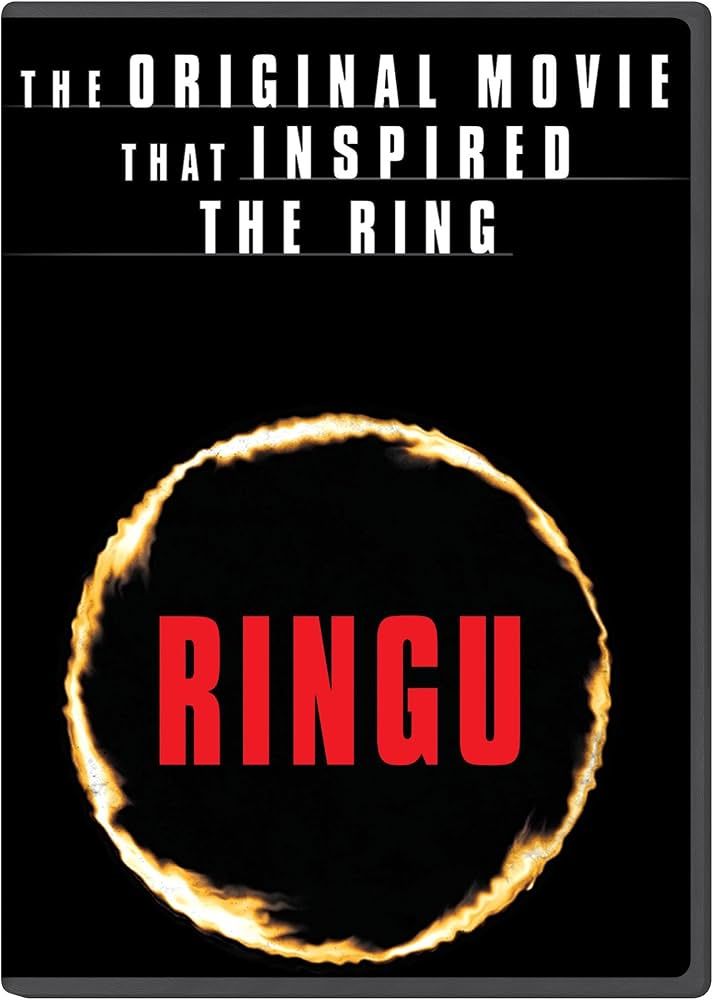
I first saw The Ring on opening night in New York. Back then, I bought Entertainment Weekly’s Fall Movie Preview every year and kept a document on my computer with all my box-office opening weekend predictions through the end of the year. A weird hobby only a handful of us had. We all ended up on hsx.com — the Hollywood Stock Exchange — where you could buy pretend stock in movies you thought would overperform. You could make billions of completely useless Hollywood Dollars. Fun times.
The Ring was coming out in October, and I hoped it would be a hit, though I had no real reason to think anyone else cared. It was Naomi Watts’s first movie after Mulholland Dr., which felt like a big deal to me for reasons that still don’t make sense. Directed by Gore Verbinski, a commercial director known for making things look expensive on the cheap. The official budget was $48 million, but I would’ve guessed closer to $90 million.
The movie was fine. Scary enough. Absurd, but almost serious about it. Watching clips now, it’s clear the movie wanted to look like Fight Club. A lot of early-2000s movies seemed to have a Se7en complex — dingy greens, low light, evenly lit hallways. David Fincher should have demanded royalties.
Ringu shows up in the “Best Horror Movies of All Time” conversation from time to time, though not as high as it once did. It was a real hit in Japan and had sequels before Hollywood remade it four years later.
—
After the movie:
VHS tapes were inherently creepy. For a time, I believed evil could will objects into existence — but only vaguely, and only cheap ones. A Rolex requires craftsmanship; a dusty tape labeled “Cheers ’89” is fair game for evil.
If you ever edited on VHS, you know the feeling. Scrubbing through footage frame by frame, playing with the tracking — it felt like something horrifying could suddenly appear and ruin your day. I don’t know what I expected. A serial killer? A dead relative? My aunt Edith happily posing with Adolf Hitler?
That whole category of urban legend basically died with streaming. If someone claims they saw something weird in their copy of The Sixth Sense, any college freshman can say, “Someone messed with that file. Re-download it from Vudu. It’s not there.”
This is part of why DreamWorks jumped on this story. In 2002, VHS was already dying. A mysterious DVD that kills you wouldn’t make sense. No scratches, no rental sticker — too clean. A cursed VHS is believable.
People sometimes compare Ringu to Halloween (1978), calling it the movie that kicked off a movement. I don’t see it. Halloween feels big — the score alone sounds like it cost millions. Carpenter’s theme tells you immediately: This is The Movie. Ringu, meanwhile, barely has a score, at least nothing recognizable, which makes it feel small and quiet — closerto Blair Witch than Halloween.
The movie is much smaller than I expected. The tape in The Ring looks like a surreal Super Bowl commercial; the one in Ringu looks like a local car dealership’s Halloween ad. And since most people saw the remake first, it’s impossible not to compare everything.
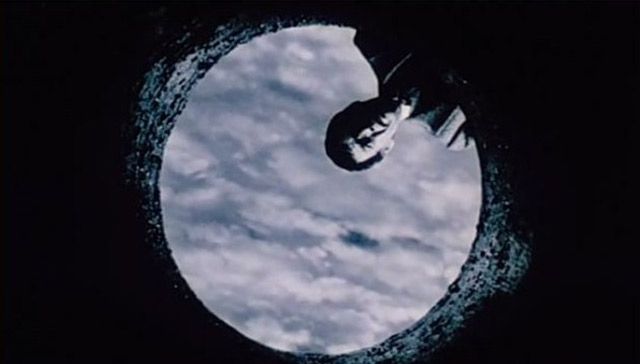
The ending is basically the same, but Ringu suggests instead of shows. No big moment — just an understated final beat.
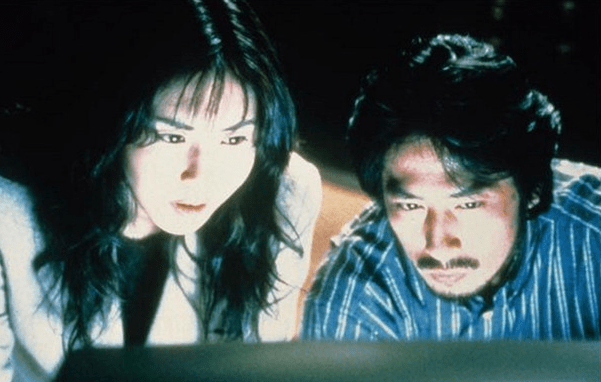
What works is that this feels like an underdog movie that succeeded despite having almost no money. Reiko feels proper — like someone raised to be respectful and polite. Naomi Watts was strangely unlikable by comparison. I remember her sitting on a counter in her son’s classroom and thinking, “Who does she think she is? Does she have no respect?” She played a reporter who treated social norms like optional settings. Why start by having your protagonist unlikable out of the gate?
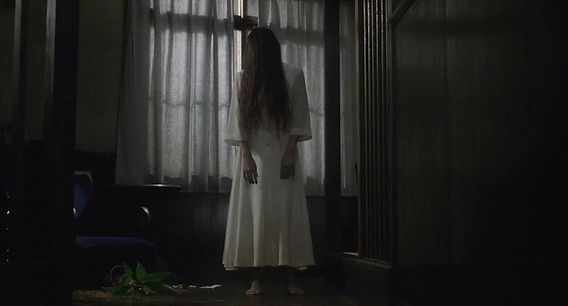
The best parts of The Ring are here, but it’s doubtful they would’ve hit American audiences without Verbinski’s water-effects, CGI, and general “big movie” polish. When I think of The Ring, I picture Samara crawling out of the TV, neck twisting, jaws unhinging, like a demonic spider. I’m probably misremembering the details, but the feeling is correct: when she wanted you dead, it seemed inescapable.
Ringu is so much smaller — almost quaint — the kind of vengeful ghost you could bring home to meet your parents. I knew the budget going in and got nervous when they were prying up a wooden fence with a crowbar.
Are they really going to damage that? That’s $5,000 in repairs!
Money is not on the screen here. It feels tiny — small enough that it’s hard to believe this kicked off a franchise, let alone a genre. But it develops its bizarre concept in a way that feels natural, with characters you can root for easily.
Maybe too easily — no one really does anything wrong. You might beg to differ, but by the end, I wasn’t sure what the next step was. The mystery works; the morality is muted.
The movie ends quietly, almost like a cliffhanger, as if the story only works if the sequels do. They don’t. Ringu 2 has a 7% on Rotten Tomatoes, and the franchise has now been long dormant. Final Destination, this is not.
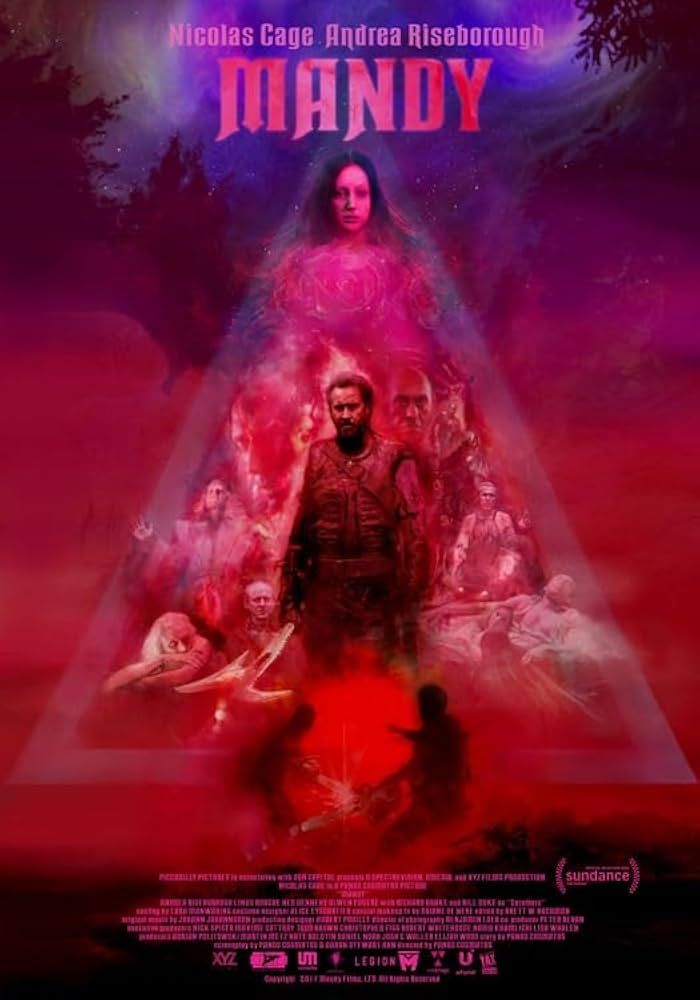
It sounds like a big hit, but it wasn’t. A violent rampage movie about Nicolas Cage taking revenge on a hippie cult. It made $1.8 million on a $6 million budget. It has a reputation for being strange, slow, and surreal. It’s the kind of movie people see at midnight and talk about for years afterward. Perhaps.
When I was putting this list together, my AI interface suggested I save Mandy for Halloween. I might still watch a few more of these before I put the project to bed this year, but this one felt like the right one for the actual day.
It has an 83 on Metacritic, which makes it the third-highest-rated movie on my list so far, behind Eyes Without a Face (90) and Eraserhead (87). It’s tied with The Lighthouse. People talk about Mandy in that same category — one of those “you should have seen this by now” movies.
—
After the movie:
The movie I hoped it would be was better than the one it actually was.
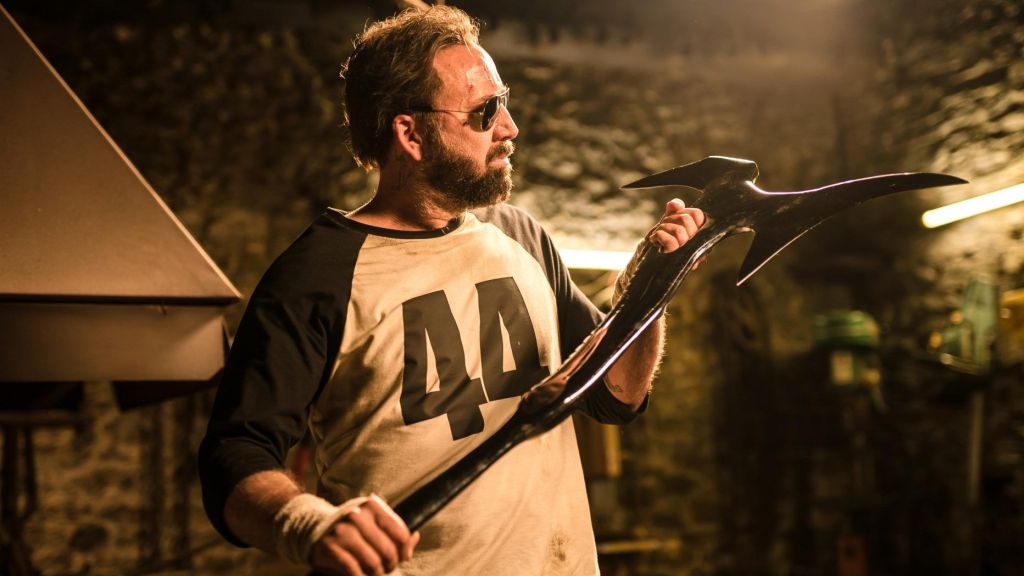
The first half is fantastic. Probably the best stretch of any movie I’ve seen during this project. The characters feel real, the dialogue is sharp and nuanced, and the direction is confident. The soundtrack is that retro ’80s synth style, like Drive or It Follows. The movie looks incredible — everything drenched in hot pinks and deep purples. I have never had a chilling association with this color scheme before
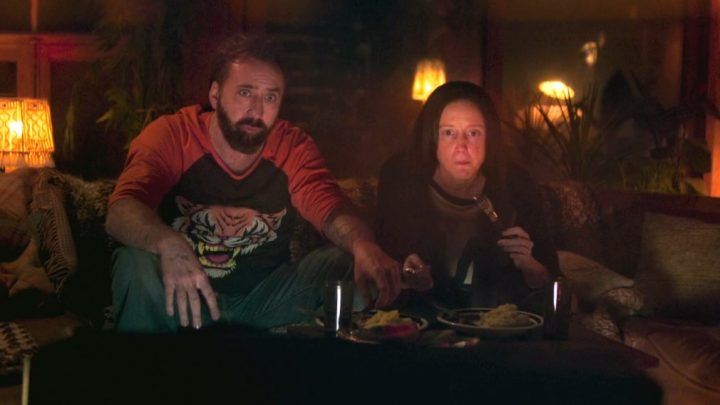
The romance works brilliantly. Nicolas Cage is slightly miscast (far too old), but his scenes with Andrea Riseborough are tender and believable. They’re the kind of pair who seem to know that the best thing either of them could be doing — anywhere, anytime — is just being with each other.
One of the best scenes involves Mandy talking about astronomy with Red. She asks him for his favorite planet. He says Saturn, and mentions that it was one of the first planets Earth discovered, so there are all these old legends about it. Then he changes his mind, referencing the strange cosmic stuff she’s been describing in the science-fiction novels she’s reading.
> “I like Galactus.”
“Galactus isn’t a planet.”
“No, but he eats planets.”
There’s no doubt that Red and Mandy are a perfect couple.
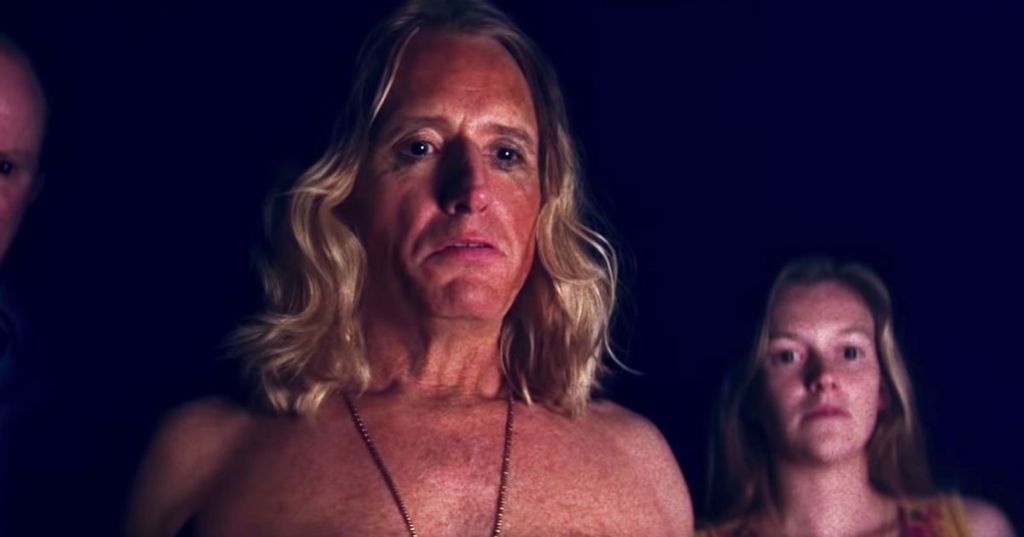
The cult is the best part, narratively — actual hippies turned true believers. There’s something deeply uncomfortable about people that certain.
Then the second half loses its way. It becomes a different film — louder, simpler. I wanted more blood. Not less. It feels like it stalls at the finish line. There’s nothing here I haven’t seen many times before.
But I did love one moment at the end. Red sits behind the wheel after it’s all over, covered in blood, and imagines Mandy sitting beside him, smiling. He looks at her like she’s still there, proud of him somehow. It’s the first time the movie feels quiet again. It’s killing in the name of love, but he’s still trying to make sure she would have approved.
The biker gang doesn’t work. They seem like demons or aliens, and that gives the cult credibility. I would have much preferred them to seem certain but fully absolute deranged. To make them seem right kills the tension.
I’ve been catching up on Nicolas Cage movies — Mandy, Pig, Longlegs, The Unbearable Weight of Massive Talent, Renfield, Arcadian — and I’m still not sure what to think of his modern era. He might be the most overrated actor today in small-budget film. Every project has a strong idea and a weak script. He finds interesting material, but the movies never quite work all the way through.
At this point, putting Cage in a movie feels like a shortcut to getting it made. Directors write for him, say to themselves, “Maybe if we write a part for him, he’ll actually do it.” He says yes, and that’s enough — green light. When the movies work, they are applauded, but the results are always secretly uneven.
He could be doing more to shape better projects for the directors who want to work with him. He doesn’t, and that feels like wasted potential — his and theirs.
Goal: Find a movie I never heard of until it started showing up on streaming trends.
—
What I know about it:
To me, this movie is an oddity. It’s like one of those titles that shows up on How Did This Get Made? alongside Death Spa or Chopping Mall—except this one actually has an overall good reputation. If it’s decent, why have I never heard a single respected critic mention it? Meanwhile, eXistenZ and Event Horizon weren’t exactly hits, yet people bring them up constantly on YouTube.
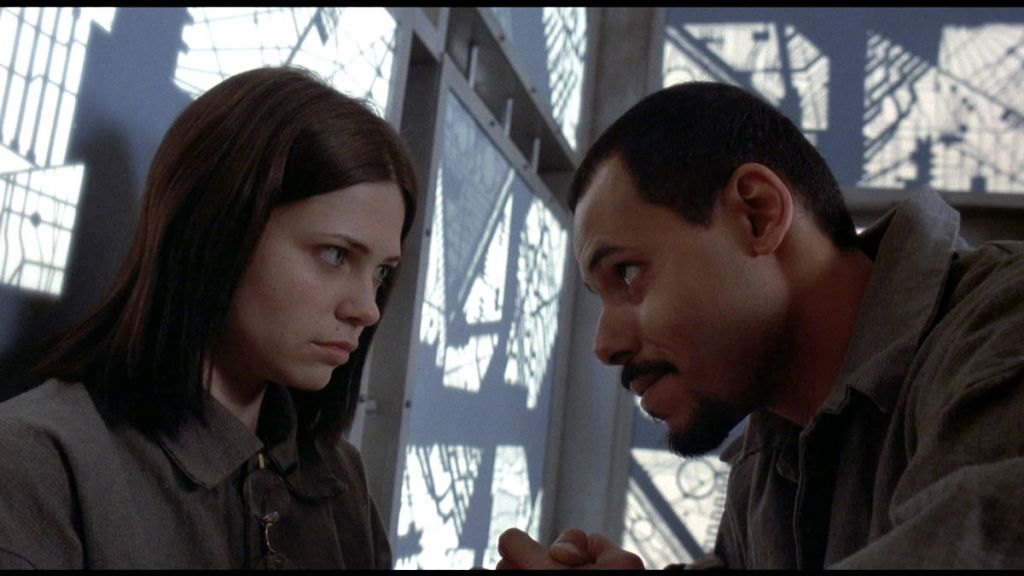
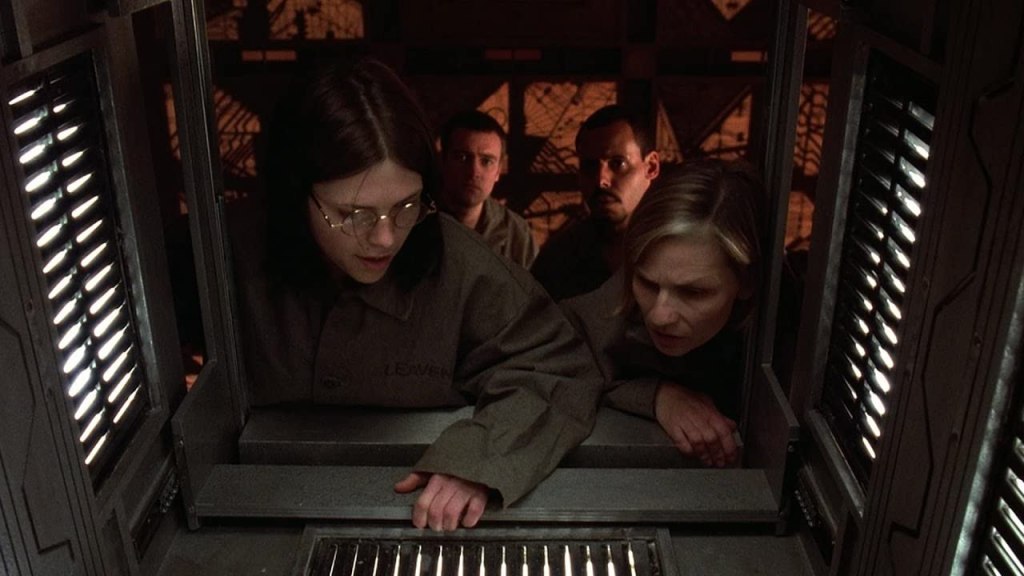
The plot sounds intriguing enough: a group trapped in a mechanical maze that might be some layer of Hell. They move up, down, sideways—each new room maybe leading to freedom. I pictured Hellraiser by way of Saw, two movies franchises with famously devoted fans. So why doesn’t Cube ever come up in the same breath?
I couldn’t find a proper trailer. I showed a clip to Josh on YouTube, and he wasn’t impressed. Maybe that’s a good sign. The movie doesn’t seem to sell itself, so maybe that is why no one has heard of it. He tends to like things that announce themselves loudly (Heretic, for example). Cube doesn’t seem to do that. Maybe the people who love it found it quietly—and showed it to their friends.
I first heard of Cube in 2006, when it was the No. 1 most-borrowed DVD from Netflix in Carmel, Indiana. One month, it sat at the top of the local trends list like a mystery no one could explain. I’ve seen it pop up on other streaming charts since—but I’ve never once heard anyone talk about it. Ever.
—
After the movie:
This was basically Canadian Escape Room: The Movie. Which is kind of impressive, considering it came out in 1997—long before “escape rooms” were a thing. I first heard of a real-life escape room in 2014, when they started popping up all over the West Coast. In Indianapolis, a place opened called The Escape Room. A year later, another one opened called Escape the Room. They weren’t connected, but I beat both. I was good, kinda—successfully completed both, where the success rate for each one was about 40%. Usually, I wasted time on red herrings, but I’d crack the last puzzle with seconds left.
Cube didn’t invent the escape-room concept, but it definitely saw the appeal coming. Its roots are in point-and-click adventure games and Dungeons & Dragons modules. Sierra made some of the first “escape room”–style text adventures like Mystery House, where you typed in commands to make your way through puzzles. The version of this idea I played was Maniac Mansion — a Lucasfilm Games classic that added comic relief and actual personality. Every room in point-and-click adventure games is an escape room, and only the elite few wanted to think enough to make their way through those. The Secret of Monkey Island and Sam & Max Hit the Road are still two of the best games ever made.
And before all that, there was Dungeons & Dragons. The legendary module Tomb of Horrors (Gary Gygax, 1975) was built entirely around the idea of a cruel puzzle dungeon. Players swapped horror stories about total party kills. The struggle was real.
When I was a kid, that whole genre fascinated me. My favorite was Jim Henson’s Labyrinth, but I also loved Scooby-Doo Meets the Boo Brothers (1987)—a movie where Shaggy inherits a haunted mansion and has to solve puzzles to find a hidden fortune. Looking back, that was basically The Da Vinci Code for children.
The problem is, puzzle-solving doesn’t translate well to film. Watching someone instantly solve something you never understood isn’t satisfying. It works in a game, or maybe a serialized show—like Batman cliffhangers: How will they get out of the conveyor belt trap this time? Stay tuned next week. Same Bat-time, same Bat-channel.
But Cube doesn’t build a world to make those puzzles matter. There’s almost no setup or lore—just math equations and quick deductions. The puzzles function as MacGuffins, filler between moments of panic. You can’t play along. You just wait to see who dies next.
Still, it’s fun. The writing’s solid, and most of the acting works. The “villain” type might be the worst performer here—but that’s part of the fun. (Play “Spot the Worst Actor” at home and see if you agree.)
The direction feels dated, full of leftover ’90s TV transitions. Even when there is gore, the whole thing looks like an episode of Goosebumps or early Buffy the Vampire Slayer—but cheaper.
The ending, though, is a letdown. It just… stops. No emotional payoff, no moral, no world-building to make sense of anything. It’s one of those “Wouldn’t it be messed up if…?” movies that mistakes mystery for meaning. I think the implication is aliens—but it could be anything, and the movie doesn’t seem sure either.
I liked Cube. I could almost recommend it. It deserves credit for being nothing like anything else from its decade, but it’s the kind of film that practically begs for a remake.
Goal: Find a horror movie that is supposed to be great, but you’re afraid you won’t like.
What I knew before watching
I recently saw the trailer. It seemed stylish in a way that could either work brilliantly or seem like it’s trying too hard. It was slow, avant-garde, and didn’t seem to care much about showing what the plot was—if there even was one.
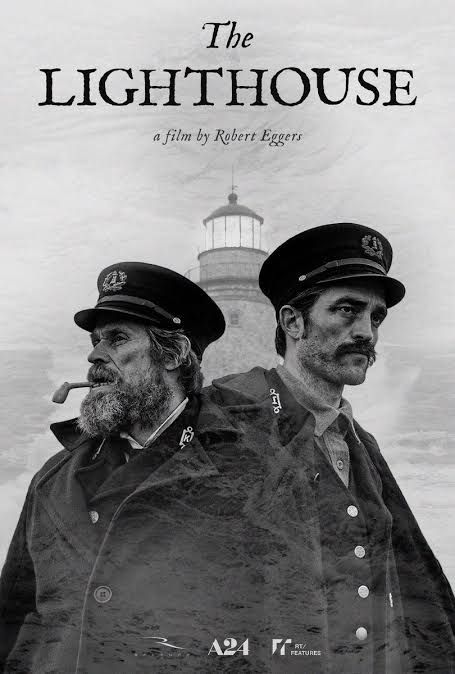
Willem Dafoe, an actor I’ve never much liked, has somehow become the most respected name in arthouse movies, and I’ve yet to figure out why. I haven’t seen his two most acclaimed performances—this and The Florida Project. Robert Eggers is a director I respect for his ambition and his taste in material. I’ve liked all of his movies, but I’ve never loved one. The Witch was my favorite, but it still felt like half a movie.
There’s an American Dad episode from 2022 called “Gold Top Nuts” where Stan and the family take a budget vacation that ends in a plane crash on a mysterious island. They lose all memory of who they are, become desocialized, and start wandering around naked. Inside a lighthouse, they find a VHS tape containing a single commercial—for a product called Gold Top Nuts—which they watch repeatedly until it becomes their religion. The tape finally dies when Stan places a magnetic rock on the VCR, and the family takes this as a divine sign to leave the island.
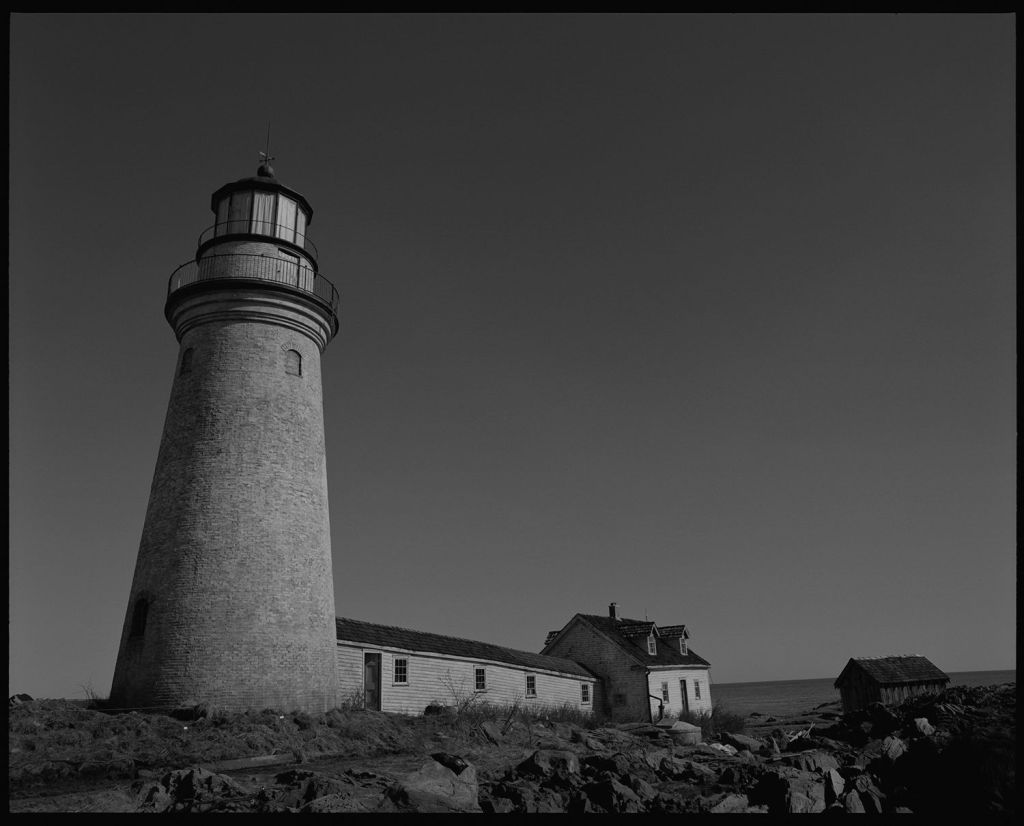
It’s a weird, singular episode, and I’ve always wondered what inspired it. Maybe it was The Lighthouse? Willem Dafoe and Robert Pattinson maybe don’t frolic naked around an island, but they do live in a lighthouse and gradually lose their minds. Perhaps that’s the connection. Then again, The Lighthouse takes place in the 1890s—before radio, let alone VHS—so maybe not.
Still, I hope there’s something truly hidden or transcendent about this movie, because on paper, it sounds like a boring idea.
—
After the movie:
What a thematically rich and hard-to-pin-down experience. What was this? A folk-horror fable? A psychological thriller in the vein of Polanski’s Repulsion? A filmed stage play with powerhouse performances? Or the dark ride preview for a new Disneyland attraction?
It’s a bit of each. (Hopefully.)
The “lighthouse causing madness” trope is new to me, and no—the American Dad episode doesn’t really relate, though trivia pages do list it as “inspired by The Lighthouse.” Maybe that’s just someone guessing, but I get why they’d think so.
This feels like a complete movie. The Witch always felt like it needed a third act; The Lighthouse delivers exactly what it promises—two men losing their grip on sanity in isolation. That’s a tougher sell to audiences, and it earned only about 40% of The Witch’s box office, but it’s the superior film: tighter, clearer in purpose, and not easy to dismiss as “great until the last twenty minutes.”
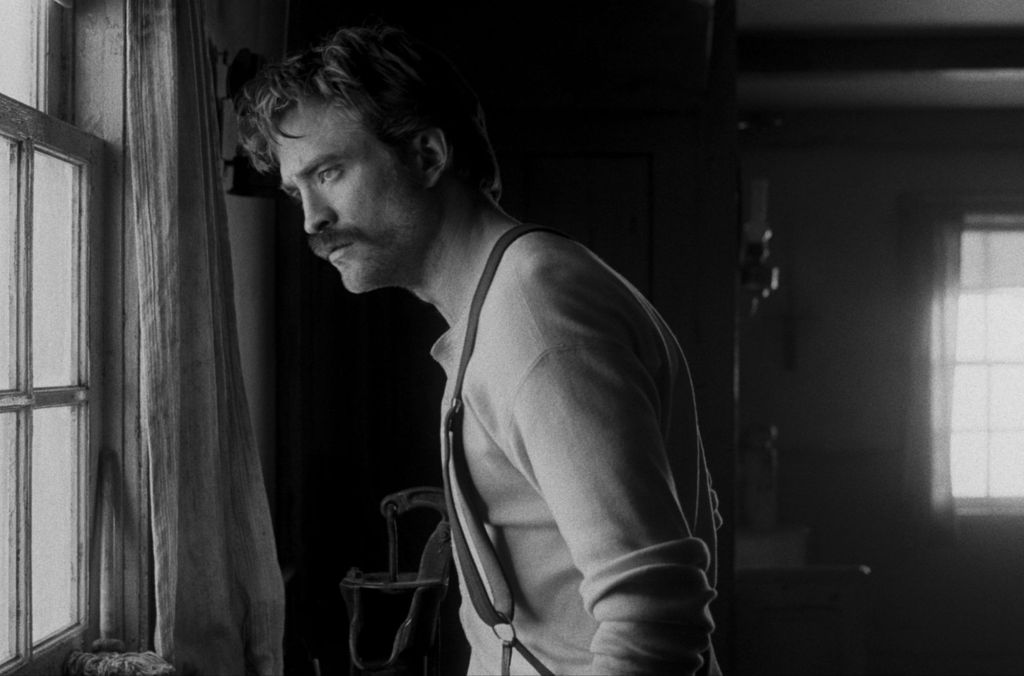
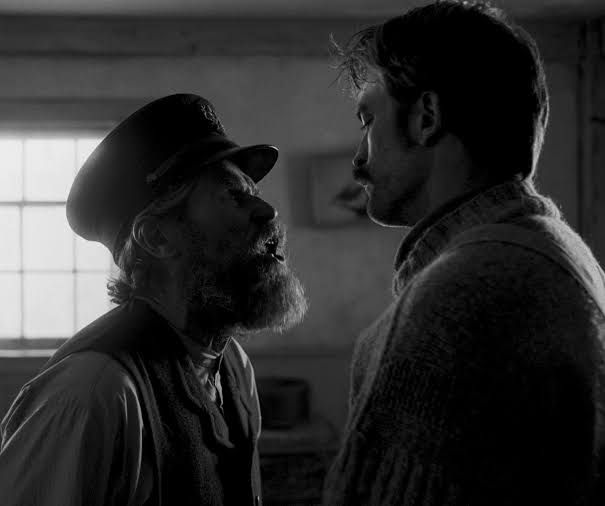
It’s ultimately a simple story about what happens when you live with someone you wouldn’t otherwise tolerate. I compare it to Repulsion because disgust drives much of Thomas Howard’s (Robert Pattinson) mental decay. In Repulsion, Carol Ledoux is repulsed by her sister’s lover—particularly when his toothbrush contaminates her mouthwash cup. In The Lighthouse, Thom is revolted by the flatulence of the man sleeping five feet away. Even the creaking boards of the storm-battered shack seem to echo Willem Dafoe’s farts. Every shift of the wind becomes an olfactory trigger.
Willem Dafoe gives one of the greatest horror performances I’ve seen. He convinces you that this is exactly how a lighthouse keeper would have sounded in 1890—even though no one could possibly know. Or maybe someone could.
The reason it feels authentic is that Robert Eggers built the dialogue from the writings of Sarah Orne Jewett (1849–1909), who transcribed the dialects of Maine’s fishermen and lighthouse keepers, and paired them with the salt-soaked cadences of Herman Melville. The result sounds like Dafoe studied recordings made decades before recording existed. Eggers is now the master of this trick—painstakingly reconstructing lost voices for The Witch and The Northman (even if his Vikings conveniently speak English).
The Lighthouse flirts with realism but lands squarely in folk horror: a world where curses, seabirds, and Cthulhu-like tentacles coexist with human guilt. Thom isn’t a sailor, yet his hallucinations teem with sea monsters and mythic fears that belong to men who’ve spent lifetimes at sea. The horror isn’t that he’s imagining them—it’s that they might be real. In Eggers’s world, if you live with secrets and act carelessly, the sea itself will swallow you whole.
Dafoe’s accent might be the film’s most hypnotic element, but Jarin Blaschke’s cinematography deserves equal praise. Every frame looks hand-composed and electrified, dense with atmosphere—like candlelight on wet glass. Blaschke was nominated for an Oscar (he lost to 1917), and while I love that movie, The Lighthouse is the one that should hang in museums. He’s since been nominated again for Nosferatu; it feels inevitable he’ll win eventually.
The film’s most unnerving scene isn’t monstrous but human: two lonely, drunk men on the verge of a kiss. They utterly hate each other, yet they suddenly are about to make out? Uh, no. Abort! They waltz together because there’s nothing else to do, sure, but why would they ever go beyond that? It’s both comic and terrifying—proof that intimacy, when born of isolation, feels grotesque.
This is an actor’s movie through and through. Dafoe and Pattinson hit their monologues btilliantly—each word chewed, every beat deliberate. When Dafoe’s Thomas Wake finally tells Pattinson’s Thom, “You have a way with words,” it’s the movie’s thesis. The two Thoms want bury each other, and for no reason at all, they seem to want to be buried.




 Avidavr: Media Reviews