Category: 27 day film a thon #1

  • Onibaba (1964)

    My 27 movie A-Z film-a-thon’: day 16.

    Onibaba (1964)

    Onibaba: Demon Woman feels like a 1970s grindhouse movie — except it came out of Japan in 1964. Though “pink films” and exploitation movies had already been made since 1959, Onibaba isn’t a sex picture. It’s a folk-horror art film, and it features some of the best black-and-white cinematography of all time. It looks like Seven Samurai in its craftsmanship. That much effort was put into it.

    The plot is slight and semi-ludicrous. Two women, a mother and daughter-in-law, have no way to fend for themselves while the son is off fighting a war. They kill wandering samurai and sell their belongings. I expected them to lure men and poison them, or attack them in their sleep — something two normal women could plausibly do. Nope. When a samurai happens to wander near, they stab him with a spear or bludgeon him with a rock. Killing a fully armored samurai with a single spear thrust seems as far-fetched as saying: Hungry? Just bend this crowbar with your bare hands!

    The story centers on Hachi, a soldier who returns home without the son. He claims the son was killed, but the mother suspects Hachi may have murdered him. Hachi quickly discovers the women’s killing scheme and demands a share of the spoils. “Mind your own business,” the mother tells him.

    Tension builds as Hachi becomes attracted to the daughter-in-law, now a widow, much to the mother’s horror. She fears losing her killing partner — and maybe something more. She tries to drive a wedge between them, but her interference only fuels their desire.

    Tarantino has never explicitly cited Onibaba, but it’s hard to believe he hasn’t seen it. He loves both Japanese art films and pink films from this era, and the ending here feels very Death Proof-esque. The movie wrings everything it can from its setting: a well-scouted marsh, a fearsome demon mask, and immaculate framing. It is unforgettable visually — any frame could be hung in a gallery. It looks exquisite.

    The movie has atmosphere, but not necessarily much content. About 30% of the dialogue is filler, with characters repeating key lines three or four times. Still, it is never boring, which is a rare thing for me to say about a 1960s film. Onibaba is rich with emotion, captured against the wild beauty of nature. It’s a rare hybrid: an exploitation film with real artistry, and an art film that embraces sex and nudity with surprising frankness for its time.

    If you’re a fan of cult cinema, Japanese film, old horror, or any combination thereof, Onibaba is a relic worth unearthing.

    8/10
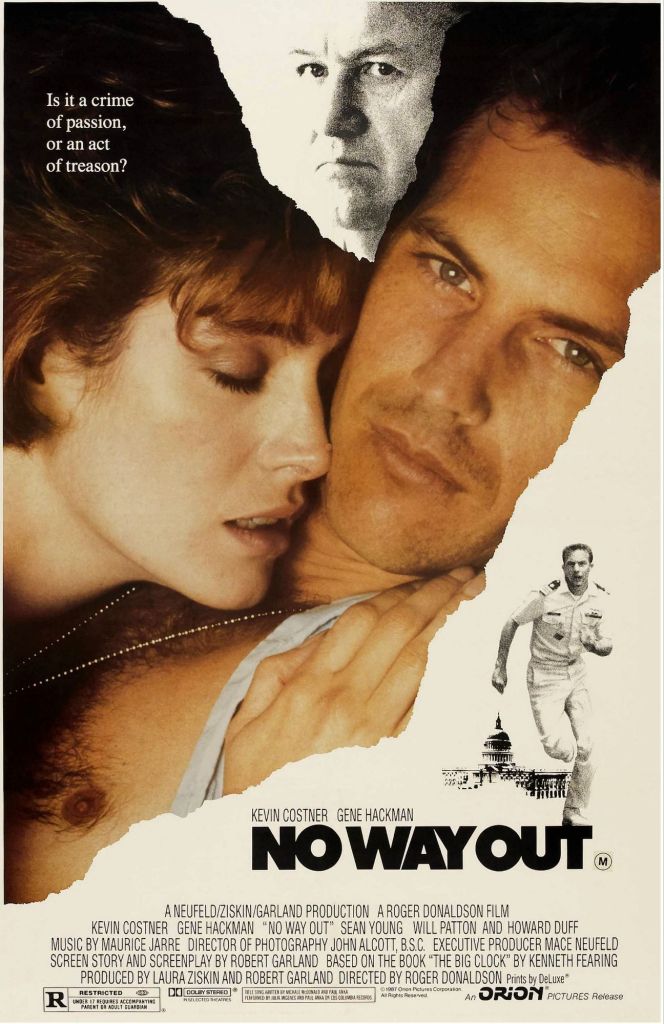
  • No Way Out (1987)

    My 27 Movie A-Z Film-a-thon: Day 15.

    Day 15: N


    No Way Out (1987)


    Let’s get the elephant in the room out of the way: it is absolutely ridiculous that Kevin Costner walks around in a Navy uniform the entire movie. Yes, he’s a high-ranking officer, and Gene Hackman’s Secretary of Defense would likely want a military figure nearby to lend credibility to his authority. But for Costner to walk around in uniform all the time feels like a producer’s decision, not the director’s. (“Just have him in uniform every scene — otherwise how will people understand the trailer?”)


    The direction is a little shaky. During the love scene, the characters listen to a song on the radio where the lyrics literally say, “No way out. None whatsoever.” It’s not just a musical cue for the audience — it’s actually playing inside the scene. So, which is it? Is the movie called No Way Out because there’s no way out, or because there’s a song called “No Way Out”? If it’s both… wow. Super cheesy.


    The ‘80s really didn’t understand technology, at least not in movies. In Blow Out, it was somehow plausible for John Travolta to turn magazine photos into a moving film. Here, the characters scan a Polaroid negative into a computer to “enhance the pixels.” Of course, Polaroids don’t have pixels — they have pigments — and even today, you can’t magically clarify a bad analog photo with a few keystrokes. And if you somehow could, it wouldn’t take days to do it.


    The plot’s logic is generally flawed — because it has to be. Not just the technology, but the basic chain of clues. She only takes one Polaroid? She only leaves behind one negative? If the image enhancement process is so painstaking, they’re awfully lucky there’s just one photo to worry about.


    Good things:


    I really loved the music. The synth score was probably seen as cheesy at the time, but it has aged surprisingly well. It’s smooth when it needs to be, exciting when the action picks up — the kind of distinctively polished sound that could only have existed a few years after Vangelis’s work on Chariots of Fire. I’m glad movies don’t sound like this anymore, but the ones that do each have a unique charm that adds something you can’t fake.


    The actors make the most of what they’re given. The characterizations are astute: both Costner and Sean Young’s characters recognize the practical realities of their situation. Susan (Young) accepts her arrangement, and David (Costner) resigns himself to it. It’s practical and matter-of-fact, up to a point — and relationships portrayed this way are rare. The only other film that comes to mind is The Servant (1963).


    Costner is serviceable. Sean Young is great — I honestly don’t know why she didn’t become a bigger star. Gene Hackman has a rather thankless part but, as usual, he makes the most of it. He cuts right to the heart of the power and authority his role demands, without any wasted motion.


    This moves briskly, hits its marks, and has some interesting plot turns. It’s not a great story: there are plot holes, no truly standout scenes, and it could have used a sharper director. Costner’s suit stays perfectly clean all the way through, even when he gashes his hand — until the very last scene, where a single drop of blood is ceremonially smeared on the jacket. Wouldn’t it have been better storytelling to have the uniform gradually degrade alongside the rising tension?


    Still, No Way Out is a smartly written thriller, one of the better political thrillers of its era. It’s worth checking out — if only to watch Gene Hackman quietly nail yet another role.


    7/10

  • Make Way for Tomorrow (1937)

    My 27 movie A-Z film-a-thon: Day 14

    Day 14: M

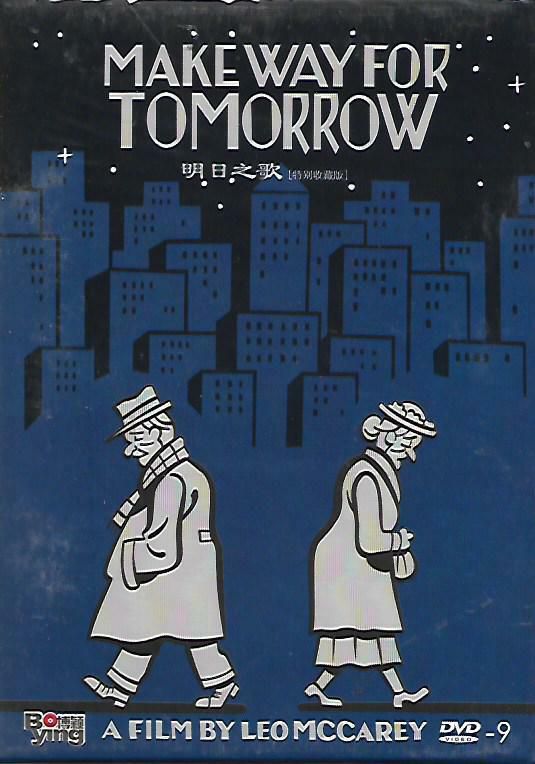
    Make Way for Tomorrow (1937)

    A minor tragedy and heartfelt romance wrapped in one package, Make Way for Tomorrow is a little bit of Casablanca mixed with Tokyo Story. And yet it predates both.

    The setup is a little like a horror story. Barkley (Pa) is an elderly man who hasn’t worked in four years—he’s simply considered too old. He and his wife, Lucy (Ma), secretly mortgaged their house, hoping some sort of work would turn up. They don’t tell their kids until they are about to be homeless next Tuesday.

    This scenario may be a little extreme, and yet it is a very familiar fear for most people. Luckily, Ma and Pa’s kids are very understanding—at first. They quickly come up with a plan. One daughter says she has room for them to live with her, but needs six months to warm her husband up to the idea. Temporarily, Ma is to live with one child and Pa is to live with another. The first daughter’s husband, it turns out, is not so keen on the idea.

    Did you know people used to teach bridge? Like, to an entire classroom’s worth of students? Bridge used to be that popular. She doesn’t just teach the basics—this is college-level theory and strategy. Bridge mattered. There were national competitions, and even wives didn’t see it as just a social pastime. Most people took it that seriously in the ‘30s. Why have I never heard of this outside of this movie?

    So Ma spoils the bridge class. Ma spoils a secret romance for the granddaughter. Ma even spoils movies for strangers on the street. She does this—like many elderly women—accidentally and innocently. She becomes aware of her presence as a household nuisance, but she doesn’t know how to be less of a bother. She finds a letter from the “Home for Aged Women.” Knowing her children likely inquired about sending her away, Ma sulks but then dutifully volunteers, pretending like it is only her idea.

    What is happening to Pa in all this? It turns out Pa isn’t just old; he is sickly old. At least, he is living in the harsh winter climates of NYC. One of his kids lives in California. So, Pa is to move thousands of miles away. Ma stays behind, never telling her husband she plans on moving into the Home for Aged Women, worrying that the stress might kill him.

    Make Way for Tomorrow is sad—but in a quiet, bittersweet way. It helps sort through the noise of day-to-day life to focus and remind us what really matters. The grandparents truly were in love, and the children *know* they are horrible people. Ma and Pa are very lucky to have their family, though. And they are very lucky to have each other.

    Before Pa leaves for California, the two walk through the park reminiscing about their honeymoon and all the good times they had together. I’m reading The Grapes of Wrath, which takes place at almost the exact same time. I was worried for Ma and Pa—that their lives were destined for similarly tragic ends. But they’re not. At least, not entirely. The effect of Make Way for Tomorrow is melancholic but sweetly romantic. Make Way for Tomorrow is the perfect Valentine’s Day card.

    9.5/10

  • Living in Oblivion (1995)

    My 27 movie A-Z film-a-thon: Day 13.

    “I’m sorry, Nick. Something came up and I forgot to call. I feel like such an a__-hole.”
    “You’re only saying that because you’ve got Preparation H on your face.”

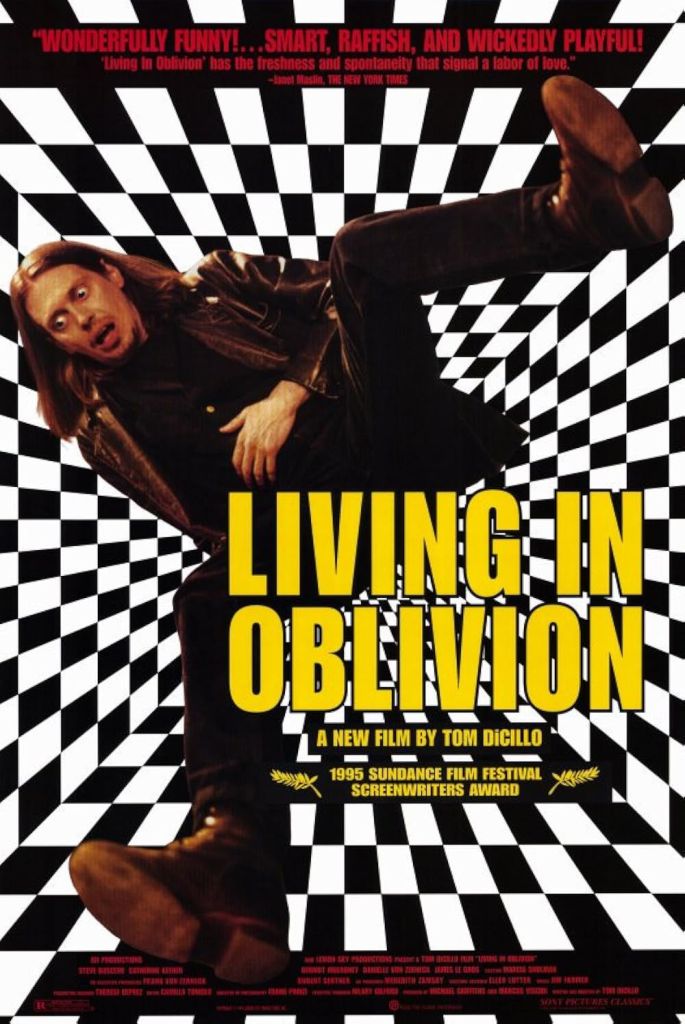
    There are stretches of Living in Oblivion that feel Oscar-worthy. The writing is so sharp, so inspired, you forget how small the production really is.

    Despite being a Sundance hit and critically beloved, this movie flew under the radar. It somehow escaped Roger Ebert entirely—rare for a ’90s indie. Maybe it felt too “made for L.A.” and never caught on in middle markets, even in Chicago.

    Tonally, it’s about 70% of a Christopher Guest film—For Your Consideration comes to mind—but with more bite. The satire lands because it’s grounded in genuine frustrations of indie filmmaking.

    Nick Reeve (Steve Buscemi) is directing a film that seems… off. Most shots have actors delivering lines directly to the camera, side by side. It might be a nod to old Hollywood style, but it reads like clunky direction—probably by design, to reflect the chaos behind the scenes.

    That chaos is part of the charm, but also the limitation. The “film within the film” is never compelling enough to fully anchor the story. The structure is scattered, with a handful of scenes that feel like endings, none of which really stick. It’s an odd way to finish a film with such smart momentum early on.

    But the cast—what a cast. DiCillo somehow assembled Steve Buscemi, Catherine Keener, Peter Dinklage, and Dermot Mulroney before they broke big. Buscemi and Keener especially seem fully formed here, already doing what they do best.

    I’d say there are about seven standout moments that feel like they were lifted straight from an A-list film, and another seven full scenes that showcase genuinely brilliant writing. But while these parts shine on their own, they don’t quite add up to a cohesive whole. The film is less than the sum of its best moments..

    This seems like it was made five years before it possibly could have. It is great. As someone that has seen almost every prominent English language movie from the 90s, this seems like a lost relic of the era. A forgotten keepsake that continuously earns its “cult film” label.

    8/10

  • Kubo and the Two Strings (2016)

    My 27 movie A-Z film-a-thon: Day 12


    This era of animated films contains many clunkers.
    Okay, that’s a little unfair. It doesn’t just apply to animated films, but to almost any large, big-budget or franchise movie from 2016 to 2019. Scripts from this time often offered nothing new—or if they did, it felt like the result of throwing darts at a wall.


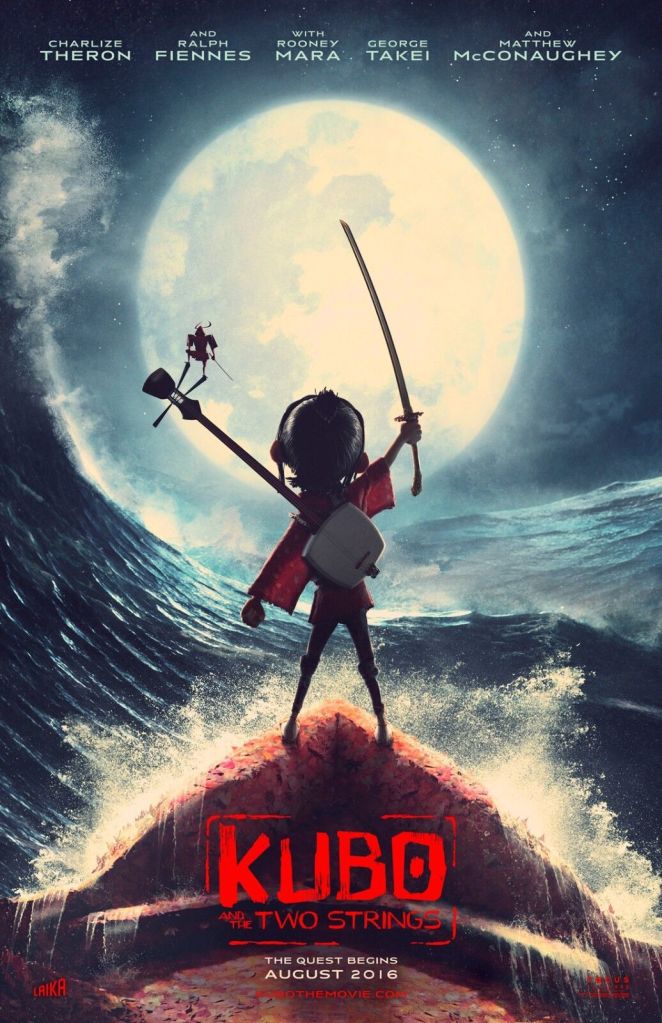
    Kubo and the Two Strings is creative, yes, but also absolute nonsense. Nothing here is grounded in reality. Kubo can control origami by playing a magical shamisen—but where did that power come from? The movie isn’t interested in asking, or answering, that question. Compare this to Miyazaki’s Spirited Away, where every surreal moment still feels rooted in something emotionally familiar. In Kubo, things just… happen. Every minute, it feels like another random idea is yanked from a grab bag and dropped into the script with little development or organic integration.


    The animation is impressive, considering the budget, but the character models are oddly generic. Everyone seems to have Gru’s face shape from Despicable Me, and the animation feels a little “floaty”—there’s not much weight when characters fly or step. Not a dealbreaker, but noticeable.


    More frustrating is how little the film resembles the culture it supposedly draws from. Set in early feudal Japan, Kubo features no Asian voice actors in key roles, and everyone speaks in a flat, stereotypically American tone. Why build a story around such a specific cultural setting, only to strip it of that culture in execution?


    In the end, it’s a jumble: generic animation, generic music, a scattershot script that relies on its uniqueness of ideas rather than their development. Worst of all, the movie constantly tells instead of shows. Kubo is sent away with his mother’s magic, then wakes in a snowy field next to a talking monkey—who was once a wooden charm named Monkey. “I said, your mother is gone. Your village is destroyed! Burned to the ground!” Monkey yells. Would’ve been nice to see that scene, right?


    Kubo and the Two Strings isn’t a bad movie. In fact, it’s rather engaging, and refreshingly distinct in a sea of interchangeable animated films. It’s just… this could have been so much more in the right hands. I enjoyed it—even though I found something to complain about in every scene.


    6.5/10

  • The Joy Luck Club (1993)

    My 27 movie A-Z film-a-thon: Day 11.5.

    I added another J entry, this time a request. I decided that both Johnny Guitar and the movie would have enough to write about to do them both.

    A beloved critical darling at the time of its release, The Joy Luck Club has largely faded from public memory. I first heard of it in Roger Ebert’s year-end collections, but for some reason, I always assumed it was a relationship drama among recent college grads—something more in the vein of St. Elmo’s Fire. I was way off.

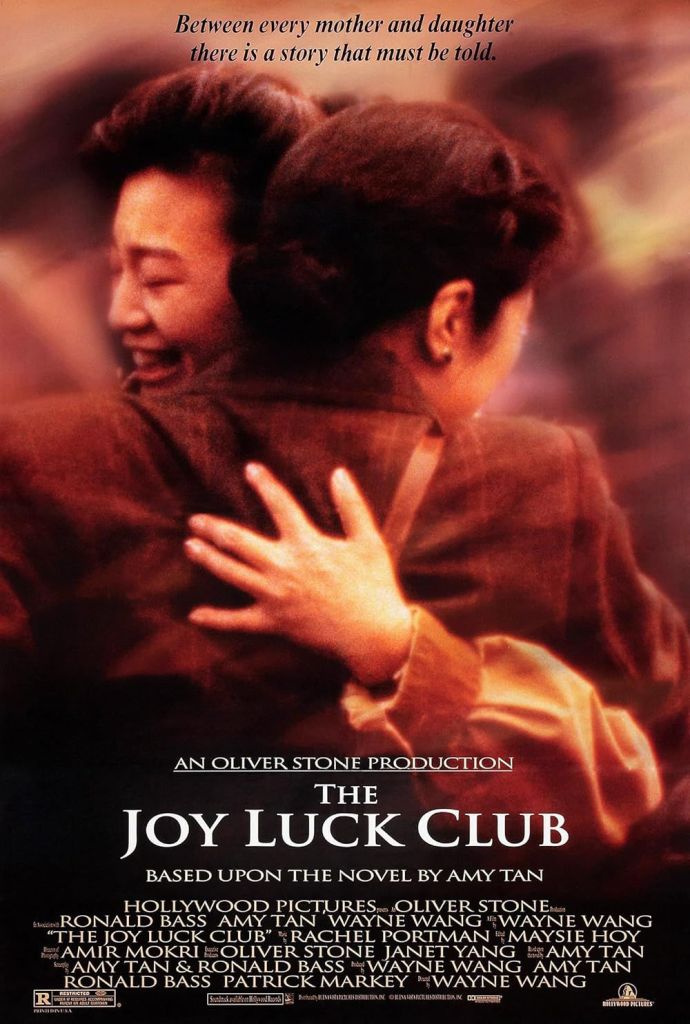
    In reality, The Joy Luck Club is one of the first major Hollywood films centered entirely on Asian characters, played by Asian actresses. The title refers to a mahjong club formed by the main character’s mother during wartime in China. “Joy luck” is the idea that, even in the worst of circumstances, one can find fortune through joy and friendship.

    The film follows four Chinese-American women and their immigrant mothers, weaving together stories from both generations. I’ll be honest: I had trouble telling some of the characters apart. The actresses have similar looks, voices, and even plot arcs. At times, I thought the same woman had multiple white husbands. A more exacting director—maybe someone like Spielberg—might have pushed harder to visually or tonally differentiate the stories.

    That said, this is a compelling “women’s picture,” packed with enough plot turns to stay engaging without dipping into melodrama or cliché. The central thread follows June Woo and her mother, who escaped from war-torn China after abandoning her infant twin daughters by the side of the road. The film asks, “How could a mother do such a thing?”—and then slowly, powerfully, answers it.

    The other daughters of the Joy Luck Club all carry histories that echo each other in meaningful ways. Second-generation immigrants often face similar tensions, especially when navigating between tradition and assimilation.

    I feel like this film is a perfect introduction to Amy Tan’s novel. I never thought I’d want to read it, but now I might. The characters are strong on screen, but you can sense there’s even more to them on the page—more cultural nuance, more inner life.

    A strong, meaningful film with a clear place in cinematic history. It’s just a shame the writing/directing team couldn’t quite replicate the success—Maid in Manhattan is a far cry from this. But this one’s great.

    8.5/10

  • Johnny Guitar (1954)

    My 27 movie A-Z film-a-thon: day 11.

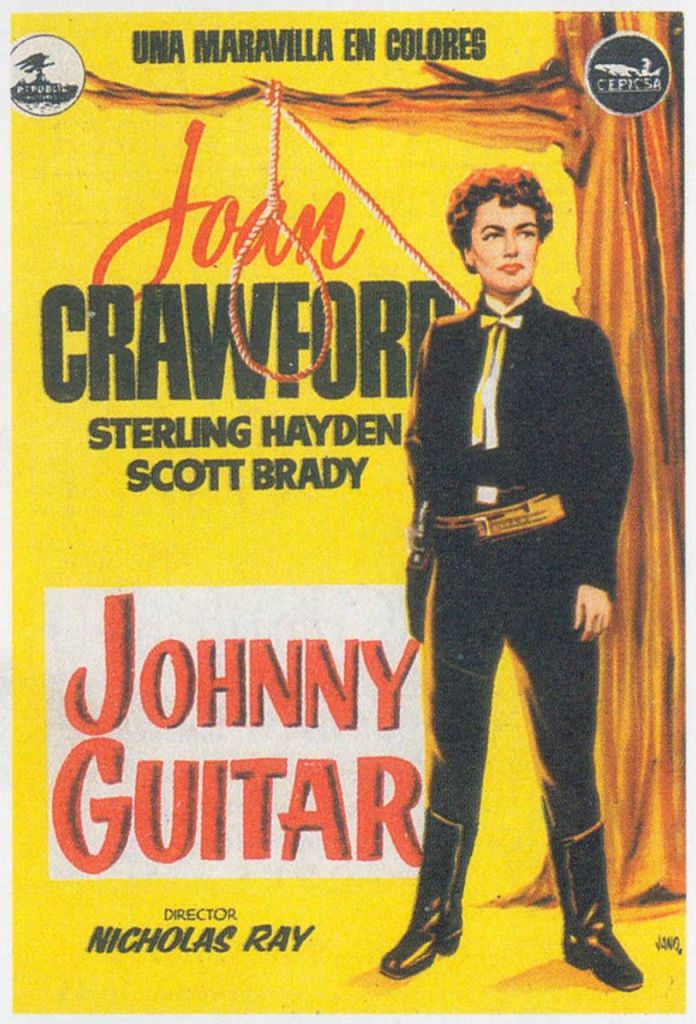
    Johnny Guitar is named after a sagely gunslinger (Sterling Hayden) who carries a guitar — sans case — on his back. But the movie is all about the women: Joan Crawford as Vienna, the mysteriously affluent saloon owner who can play the piano, and Mercedes McCambridge as Emma Small, the vengeful zealot who relishes the chance to take the esteemed Vienna down.

    I watched a great deal of the Grit channel for a few years. If I had seen this on there, it would’ve been one of my very favorites. It has everything I want from a 1950s Western: beautiful, well-scouted locations, gruff gunslingers, double crosses, vigilantes, and beautifully (if unnecessarily) cinematic imagery that begs to be seen in a theater. Sure, they used explosives to blow the hell out of priceless natural landscapes and burned down a million-dollar mansion attached to a cliffside rock, but the film has constant movement. There’s never a time when something interesting isn’t happening onscreen.

    Nicholas Ray seems to be doing too much to prove himself here. It might be a tad over-directed, and in doing so, it feels more like a producer’s movie than a director’s one. “Make sure you can see all the movie onscreen!” I can hear someone say. It’s the kind of film that feels made for the trailer — long before that was much of a thing.

    The movie has amassed a devoted cult following, mostly due to the resolve of Joan Crawford, who excelled at roles steeped in determination and melodrama. Vienna is highly respected by almost every man in town, yet she accepts it when the little chain of dominoes gradually descends to crush her. “What am I to expect? This is a man’s world, and I’m in the way,” seems to be her outlook. The men end up turning on her, even if they don’t want to.

    Johnny Guitar isn’t great cinema, maybe, but if you like classic Westerns, it checks all the right boxes.

    8/10

  • In the Loop (2009)

    My 27 movie A-Z film-a-thon: day 10.

    I am watching a different movie every day that I otherwise wouldn’t get to for a long while. One for each letter of the alphabet. What I have watched so far:

    _13 Assassins (Takashi Miike, 2010) – 9/10

    _All Dirt Roads Taste of Salt (Raven Jackson, 2023) – 7.5

    _Blow Out (Brian De Palma, 1981) – 8.5

    _Cold War (Pawel Pawlikowski, 2018) – 6.5

    _Darby O’Gill and the Little People (Robert Stevenson, 1959) – 9 

    _EO (Jerzy Skolinowski, 2022) – 5

    _Fat City (John Huston, 1972) – 9

    _Gomorrah (Matteo Garrone, 2018) – 8.5

    _Happy as Lazarro (Alice Rohrwatcher, 2018) – 7

    It’s been a little heavier than my usual tastes, so I thought I would try another comedy. I have been meaning to see this one for quite a long time, since it was out probably. I am not sure why I haven’t gotten to it.

    _

    Day 10: I

    In the Loop (2009)

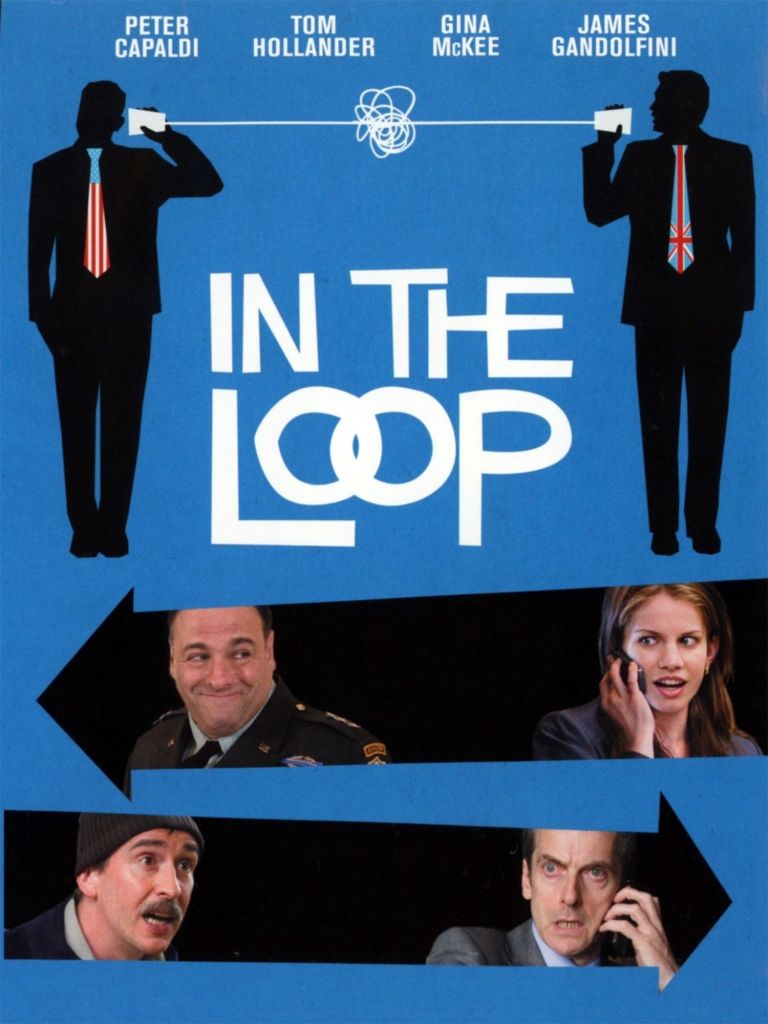
    Twice as interesting as The Office.

    “I am making you pump Chad. Go on, it will be easy-peasy-lemon-squeezy.”
    “No it won’t. It will be difficult. Difficult-lemon-difficult.”

    I remember that line very well from the trailer 16 years ago. It’s a perfect sample of In the Loop’s rapid-fire dialogue—a very small Sundance film released in April 2009 that somehow made enough of an impression to earn a nomination for Best Adapted Screenplay.

    If you’ve seen The Death of Stalin, Armando Iannucci’s 2018 political meisterwerk, this is a more manic, modern-day version of that, with two parts The Office stirred in. Zach Woods plays a version of his character from The Office—“A.A.” Ron—but this came first.

    The plot follows a dozen key players scrambling through a blitzkrieg of political turmoil after a British cabinet minister says that a war in the Middle East is “unforeseeable.” Of course, saying a war is unforeseeable means you don’t think it’s going to happen—but literally every single person in the movie takes it to mean the opposite. “Unforeseeable” means “foreseeable” in political-speak, apparently. That misreading becomes a darkly hilarious domino that drives much of the chaos.

    The film presents situations that likely feel grounded in real-life. Mid-level politicians and their aides rush to put out fires while jockeying for influence and trying not to compromise either their image or their mission. Characters make “pros and cons lists for war” and struggle to appear busy without unraveling.

    “I need to get out of here. Otherwise, I’ll end up staying in and watching a f___ing shark documentary and having a wank. Because I’m too scared to order porn on the hotel TV.”

    The script is consistently engaging, with little details that return in clever, rewarding ways. I’d argue that the climax—if there is one—doesn’t feel like the movie was building toward it. But that doesn’t really matter. The rest of the film works so well, like a sharper, less cringe-inducing version of The Office. If your brain wants something fast-paced and packed with details worth piecing together, I very much recommend this one.

    8/10

  • Happy as Lazzaro (2018)

    My 27 movies A-Z film-a-thon day 9.

    I am choosing a movie for each letter of the alphabet that I want to see but likely would not get to in years. So far, I have seen:

    _ 13 Assassins (Takashi Miike, 2010) – 9/10

    _All Dirt Roads Taste of Salt (Raven Jackson, 2023) – 7.5

    _Blow Out (Brian De Palma, 1981) – 8.5

    _Cold War (Pawel Pawlikowski, 2018) – 6.5

    _Darby O’Gill and the Little People (Robert Stevenson, 1959) – 9 

    _EO (Jerzy Skolinowski, 2022) – 5

    _Fat City (John Huston, 1972) – 9

    _Gomorrah (Matteo Garrone, 2008) – 8.5

    Maybe I should stick to films at least 10 years old. I feel like a fogey, but I wonder if I have seen all of the most necessary films of recent years. I feel like the trend may be that some of these highly acclaimed movies have so much critical support because they have to like *something*. Every film since 2018. I think are graded on a curve. “Shows promise”, should be attached to the report card.

    Happy as Lazzaro (2018)
    Mixed metaphor city.

    This is an allegorical reference to Lazarus in the Bible. But which Lazarus, you ask—Lazarus of Bethany or the beggar Lazarus? The answer is both. Lazarus of Bethany was raised from the dead by Jesus. His story is about miraculous resurrection and faith. The beggar Lazarus, on the other hand, was denied entrance at the gates of a rich man’s home, only to be accepted into Heaven while the rich man suffers in Hell.

    I’m not a religious man. I don’t like stories from the Bible—especially not ones that end with someone suffering for eternity in Hell. So this story didn’t really work for me.

    Lazzaro is a “blank canvas” character. But in this case, he’s a total blank. He has no discernible traits beyond being passive and agreeable. He makes no major sacrifices and undergoes no deep suffering. At most, he’s overworked. Someone asks him to cover their post—he agrees. They never return. Grueling stuff.

    And yet, I might’ve found that charming: the idea of a pure-hearted man quietly enduring a lower-class life while being used by those above him. It has the ingredients of a good Renoir film, exploring class divisions and how each side protects its own. But it didn’t need to reference such dramatic, life-or-death biblical stories to tell that tale.

    Did I mention the wolves? This is where the metaphors start stacking up to the point of collapse. A mystical wolf appears, seemingly tied to Lazzaro’s nature or fate. Another character teaches him to howl back, and a narrator even tells a story about a wolf that may, in fact, be about Lazzaro himself. It’s all very… much.

    That said, Happy as Lazzaro is gorgeously directed and features a few genuinely inspired moments. The story of the rich exploiting the poor certainly has cultural resonance. Lazzaro is a nice idea for a character, and the message has value. But the rich don’t seem quite rich enough, and the poor don’t seem quite poor enough.

    Mostly, there are too many moments of allegory that feel forced or unnecessary. I won’t spoil them here—this deserves to be seen, and some viewers will walk away feeling deeply satisfied.

    For me, Alice Rohrwacher would go on to do a much better version of these themes in La Chimera—a film that feels deeper, more believable, and uniquely necessary.

    7/10

  • Fat City (1972)

    My 27 movie A-Z film-a-thon: day 7

    Most sports movies are about the 0.1% who achieve something extraordinary. Fat City is about the other 99+.

    I’ve never really understood the sports mindset. I get being a casual fan. I get enjoying physical activity and the social element. But I don’t get the fantasy footballers who desperately need Chuba Hubbard to rack up yards, or the guys betting their paychecks on the Knicks winning by 14. I especially don’t understand the middle-aged men still clinging to glory days on their high school wrestling team.

    That mindset is what Fat City explores. When deciding what to watch for the letter F-Fresh (2022) or Fat City-a friend said he got why I was leaning toward Fat City: “It’s gay.” I asked what he meant. He said the trailer was homoerotic. Queer-coded.

    I went in cold, knowing only the premise and that comment. And honestly, I think he was onto something. John Huston seems genuinely fascinated by men who are drawn to other men but can’t quite articulate or even understand that desire.

    “When I first saw you at the Y, I thought, ‘Now there’s a guy who is soft in the center.’ (beat) Never mind.”

    Jeff Bridges plays a boxer everyone gravitates to-not for his skill, but for his movie star looks. A coach lies in bed, unable to stop praising him: “He’s good looking. He’s white. People like to see a white boy fight.” His wife pretends to be asleep. It’s hard not to read something queer in a middle-aged man fixating on a 19-year-old at 1 a.m.

    Despite being quiet and subdued, the movie never feels dull. Every scene adds something. Each minute offers a new idea, another glimpse into the psychology of small-town people living in the past. There’s no wasted space here-just a deepening sense of melancholy.

    Fat City received a single Oscar nomination: Supporting Actress for Susan Tyrrell, playing a hot mess of a drunk who can’t decide whether to accept the steak Stacy Keach cooks for her. But it’s Keach who anchors the film. His performance is the story-his expressions, his reactions, the silent things his character carries.

    John Huston didn’t write this script, but his films always had an ear for natural, revealing dialogue. Fat City ranks among his very best in that regard.

    9/10.