Two more reviews from the tail end of movie season.
This turned out to be a surprisingly strong year for awards-caliber films. What made it especially encouraging is that many of the standouts came from filmmakers who seem genuinely interested in making movies that are both carefully constructed and emotionally risky. There aren’t many directors right now aiming for polished and interesting at the same time, which makes these final entries feel like a small but meaningful vote of confidence in the future of cinema.

If I Had Legs I’d Kick You
The way Rose Byrne is shot and edited in If I Had Legs I’d Kick You makes her feel like an uncredited fifth character in Requiem for a Dream. If she were in that movie, audiences would be asking where her drugs are—but here, she needs none. Her mental illness behaves like a drug anyway, distorting time and flattening reality. She sees a therapist, though she is one herself. It makes you wonder: is this what my therapist is like when they’re not talking to me?
Linda’s life collapses quite literally when a hole opens in her apartment ceiling—possibly from flooding, faulty plumbing, or maybe an alien in the walls. The film never clarifies, because Linda can’t. Her grip on cause and effect is slipping. At the same time, she is responsible for caring for her daughter, who can technically eat but refuses food because it feels “squishy,” and who is graded daily on how much she consumes. The entire household revolves around a single goal: getting her weight up to fifty pounds. Linda is never alone, yet utterly abandoned.
Byrne carries the entire film, delivering a performance built on quiet humiliation and sustained dread. Linda isn’t heroic or admirable; she’s exhausted, brittle, and increasingly convinced she is failing at everything she’s supposed to do well. Everyone else feels like a walk-on cameo. Conan O’Brien actually acts, briefly, and his presence reminded me of Dylan Baker in Requiem for a Dream: when someone is unraveling, the most others will do for them is ask a few questions and then discreetly step away.
For a first feature, director Mary Bronstein shows tasteful control. This could easily have been an amateurish mess—a pile of anxiety with no shape—but instead it becomes a low-budget, quietly devastating minor masterpiece. Byrne somehow landed a role most actresses would have killed for, had they known what Bronstein was after. Onscreen, it feels uncomfortably familiar.
This is what I felt like during COVID.
8/10

Marty Supreme
I went into Marty Supreme assuming I was about to watch a straightforward, inspirational true story about a legendary ping-pong player. Which immediately raised a question: why have I never heard of this person?
That confusion never really goes away—and that’s the point. Whose story is this, exactly? And when is it being told? The film feels like it’s been assembled inside Marty’s own head, cut together from half-remembered movies, cultural artifacts, and emotional highlights. It’s as if Marty walked out of a theater in 1989 after seeing Look Who’s Talking and thought about his own life, then edited the memories together with needle drops from Peter Gabriel, Alphaville, and Tears for Fears. The soundtrack is wall-to-wall ’80s pop for no obvious reason. That’s before you even get to the score by Oneohtrix Point Never, which is one of the most exhilarating film scores in years, so good that Pitchfork rightly highlighted it in its Best New Music section.
.
Marty Mauser has one supreme goal: to prove he’s the best at something. Unfortunately, he’s only exceptionally good at two things—selling shoes and ping pong. No one wins trophies or headlines for selling shoes, so ping pong it is. He robs his own family’s cash register to fund a trip to an international tournament, because that’s what belief looks like when it borders on delusion.
The year is 1952, and the film mostly couldn’t care less about anything else happening in the world. Marty is Jewish, carrying the psychic weight of WWII while refusing to be seen as a victim. He disarms people by insulting Jews in public, then reassuring friends in private: “It’s fine—I’m Jewish.” It’s ugly, funny, defensive, and very human.
Marty Supreme is buoyant and exciting. Marty is an archetype—the Rocky Balboa fantasy most of us secretly entertain. We may never be Michael Jordan or Babe Ruth, but maybe, if we really applied ourselves, we could become the world’s greatest pickleball champion. The movie understands that hunger perfectly.
This is one of the most exhilarating collections of well-written scenes I’ve seen in years. Timothée Chalamet produced the film, the first from the Safdie brothers since Uncut Gems—to the eternal disappointment of Adam Sandler’s Netflix fans. Try comparing this to something broadly beloved like Forrest Gump, and you can feel how unsure audiences might be. Is it a tragedy? A comic romp? A true story? It’s all of those things, but never long enough to be comfortable.
Like Marty himself, the film wants to prove it’s extraordinary, hilarious, and capable of shocking you at any moment. It brushes up against crime-movie territory—poverty, desperation, proximity to ruin—without ever collapsing into cliché. It’s a genuine delight.
I want to be like Marty one day.
9.5/10
My Top 10 Movies of 2025 (So Far)
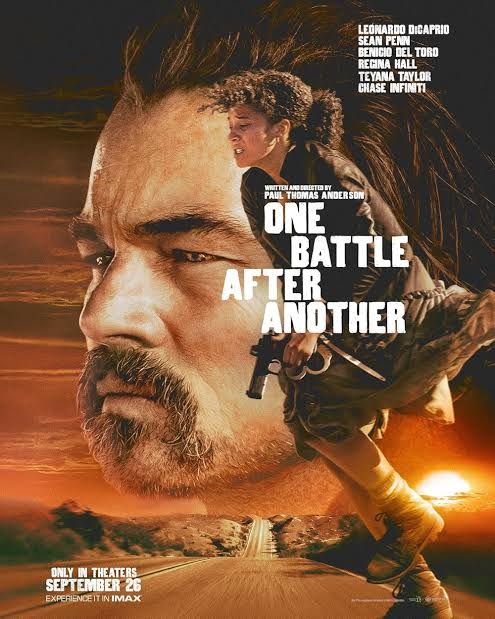
1 One Battle After Another
2 Marty Supreme
3 Blue Moon
4 Ocean with David Attenborough
5 Sorry, Baby
6 28 Years Later
7 The Alabama Solution
8 On Becoming a Guinea Fowl
9 Sentimental Value
10 Bridget Jones: Mad About the Boy
Next up, I’ll be posting a standalone review of Blue Moon, followed by individual posts for each film on this list—partly to give them the space they deserve, and partly to let future readers find them more easily through search. Some of these movies will age well. Others might not. Either way, they’re worth arguing with.
After that comes my 27-Day A–Z “I Might Actually Enjoy This Movie” Film-a-Thon. The idea is simple: one letter per day, one movie per letter—but only films that most people don’t seem to like very much. These are the movies that get shrugged off, dismissed, or quietly forgotten, but that I suspect might contain something interesting if given another chance. I’m hoping to uncover a few underrated gems, maybe even a hidden masterpiece or two. Think of it as detective work. I’ll be your movie sleuth—a Daryl Zero of cinema.
Enjoy movies. Catch up on the great ones, no matter how old they feel now.
 Avidavr: Media Reviews
Leave a comment