Life gets in the way sometimes…
I am not retired from blog writing—I am just busy. I’ve been sick off and on, or at least sick enough that a good chunk of my “time off” disappeared into fevers and whatever mysterious bug was going around. Mostly, though, I’ve been cooking. I dusted off my apron, my knife skills, and my immersion blender and made all kinds of interesting things, as my mom would say. Chicken spinach quesadillas, for one. Next up: chicken pot pie (with the crust on the bottom). Carla Hall’s Cooking With Love has quietly become my culinary Bible.
But I have also been watching things. New movies, mostly—and all five seasons of Stranger Things since December, which I’d give a solid B overall. I realized I was too far behind to pretend this would be a single post, so consider this the first part of a recent movie round-up. I wanted to get it out before the Oscars. Ideally before the nominations. Life had other ideas.
First up.
Frankenstein
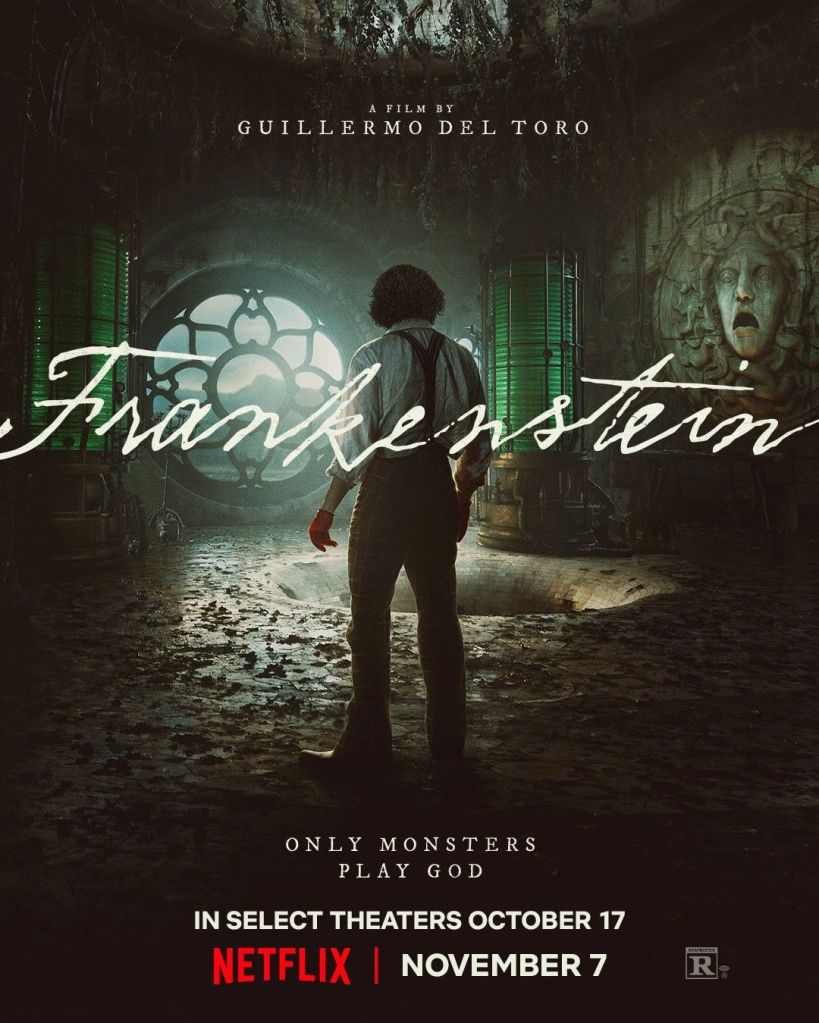
Frankenstein is not Frankenstein’s Frankenstein, and it bears almost no resemblance to the golden-era films directed by James Whale. So what is it? A Marvel origin movie with literary set dressing. At one point, the creature approaches a ship frozen in the ocean and casually pushes it until it tilts at an angle. My question is simple: why does this movie think that makes sense?
In the novel, Dr. Frankenstein discusses electricity at a time when it was still a mysterious, barely understood force. That idea—later visualized by Whale with lightning bolts and switches—gave the creature a sense of stored, barely contained power. The original monster moved like an ogre, slow and heavy, as if animated by a single catastrophic surge of energy. That logic made sense. Here, the creature is absurdly strong, with no explanation beyond “because the movie needs him to be.” He isn’t just as powerful as the Hulk—he’s as powerful as ten Hulks put together, and the film never bothers to justify it.
Worse, this super-strength comes bundled with what appear to be hypnosis powers, making the creature function less like Frankenstein’s monster and more like Dracula. Mia Goth’s character falls for him almost instantly after seeing him alone in a basement, walking toward him as if under a charm spell. The moment isn’t romantic or tragic—it’s incoherent, stripping the creature of his horror and her of her agency. I enjoyed Pinocchio, but this belongs firmly in the category of fun-but-messy genre fare like Blade II or Hellboy. It’s entertaining, but thematically muddled and largely uninterested in Shelley’s ideas. Even basic period details feel careless—why are bodies buried with uncovered faces, as if people in the 18th century simply tossed dirt directly onto the dead?
This Frankenstein favors spectacle over logic, power over consequence, and superhero mythmaking over Gothic dread.
6/10
Sorry, Baby
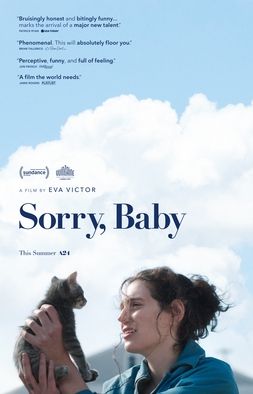
Sorry, Baby existing at all may be one of the best things to come out of the MeToo movement. While the exposure of real monsters—like Bill Cosby and Danny Masterson—showed how power can be abused through drugs, fame, or violence, Sorry, Baby reminds us that none of that is required to permanently damage someone.
Its premise is deceptively simple: “Something bad happened to Agnes.” The film never fully shows what that something is, and many viewers may wonder whether the ambiguity justifies a movie at all. It does. What we learn is enough. Someone Agnes admired desired her for her mind but had no respect for her autonomy. She wasn’t allowed to decide. She was coerced into something she wasn’t ready for. That quiet violation—the kind some people still struggle to even name—is the film’s subject, and it is more than worthy of examination.
Men can be awful, particularly when entitlement overrides empathy. The film understands that harm doesn’t come from brute force alone, but from insistence—from wanting what you are explicitly denied. Eva Victor, pulling triple duty as writer, director, and lead actor, tells this story with restraint and discomfort rather than spectacle. Sorry, Baby is labeled a dark comedy mostly because it’s too minimal and too emotionally raw to fit anywhere else.
I laughed at times, but rarely out of joy—more out of tension, desperation, and the human need to feel something break through the numbness. I wanted Agnes to laugh at life again, so I laughed loudly, hoping she might too. Whether or not this story draws from Victor’s own life, it announces a rare talent: someone capable of articulating pain with clarity, intelligence, and moral weight.
9/10
Train Dreams
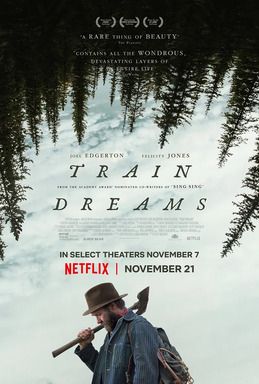
Train Dreams may be one of the most somber movies ever made. As a point of reference, I thought of films like Bringing Out the Dead, Palindromes, and Synecdoche, New York—all famously bleak works that offer little to no emotional reprieve. This film is quiet, sad, and ever lonelier.
It captures the immensity of solitude: what it feels like to be briefly, modestly happy; to watch that happiness erode; and then to wake up one day and realize the world has kept moving without you—that you may be the only truly sad person left in it. The performances are beautifully restrained, communicating grief and endurance without overt dramatics.
Still, the film’s devotion to mood comes at a cost. It often feels less like a story unfolding than an emotional state being prolonged, and at times it nearly forgets to provide a plot at all.
8/10
Song Sung Blue
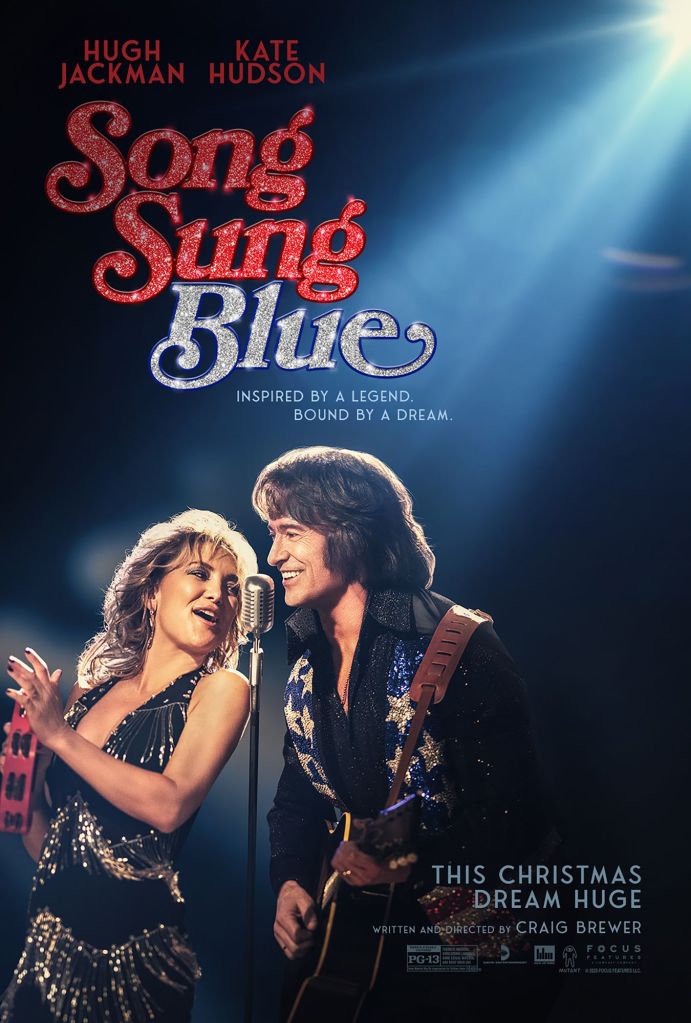
Song Sung Blue has to be a movie that played the Heartland Film Festival, right? Let me check… okay, it didn’t. But they gave it some sort of award anyway. You can almost hear the thought process: “We’re not letting a movie this paltry—and this transparently engineered to make audiences cry—not have our name attached to it.”
And yet.
This is actually a very sweet love story about two people dealing with genuinely relatable problems—at least to me. Kate Hudson does her own singing, and she sounds great. Exactly like an extremely talented singer who can’t quite turn that talent into a full career should sound.
The saddest thing of all is that Hugh Jackman never played Neil Diamond in a biopic. He looks and sings exactly like him. That said, I can’t imagine there’s a story we urgently need to see about a 60-year-old Neil Diamond—and, truth be told, this story didn’t strictly need to be told either.
But it was told, and it’s very sweet. The film gently reminds us of the importance of making the most of our lives while we still have time on Earth. I’m glad to have this one in my back pocket for people who are grieving the loss of family members.
7/10
Sentimental Value
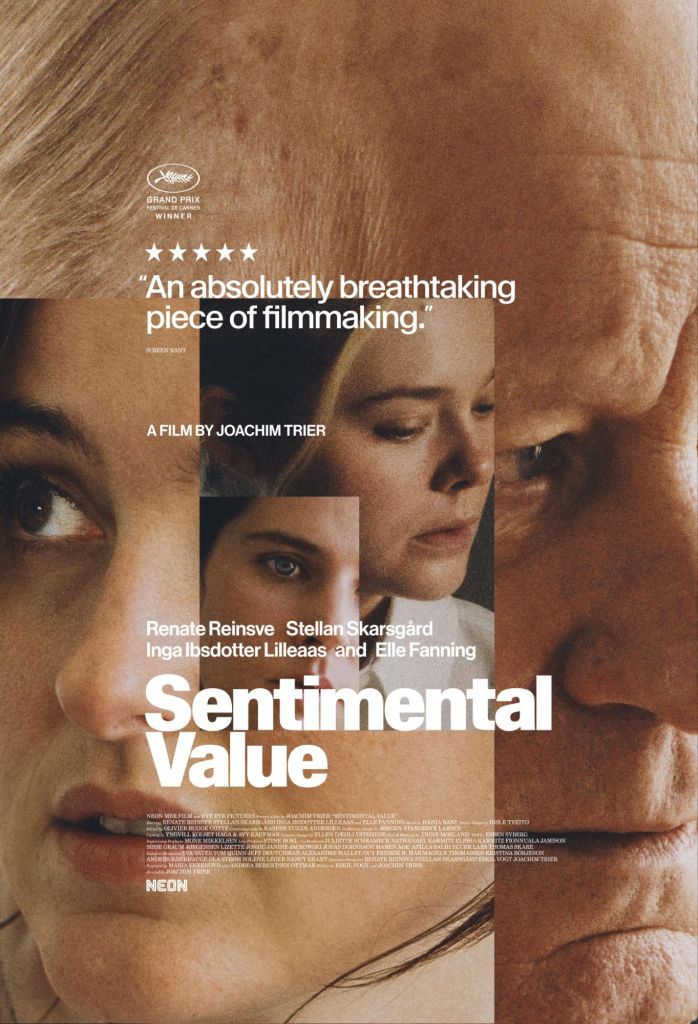
Sentimental Value is another deceptively slight movie about coping with tragic loss, but one that feels far more likely to linger. Stellan Skarsgård plays Gustav Borg, a Lars von Trier–like director who hasn’t made a film in over a decade and now feels the pressure to deliver one final artistic statement before he dies. His daughters have long since abandoned their need for him, and the distance feels permanent. Gustav is the kind of man who only loves punishing, perverse cinema—to the extent that he thinks DVDs of Irreversible and The Piano Teacher would be appropriate gifts for a twelve-year-old’s birthday.
Movies about filmmakers rarely thrill me—they tend to be self-congratulatory and therefore less honest—but this one is handled with restraint and surprising humility. The central question cuts deep: how do you convince anyone your story is worth hearing when you’ve spent a lifetime uninterested in listening to others? Elle Fanning plays one of the finest actors of her generation, and even she seems uncertain whether this man’s vision deserves her faith. (And honestly—why isn’t she already regarded that way?)
Sentimental Value kind of comes and goes for me. It says something real, and I don’t doubt that it matters, but it didn’t stay with me in the same way The Worst Person in the World did, which felt like the movie I’d want all my friends to watch when I die. That movie felt big—about terminal illness, infidelity, and how people explain their lives to themselves. Sentimental Value feels smaller by comparison, more about famous people having problems that will probably never apply to me. My boyfriend loves it. I admired it. I’m just not sure how much of it I’ll think about later.
8.5/10
Part two will come next week or sooner, I promise.
 Avidavr: Media Reviews
Leave a comment