My 27 movie A-Z film-a-thon: Day 17.
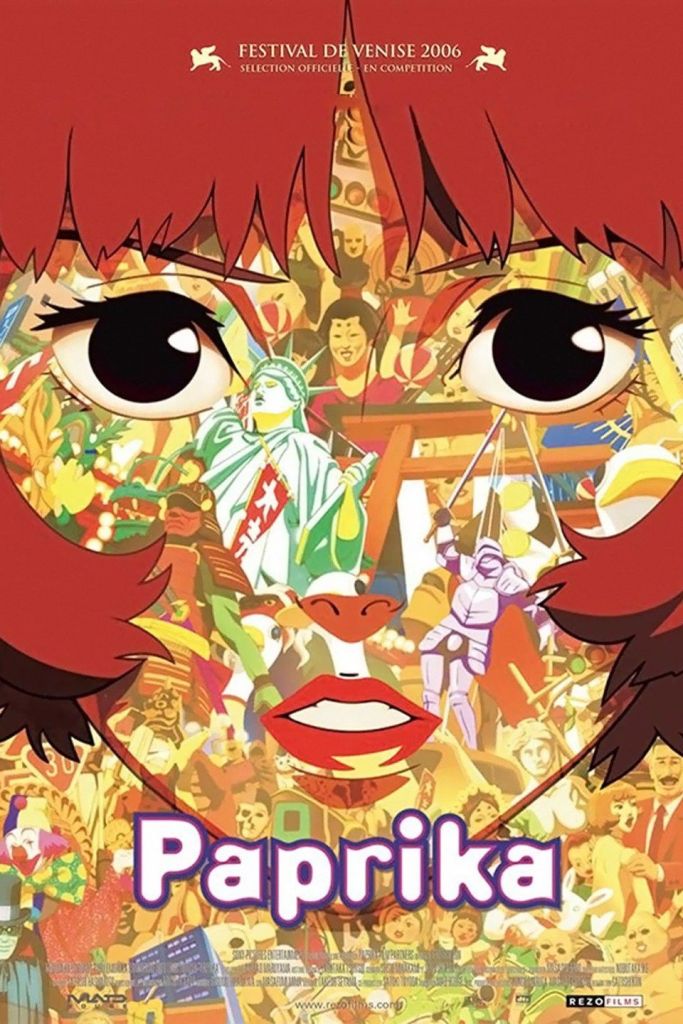
A colorful whir of technological bliss.
It’s impossible to watch Paprika without thinking of Inception (2010). In Inception, Dominic Cobb (Leonardo DiCaprio) enters people’s dreams to extract secrets from their subconscious. In Paprika, Dr. Atsuko Chiba does something similar, using a device called the DC Mini to enter dreams and help patients through their therapy. The twist: the DC Mini is stolen, and its thief begins to manipulate people’s dreams—and minds—on a mass scale.
The idea of dream infiltration isn’t new. Roger Zelazny’s novel The Dream Master (1966) shares a premise that closely resembles Paprika’s in broad strokes, and Philip K. Dick’s Ubik isn’t far off either. But Paprika takes those seeds and runs wild with them, injecting the concept with color, chaos, and visual invention. The result feels like a dream within a dream—not unlike a fantasy RPG campaign, full of wild, surreal encounters and world mechanics waiting to be explored.
The animation bears a clear influence from Hayao Miyazaki’s Spirited Away. The dream world sequences—especially the parade—are filled with characters and creatures that feel spiritually descended from Miyazaki’s more whimsical creations. “Granny” even makes a cameo of sorts. But where Spirited Away is magical and serene, Paprika is frenzied, glitchy, and technological.
Having seen director Satoshi Kon’s previous film, Tokyo Godfathers, I was surprised by how different Paprika feels. Tokyo Godfathers is dingy and dialogue-heavy, grounded in a gritty, real-world setting. I often struggled to keep up with the subtitles, and the story—while simple—felt hard to follow without a recap.
Paprika is the opposite: colorful, fast-paced, and visually stunning. The action doesn’t rely on walls of text to explain itself, and the subtitles are easy to read without falling behind. Where Tokyo Godfathers felt drab, Paprika bursts with vivid blues, reds, and golds, animated with fluidity and precision. Characters are distinctive and memorable. The soundtrack, with its glitchy electronic palette, feels right at home alongside the cutting-edge video game music of its era.
I especially appreciate works that pick up the baton and keep running with it. Has Paprika invented wholly new ideas? Maybe not. You can see traces of A Nightmare on Elm Street in its horror elements, and Eternal Sunshine of the Spotless Mind in its emotional dissection through surrealism. But Paprika refines and reimagines those ideas in its own hypnotic, high-tech voice. (And for the record, Paprika is based on a 1993 novel, so Eternal Sunshine likely drew from it—not the other way around.)
Is it a little confusing? Sure. The story is clear at first, but around the halfway mark, plot developments start coming fast, and the rules of the dream world get hazier. The villain, while intriguing, could have been more clearly defined—I wasn’t even sure what he looked like for most of the film. It’s one of those cases where a quick Wikipedia read helps connect the dots.
But compared to the convoluted multiverse films of the past decade, Paprika is refreshingly streamlined. It’s dense, but not overloaded. You can follow it, even if some pieces slip by on first watch.
More than anything, Paprika is a sensory experience. The music, animation, editing, and pacing all work in tandem to create a world that feels as real as it is unreal. It is dream logic, sharpened into high art. The film doesn’t just explore dreams—it feels like one.
Sadly, Satoshi Kon passed away in 2010 from pancreatic cancer, leaving this as his final feature. That makes Paprika not just a masterpiece, but a culmination—the crowning achievement of an artist and team at the height of their powers.
9/10
 Avidavr: Media Reviews