My 27 movie A-Z film-a-thon: Day 11.5.
I added another J entry, this time a request. I decided that both Johnny Guitar and the movie would have enough to write about to do them both.
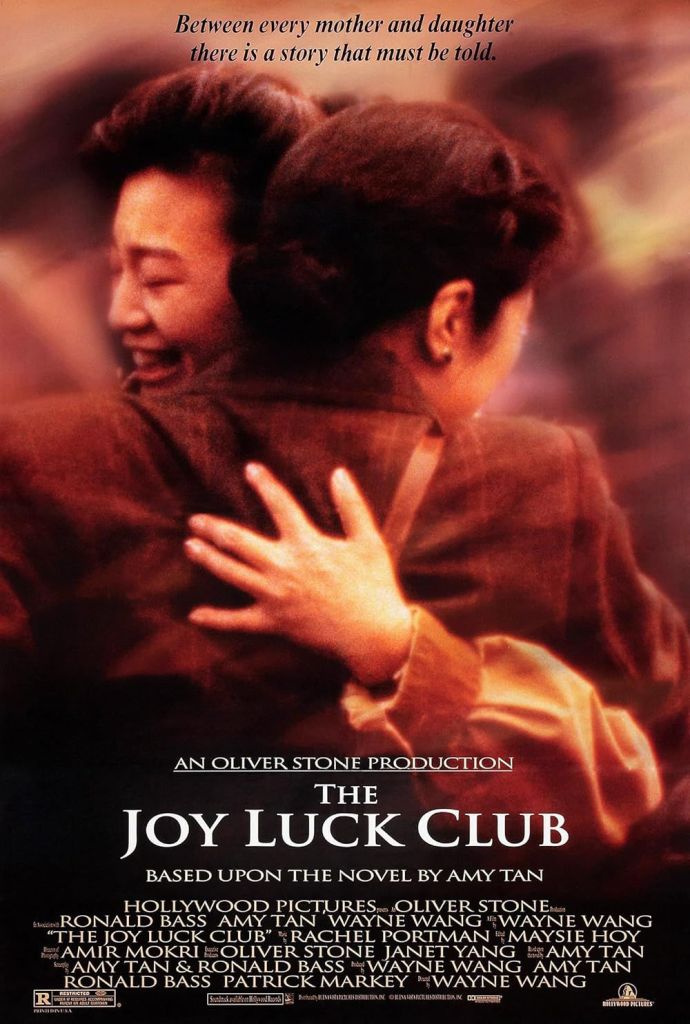
A beloved critical darling at the time of its release, The Joy Luck Club has largely faded from public memory. I first heard of it in Roger Ebert’s year-end collections, but for some reason, I always assumed it was a relationship drama among recent college grads—something more in the vein of St. Elmo’s Fire. I was way off.
In reality, The Joy Luck Club is one of the first major Hollywood films centered entirely on Asian characters, played by Asian actresses. The title refers to a mahjong club formed by the main character’s mother during wartime in China. “Joy luck” is the idea that, even in the worst of circumstances, one can find fortune through joy and friendship.
The film follows four Chinese-American women and their immigrant mothers, weaving together stories from both generations. I’ll be honest: I had trouble telling some of the characters apart. The actresses have similar looks, voices, and even plot arcs. At times, I thought the same woman had multiple white husbands. A more exacting director—maybe someone like Spielberg—might have pushed harder to visually or tonally differentiate the stories.
That said, this is a compelling “women’s picture,” packed with enough plot turns to stay engaging without dipping into melodrama or cliché. The central thread follows June Woo and her mother, who escaped from war-torn China after abandoning her infant twin daughters by the side of the road. The film asks, “How could a mother do such a thing?”—and then slowly, powerfully, answers it.
The other daughters of the Joy Luck Club all carry histories that echo each other in meaningful ways. Second-generation immigrants often face similar tensions, especially when navigating between tradition and assimilation.
I feel like this film is a perfect introduction to Amy Tan’s novel. I never thought I’d want to read it, but now I might. The characters are strong on screen, but you can sense there’s even more to them on the page—more cultural nuance, more inner life.
A strong, meaningful film with a clear place in cinematic history. It’s just a shame the writing/directing team couldn’t quite replicate the success—Maid in Manhattan is a far cry from this. But this one’s great.
8.5/10
 Avidavr: Media Reviews